Place
Dates and hours
Artists
On viewGroup exhibition
Ithra Art Prize: Seventh Edition Shortlist Exhibition
Press release
For the first time in the Ithra Art Prize's history, all five shortlisted artists of an edition are being shown together. The exhibition of the seventh edition opened at Ithra Museum in Dhahran in August 2026 and runs in Gallery 1 until 31 December 2026, with the winner to be announced at the end of October.
The five finalists, chosen from more than 500 submissions by a jury including Farah Abushullaih, Nada Shabout, Jérôme Sans, Tarek Abou El Fetouh and Nadia Kaabi-Linke, are Aseel AlYaqoub (Kuwait), Bady Dalloul (Syria and France), Heba Y. Amin (Egypt), Ala Younis (Jordan) and Jawad Al Malhi (Palestine). This edition gave every finalist a production grant; the winner receives USD 100,000 and the winning work enters Ithra's permanent collection.
AlYaqoub's Flora Incognita is a herbarium of 3D printed plant sculptures, steel cabinets and graphite drawings that asks how botanical classification has shaped knowledge in the Gulf. Bady Dalloul shows Drawing in Matchboxes, a daily practice begun during the Syrian war that now runs to more than 800 tiny drawings. Heba Y. Amin's The Last Carrier: Iteration I screenprints an 18th century engraving of the mahmal procession leaving Cairo onto fragmented textile panels, so that figures once shown as spectacle "look back".
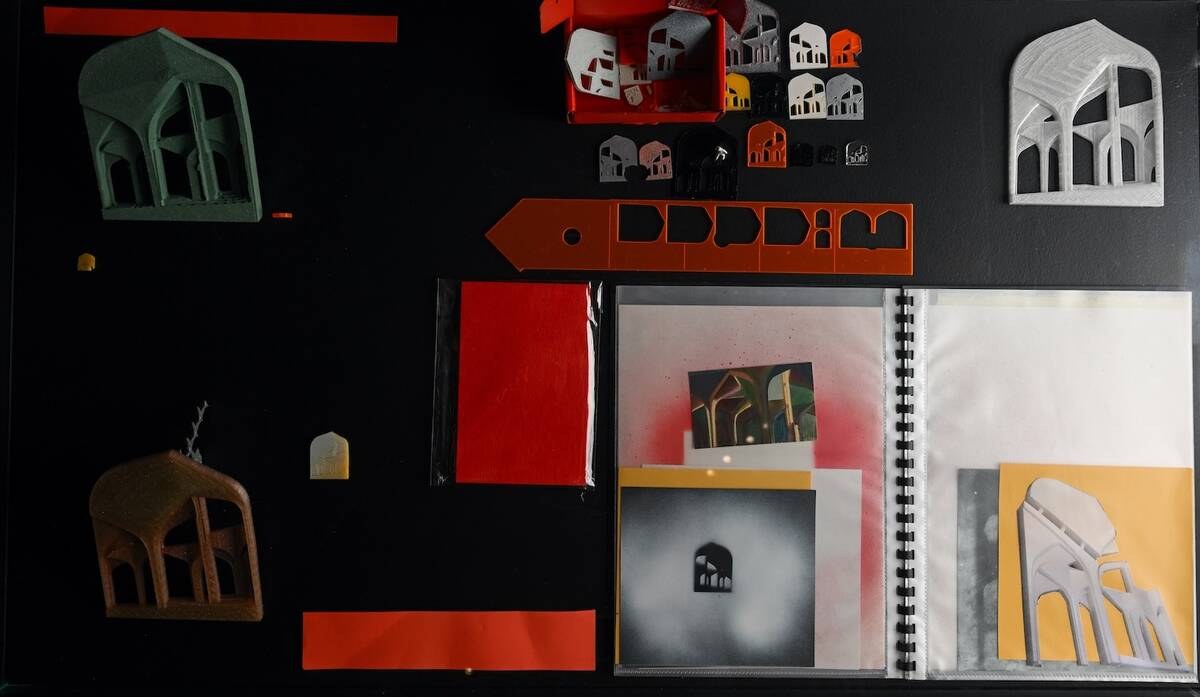
Ala Younis's Lifted Arches starts from the Dhahran Civil Air Terminal of 1961 by Minoru Yamasaki, compressing his pointed arch motif into a leaning 3D printed sculpture shown with drawings, archival prints and wooden studies. Jawad Al Malhi's Ashes of Absence fills its grey toned surfaces with fragile, isolated figures, a meditation on grief and disappearance in which "silence subsumes the air."
Taken together, the works share concerns with memory, colonial legacy, displacement and the archive. For Farah Abushullaih, Head of Ithra Museum, the show reflects the prize's evolution into "a dynamic platform for artistic production and cultural dialogue," and for visitors it is a rare chance to see five of the region's most closely watched practices side by side.