Modern Art Groups From the MENA Region You Should Know
The collectives that formed our modern art history
The collectives that formed our modern art history
The art scene in the MENA region has developed rapidly in recent decades, but who were the movers and shakers of modern art history who laid the foundations for that expansion? There were a number of groups and schools that operated in the 20th century, pushing the art scene forward in their respective countries and giving voice to complex cultural, social and political narratives. From Beirut to Cairo, Khartoum to Casablanca, these modern art groups redefined what it meant to create in a region rich in history. Keep reading as we spotlight just some of the most influential modern art groups from the MENA region that you should know.
D Group (1933-1947)
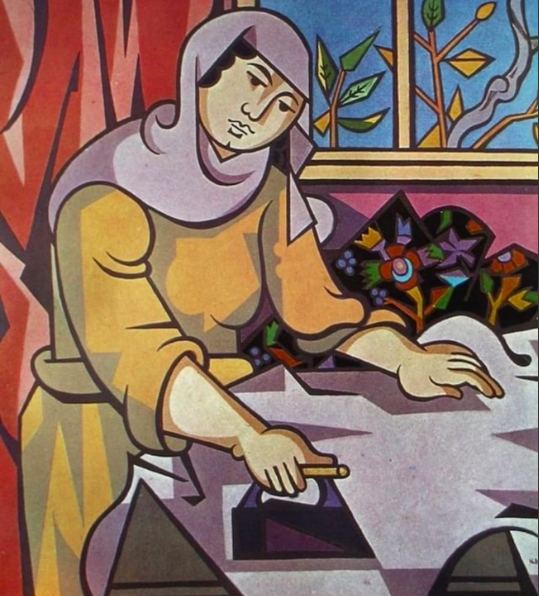
The D Grubu, who were known as either the D Group or Group D in English was founded in Istanbul in 1933 by five painters and one sculptor: Nurullah Berk (1906-1982), Abidin Dino (1913-1993), Zeki Faik Izer (1905-1988), Zuhtu Muridogli (1906-1992), Elif Naci (1898-1987) and Cemal Tollu (1899-1968). The D Group took its name from the fourth letter of the latin alphabet after identifying themselves as the fourth generation of modern Turkish artists following the Ottoman Painters’ Society (founded in 1909), the Fine Arts Union (also founded in 1909), and the Independent Painters Association (founded in 1929). Many consider the group to be Turkiye’s first contemporary art movement. Together they rejected the academic realism that was dominant in the Turkish art scene in the beginning of the 20th century. Instead, they took inspiration from European modern art movements including Constructivism, Cubism and Fauvism. Their work often engaged with industrialisation, modernisation, and the Republican vision for a new, secular, and Western-facing Turkiye, reflecting the transformation of Turkish society under Atatürk's reforms at the time.
Art et Liberté Group (1938-1948)
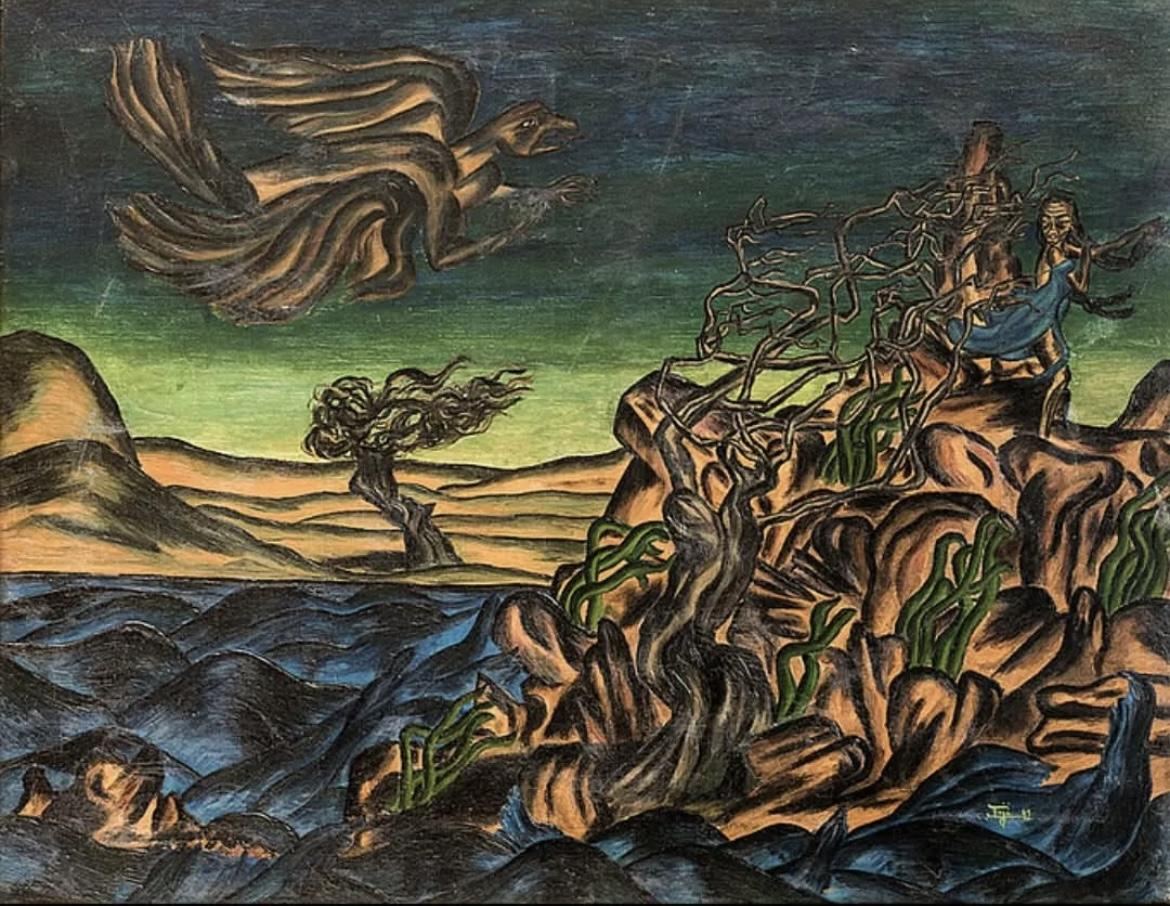
Egypt’s Art et Liberté Group or jama’at al-fann was al hurriyah is often referred to as Egyptian Surrealism. On 22 December 1938 writer and thinker Georges Henein (1914-1973) published his manifesto Vive L'Art Dégéneré! (Long Live Degenerative Art! in French and Arabic, carrying 36 signatures. The group was then founded on 19 January 1939, comprising a number of artists including Kamel el-Telmissany (1915-1972) and Ramses Younan (1913-1966). The word “degenerate” had initially been used as a pejorative term by the German Nazi party to ridicule modern art, but the Art et Liberté Group wore it as a badge of honour. During this period, Egypt had become a haven for the artistic set, with many of the group’s members not being Egyptian. Henein was actually spurred to found the movement after attending a lecture on futurism by Italian artist Filippo Marinetti (1876-1944) which Henein was opposed to. What distinguished Art et Liberté from previous Egyptian art movements was their embrace of cosmopolitanism and universalist ideas. While many movements in the region were being formed in opposition to nationalist sentiment, Art et Liberté were against this and preferred to embrace cosmopolitan and universal ideas. In fact, they were in dialogue with the European Surrealists, with Andre Breton (1896-1966) and Henein having a close relationship. For a time, European artists like Lee Miller (1907-1977) even joined the Egyptian group. The Art et Liberté Group has recently been part of an exhibition that has travelled around Europe including the Museo Nacional Centro de Arte Reina Sofia in Madrid, the Centre Pompidou in Paris, the K20 Kunstsammlung Nordrhein-Westfalen in Dusseldorf and the Tate Liverpool in the UK.
Baghdad Group for Modern Art (1951-1964)
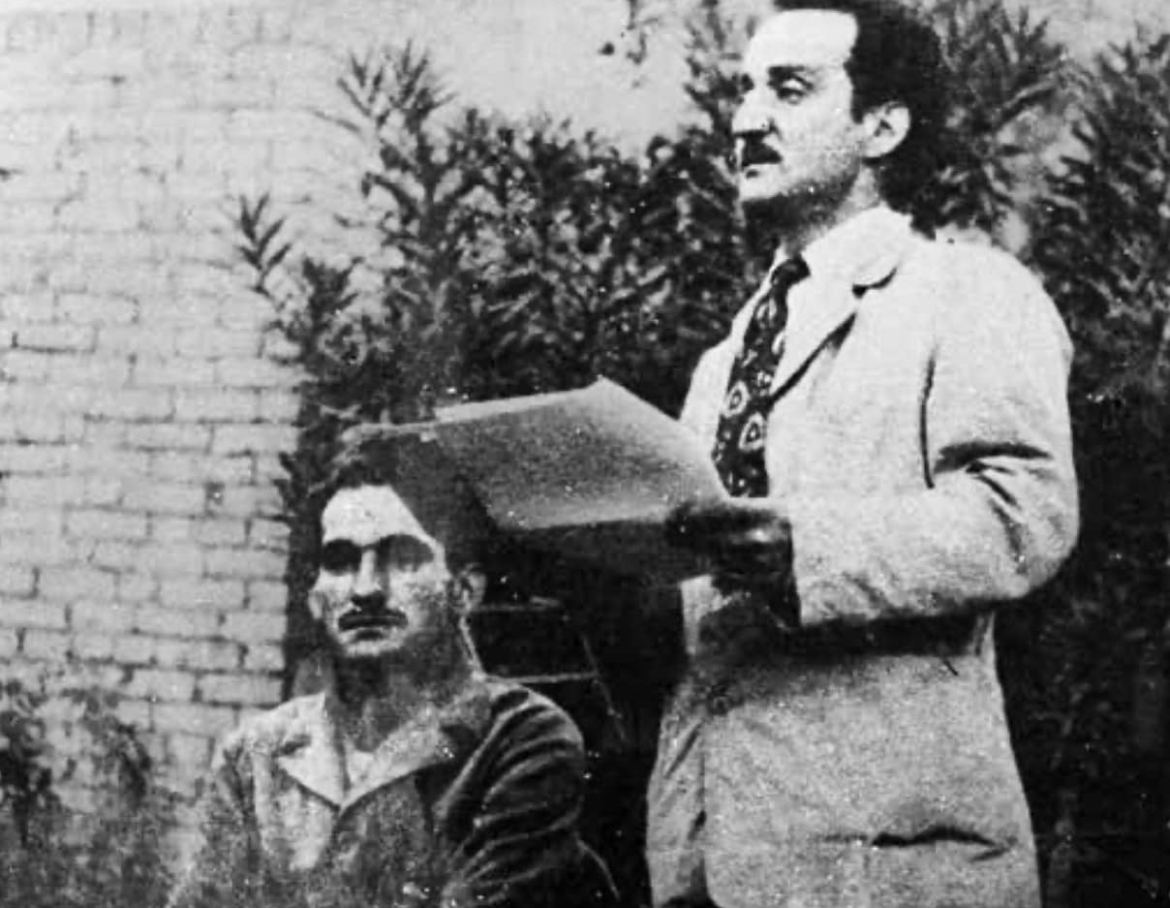
There were a number of modern art groups coming out of Iraq. The first 20th century Iraqi movement was called “The Pioneers” (Al Ruwad) (1930s-1960s), this was followed by “The Primitive Group” (Jum'at al Ruwwad) (1950s), before Jawad Saleem (1919-1961) and Shakir Hassan Al Said (1925-2004) founded the Baghdad Group for Modern Art in 1951. They promoted stilham al-turath or “seeking inspiration from tradition”, with the aim of reinterpreting Western Modern Art to incorporate Iraqi heritage, culture, and tradition. In its 1951 manifesto, the group wrote: “If we fail to fulfill ourselves through art, as through all other realms of thought, we won’t be able to make the feverish leap into the fierceness of life.” Iraq gained independence in 1932 so it follows that Iraqi artists were searching for a distinct visual identity. They created this by merging modernist techniques with local traditions and Mesopotamian heritage. Having studied in Europe, Saleem and Al Said adapted modernist ideas and adapted them to Iraq’s heritage, responding to colonial legacies to foster an Iraqi artistic identity. This involved mixing abstract forms with calligraphy, geometry and folk elements. The first comprehensive survey of the Baghdad Group for Modern will open at Bard College's Hessel Museum of Art in the US in June 2025.
The Khartoum School (1960-1975)
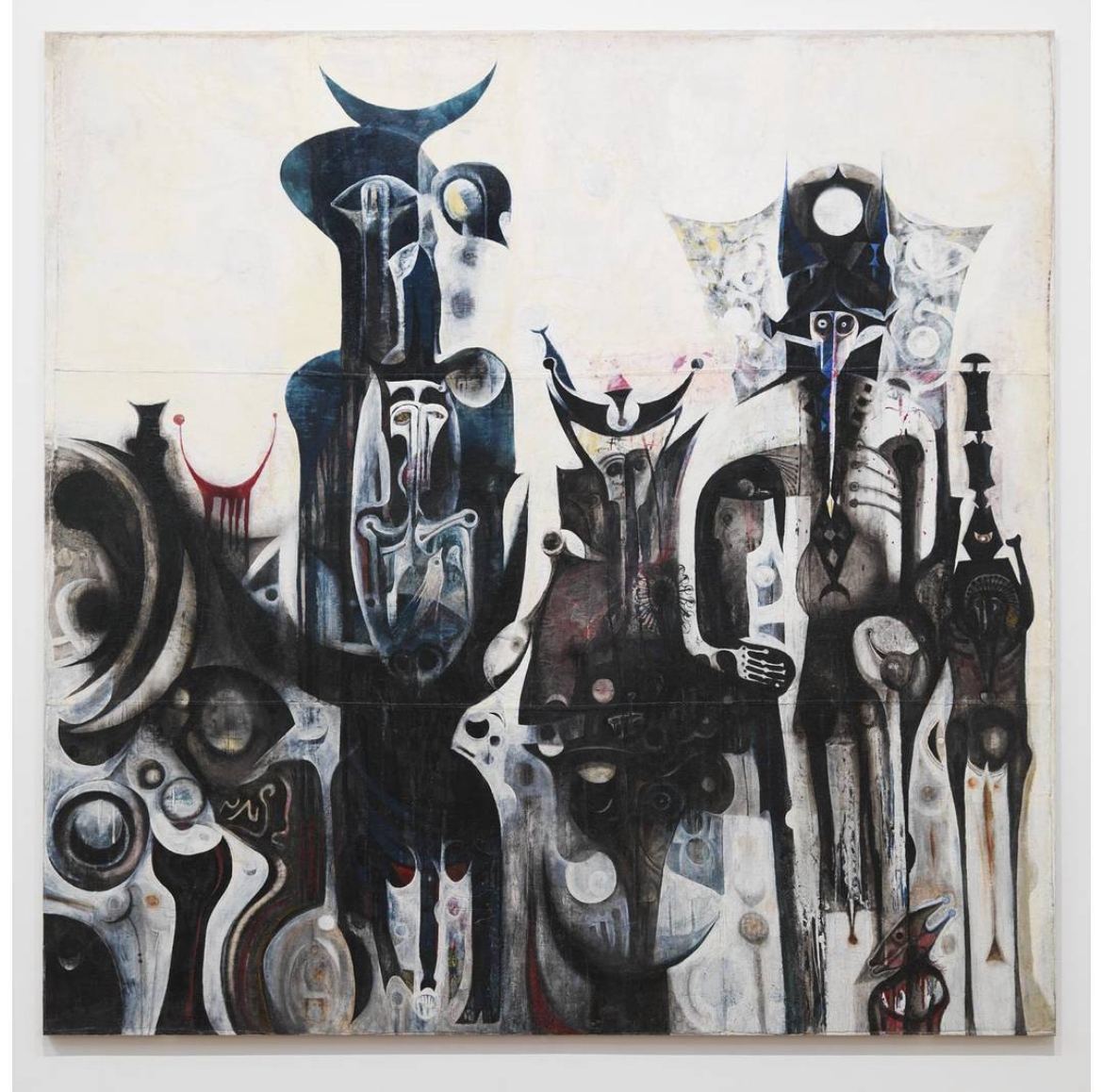
Sudan’s Khartoum School was formed by Ibrahim El-Salahi, Majzub Rabbah (1930-1999), Ahmad Mohammed Shibrain (1931-2017) and Osman Waqialla (1925-2007) in 1960. The modernist movement worked to reflect the distinctive identity of the newly independent country through a new artistic vocabulary. They defined art as a search for, a reflection of and the characteristics of Sudanese culture. The artists were interested in both Arabic culture and calligraphy, and African decorations, masks and culture, creating works that were distinct from other artists in Africa. This resulted in mixing African and Islamic imagery, with one distinctive characteristic being a simplification of the Arabic script into abstract shapes. Waqialla had opened “Osman Studio” the first art studio in Khartoum in 1954, while Rabbah opened Khartoum’s first studio for textile design in 1962. The group parted ways in 1975 when El-Salahi was imprisoned following being accused of anti-governmental activities, going into self-imposed exile in the UK. The group’s work has been exhibited in prominent exhibitions including London’s Saatchi Gallery and the UAE’s Sharjah Art Foundation.
Saqqakhana Movement (1950s-1960s)
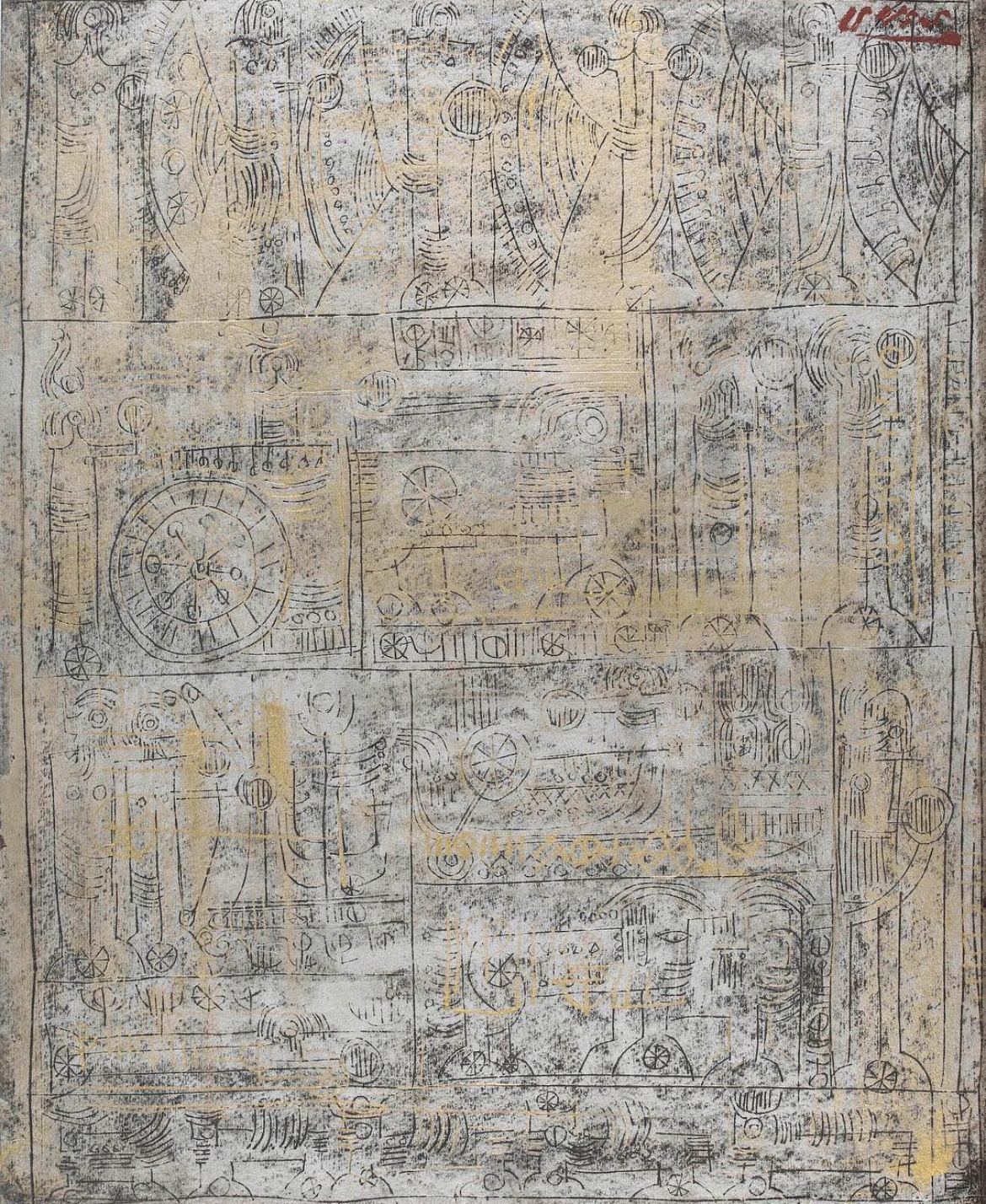
An exhibition by a group of Iranian artists at the Third Tehran Biennial in 1962, was described by art critic Karim Emami (1930-2005) as saqqakhana in 1963, naming the influential movement. In Persian, saqqakhana is a public water fountain that commemorates the Shi‘i martyrs who had been deprived of water during the battle of Karbala in 680 AD. These saqqakhana often included a grill-like exterior where votive items like locks or flags could be left. There was a fountain for drinking, and the structure was often decorated with religious objects. Emami believed that the artists’ works resembled the actual saqqakhana both visually and symbolically. He likened the experience of viewing the artworks to the private devotion offered by saqqakhana monuments. The artists associated with the movement include Massoud Arabshahi (1935-2019), Parviz Tanavoli, and Charles Hossein Zenderoudi. Their works were visually diverse, but they each drew inspiration from Islamic motifs and indigenous symbolism, blending modern art with traditional Iranian elements. They took inspiration from religious objects, votive Shi’i artefacts, and even common household objects like talismanic seals, locks, beads and bowls. The artists were also inspired by texts, both about religion and Iran’s ancient past. It is said that their approach was a reaction against centuries of elite patronage of the arts, and also a celebration of the material culture and lives of the underprivileged of Iranian society. Their work was part of an exhibition at Meem Gallery in Dubai in 2018.
The Casablanca School (1964-1972)
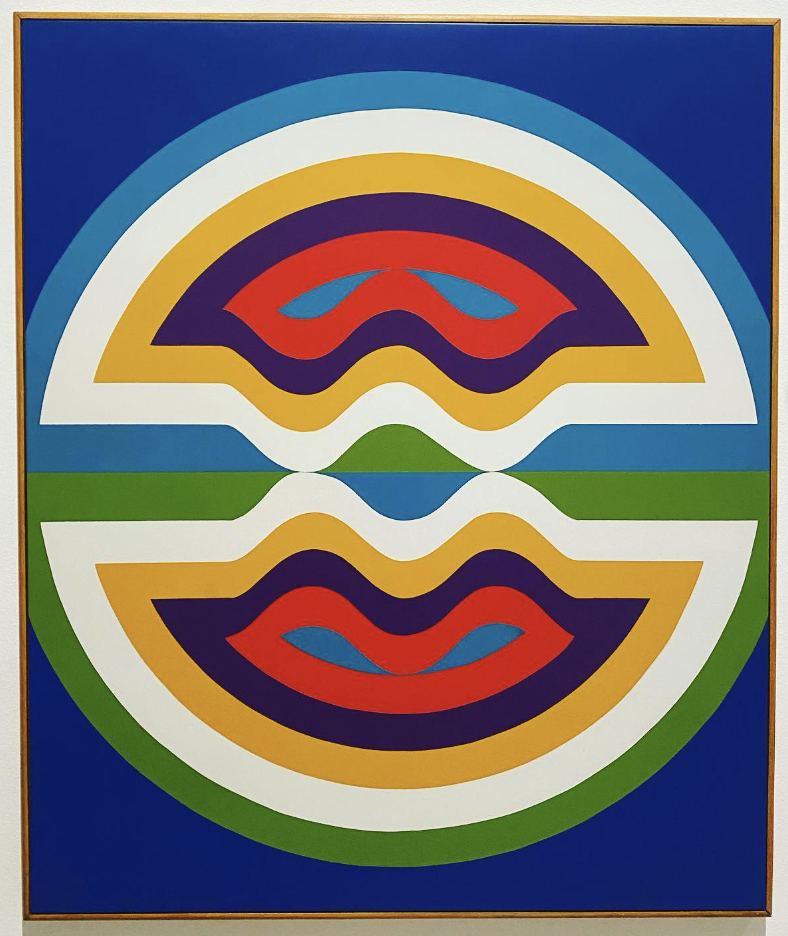
This was both a school and an art movement, the school was established in Casablanca, Morocco in 1919, whereas the movement was led by its faculty members Farid Belkahia (1934-2014), Mohamed Chabaa (1935-2013) and Mohamed Melehi (1936-2020) in the 1960s. Morocco had gained independence in 1956 and there was a feeling of wanting to regain their own national identity. The Casablanca School broke from tradition and looked at various aspects of modernism as well as artistic practices from their own region. They were also interested in connecting with the public environment, often presenting their work in public squares, rather than in museums. In fact, Chabaa had even said that a poster was a painting that was accessible to all. The group often worked with natural pigments and used local traditional crafts, working to the democratisation of the art curriculum and critiquing the dependency on foreign influences which had been prominent patrons of Moroccan art. Major exhibitions dedicated to the School have taken place at the UK’s Tate St Ives, the UAE’s Sharjah Art Foundation and Germany’s Schirn Kunsthalle.
The House of Saudi Arts (1979-1995)
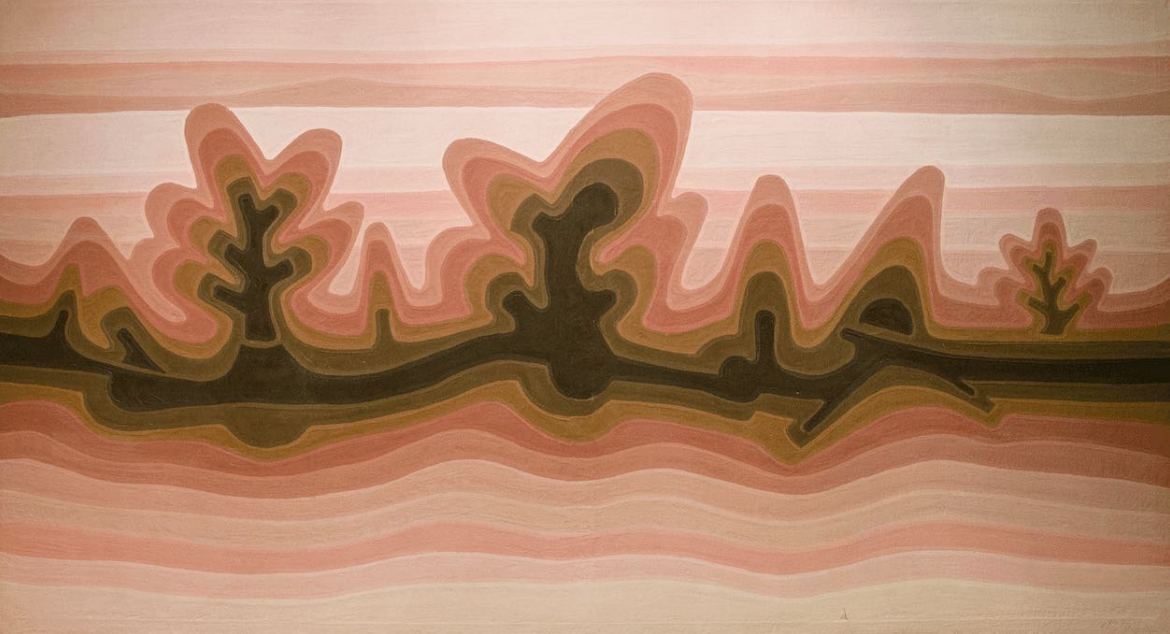
dār al-funūn al-sa’udiah (The House of Saudi Arts) was founded in Riyadh in 1979, a year before Saudi Arabia moved away from westernisation and towards conservatism with cinemas closed and music banned. The House of Saudi Arts was founded by Mohammed Al-Saleem (1939-1997), who had been awarded a scholarship by the Saudi government to study in Florence. On his return to Riyadh, he opened The House of Saudi Arts, which was inaugurated by HRH Prince Faisal bin Fahad Al-Saud. “I pay for the almighty seeking more guidance, seeking the content of the Saudi sun towards the approach of an authentic Saudi art”, Al-Saleem is quoted as saying in 1995, suggesting that he was promoting a distinctly Saudi artistic identity. The House of Saudi Arts was both a meeting place for creative exchange, and a gallery for exhibition, at a time when getting art supplies in Saudi Arabia was scarce. It also became a place for international artists to participate and exhibit alongside Saudi artists. Unfortunately, the House of Saudi Arts closed in 1995 because it was not profitable. However, his daughter Najla Al-Saleem, also an artist, is working on restoring and reopening the House of Saudi Arts to the public.
Flying House Collective (2007-2012)
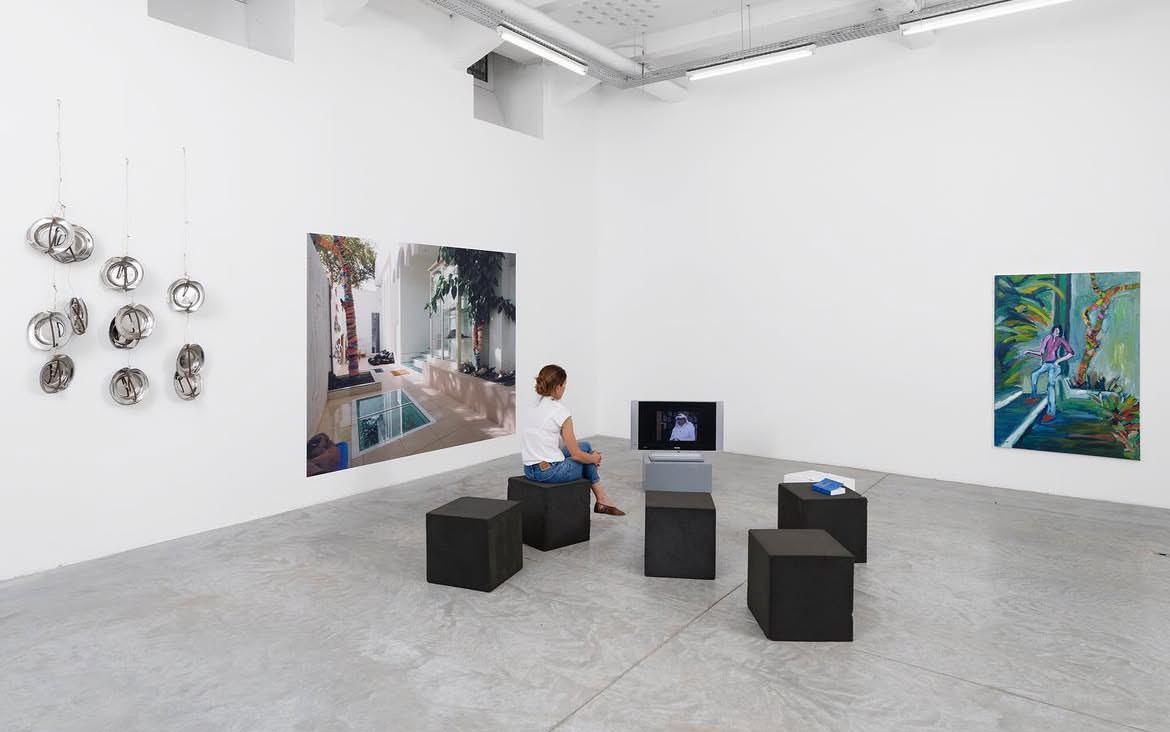
The UAE’s Flying House was a project by Hassan Sharif (1951-2016) and his brother Abdulraheem, who transformed his house into a permanent exhibition space to share the ideas of Emirati artists in 2007. The Flying House was seen as a laboratory to explore contemporary art practices and provide a space for production. It is said that in August 2007, Abdulraheem Sharif visited Documenta 12 in Kassel with Mohamed Ahmed Ibrahim and Joos Clevers, which prompted him to transform his former home to house the crates of his brother’s - Hassan Sharif - art that he had collected over the years. The space was officially opened as the Flying House in 2008, the name being inspired by a painting by Clevers, the only non-Emirati in the group. The space was not a museum or gallery, but nevertheless was visited by people from across the globe. Eventually the space was closed in 2012, though works from this time have been exhibited at Art Dubai as well as at GB Agency in Paris in 2021. Of the project, Abdulraheem Sharif is quoted in The National as saying: "Everybody was saying there was no contemporary art available in the UAE and that there are no contemporary artists. I was getting quite nervous because I had something like 10 containers of the work and people were telling me it didn't exist. I realised that somebody had to look after this work and that person just happened to be me."
More from News
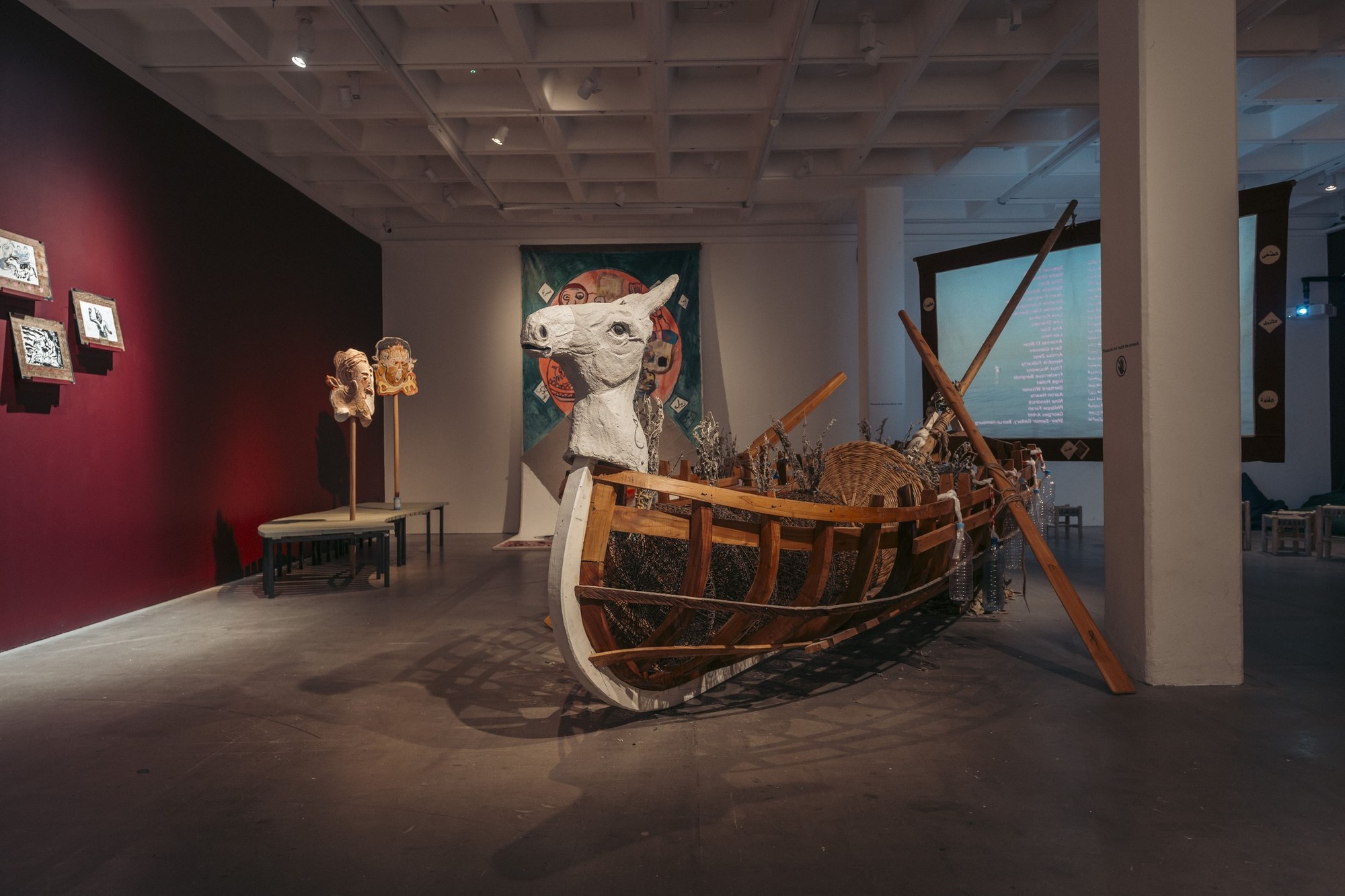
Mounira Al Solh Stitches Myth, Migration and the Feminine into New Work
Lebanese artist Mounira Al Solh turns ancient Phoenician myth into some of the most quietly radical work coming out of the MENA region, from her Venice Pavilion to her collaboratively embroidered tents.
Yemeni Artists You Should Know
From its striking architecture, to its poetry and music traditions, Yemen has a rich artistic history. Yemen also has a contemporary art scene too. A new generation of Yemeni artists is redefining cultural narratives,…
10 Contemporary Turkish Artists You Should Know
The Turkish art scene is booming. Beyond institutions like Istanbul Modern, the Istanbul Biennial and Contemporary Istanbul, a flourishing contemporary art scene is making a lot of noise within the wider MENA art scen…