Artists
Mounira Al Solh Stitches Myth, Migration and the Feminine into New Work
Artists
Mounira Al Solh Stitches Myth, Migration and the Feminine into New Work
Lebanese artist Mounira Al Solh (born Beirut, 1978) has spent the past two years turning ancient Phoenician myth into some of the most quietly radical work coming out of our region, and her recent run of exhibitions has brought it to new audiences. Working between Beirut and the Netherlands, Al Solh weaves painting, drawing, sculpture, video, embroidery and performance into a practice defined by irony, tenderness and a stubborn insistence, as she puts it, on our right to be frivolous even in the darkest moments.
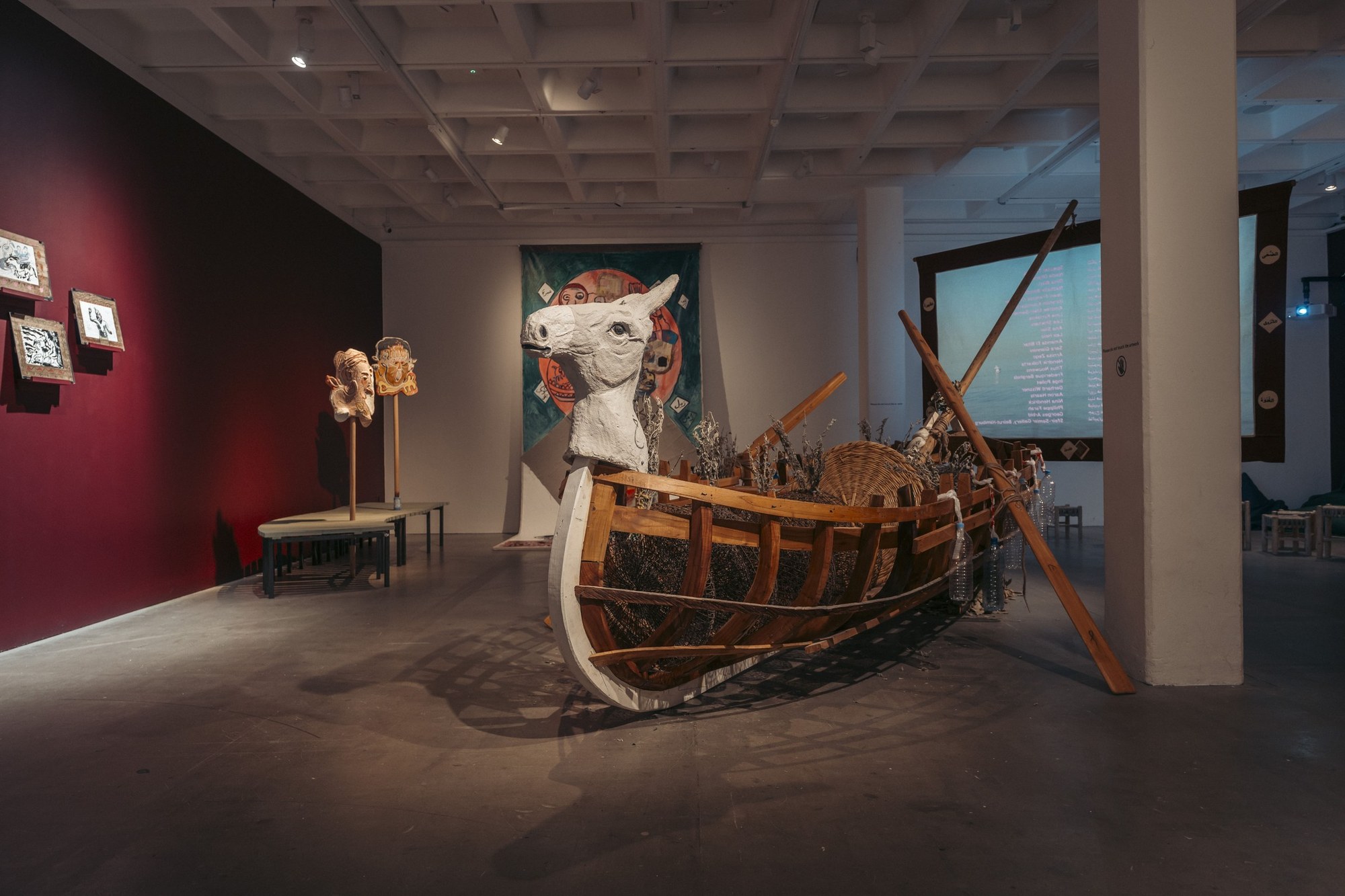
At the centre of this chapter is "A Dance with her Myth" (2024), the multimedia installation created for the Pavilion of Lebanon at the 60th Venice Biennale, curated by Nada Ghandour. Composed of 41 pieces across 180 square metres in the Arsenale, the work reimagines the abduction of the Phoenician Princess Europa by Zeus, who took the form of a white bull and carried her off from a beach at Tyre. At its heart sits a life-size boat, built with a family in south Lebanon following Phoenician methods. Notably, Al Solh refused to use cedar, in order to protect the country's few remaining trees, and filled the vessel instead with fishing cages, sage, bay leaves and the empty plastic bottles of her childhood memory. It is myth and ecological grief in the same hull.
The Venice installation went on to anchor her major touring solo exhibition, "A land as big as her skin," which travelled from the Bonnefanten in Maastricht (7 June 2025 to 11 January 2026) to Arnolfini in Bristol (28 February to 24 May 2026), among her first shows in the UK. There, "A Dance with her Myth" was shown alongside new works "Elissa's Room" and "Europa's Bedroom," which extend her mythic cast to Elissa, the Phoenician princess remembered as the founder of Carthage and known to Greek and Roman readers as Dido.
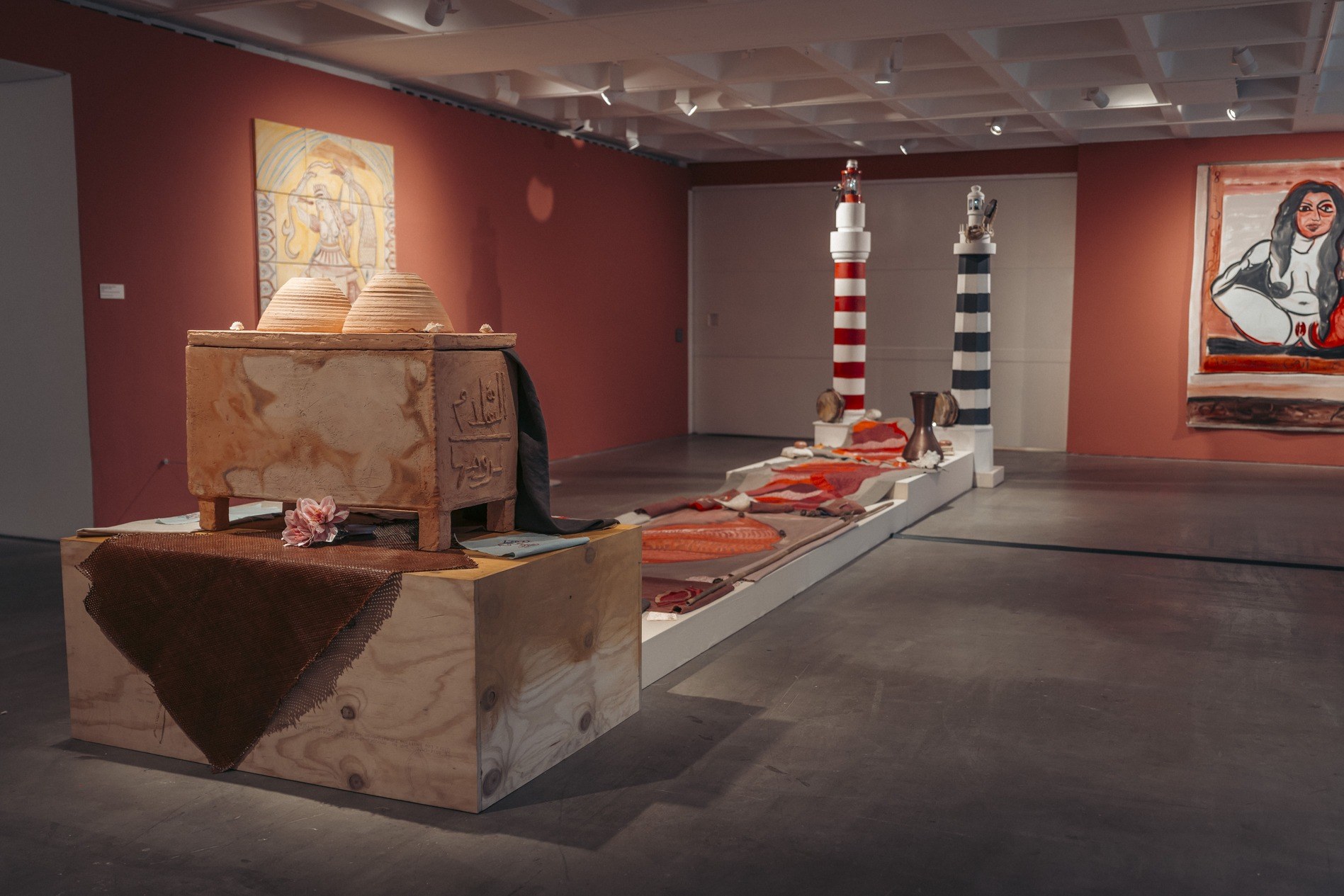
Al Solh's retelling is pointed. Where Virgil's "Aeneid" frames Dido's death as tragic weakness, Al Solh hands her back her agency. "Elissa was a witty woman, beautiful. Carthage became very successful thanks to her, according to the myths," she told The New Arab. Her wider ambition, she has explained, is to reclaim "the position of women and our attitude towards myths written by Europeans about us," often through humour, "which allows people to embrace our current condition."
The embroidered tent is the other signature to know here.
Across several works, Al Solh has built large embroidered tents that function, in her words, like libraries or reading rooms, holding the otherwise overlooked stories of women. For "A day is as long as a year" (BALTIC Centre for Contemporary Art, Gateshead, 2022), she copied a Qajar-era ceremonial tent made for Muhammad Shah, held in the Cleveland Museum of Art, and stitched it with more than thirty women from Afghanistan, Iran, Lebanon, Turkey, South Africa and the Netherlands, many of them asylum seekers, refugees and migrants. These tents, historically symbols of male sovereign power, become in her hands monuments to women's stories and sorrow. Earlier tents, such as "Mina El Shourouk ila Al Fahmah" (2019), took their titles from Mahmoud Darwish and carried testimonies of oppression alongside instances of female empowerment in Islamic history.
Her mythic thread continues right now. For Sonsbeek 2026 in Arnhem, Al Solh has unveiled "And Europa fled" (2026), a monumental sculpture of a woman rising from a Murex shell, the creature whose purple dye once enriched the Phoenicians before being harvested nearly to extinction. Larger than life, the figure carries a suitcase, a mobile phone and an oar, a Phoenician boat balanced on her head and her body pierced by bullets: antiquity and the present collapsed into a single migrating body.
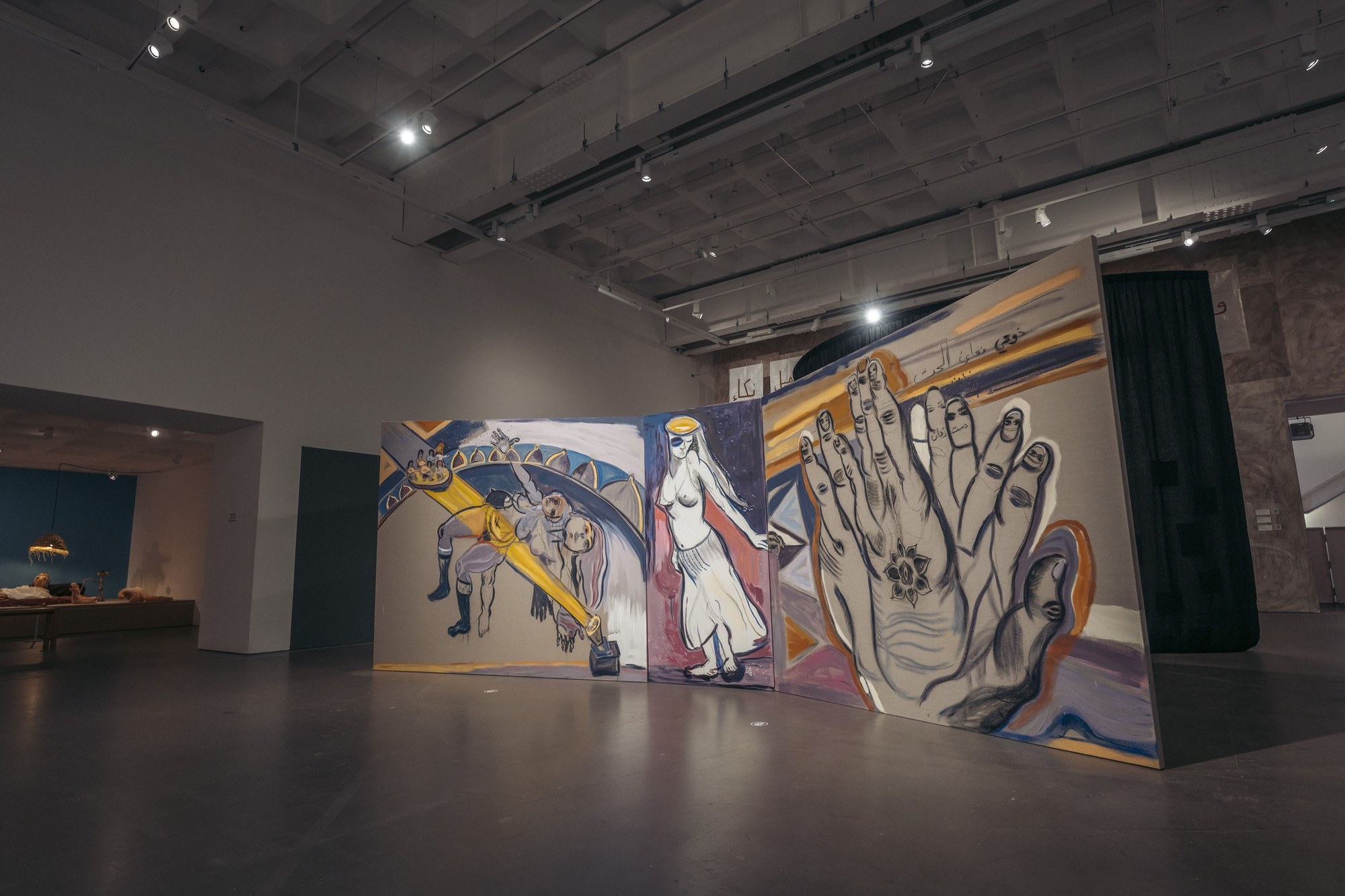
It has been a notable few years for Al Solh, who won the ABN AMRO Art Award in 2023, was shortlisted for the Artes Mundi 10 prize, and represented Lebanon at Venice in 2024. Her work is held by Tate, among others. What we love about her practice is how it refuses the binary the West so often imposes on artists from our region: she is political and playful, grieving and joyful, ancient and utterly contemporary, all at once.
As Lebanon continues to navigate crisis after crisis, Al Solh's insistence on stitching, storytelling and dancing with our myths feels like its own form of resistance. We can't wait to see where her Phoenician voyage sails next.
More from News
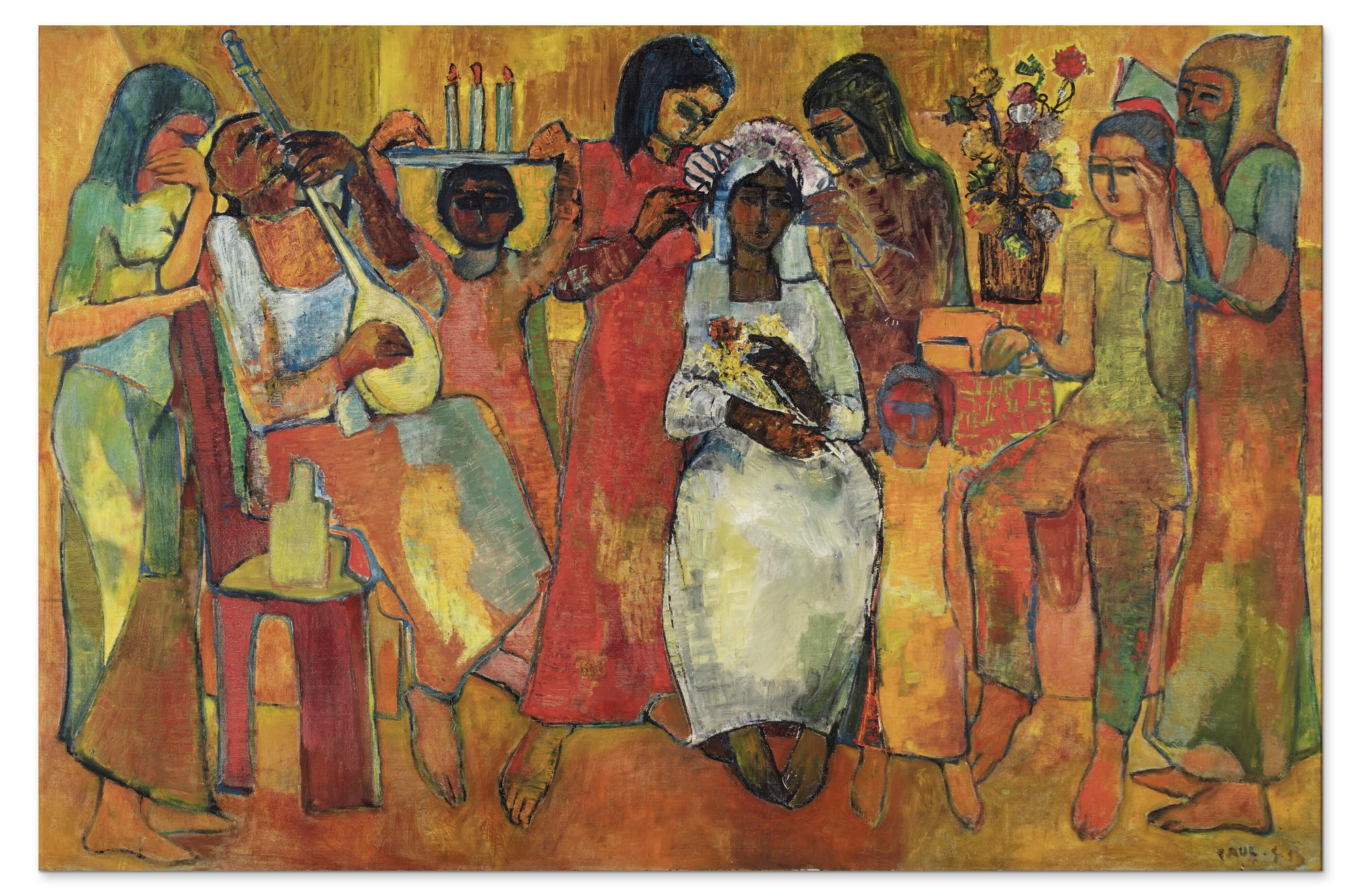
Case Study: Why Christie's Is Taking Its Middle Eastern Sale to Abu Dhabi
Christie's will hold its first fine-art auction in Abu Dhabi on 1 November 2026. We look at the numbers behind Mawasim, what the move tells us, and what to watch as the capital's biggest art season begins.
Islamic Arts Biennale Names Four Lead Curators for 2027
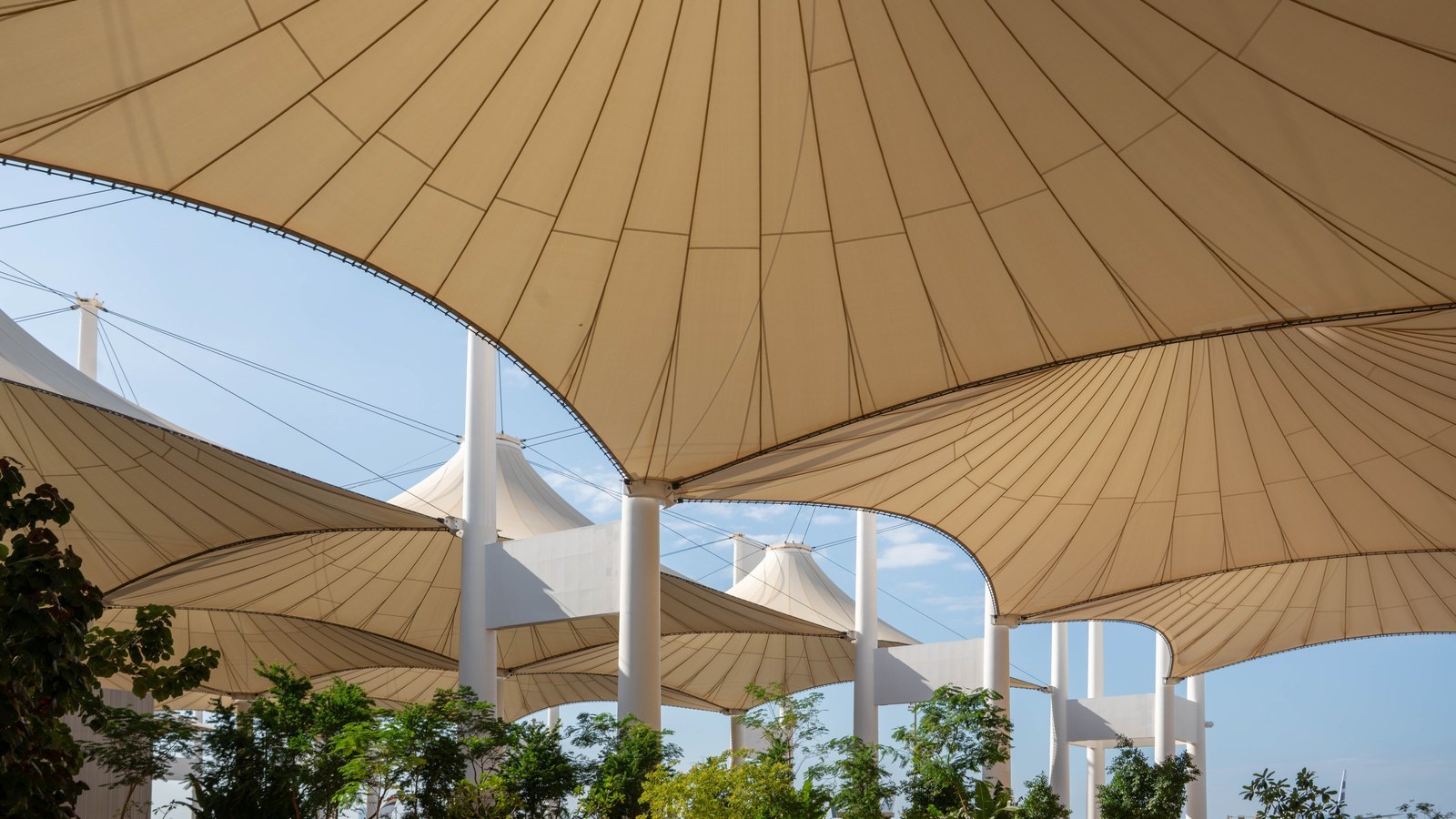
The Diriyah Biennale Foundation has just named Nada Raza, William Robinson, Alain Fouad George and Idries Trevathan as lead curators of the third Islamic Arts Biennale, opening in Jeddah on 1 November 2027.
CONTINUUM '26 Puts a New Generation of Media Artists in the Spotlight in Diriyah
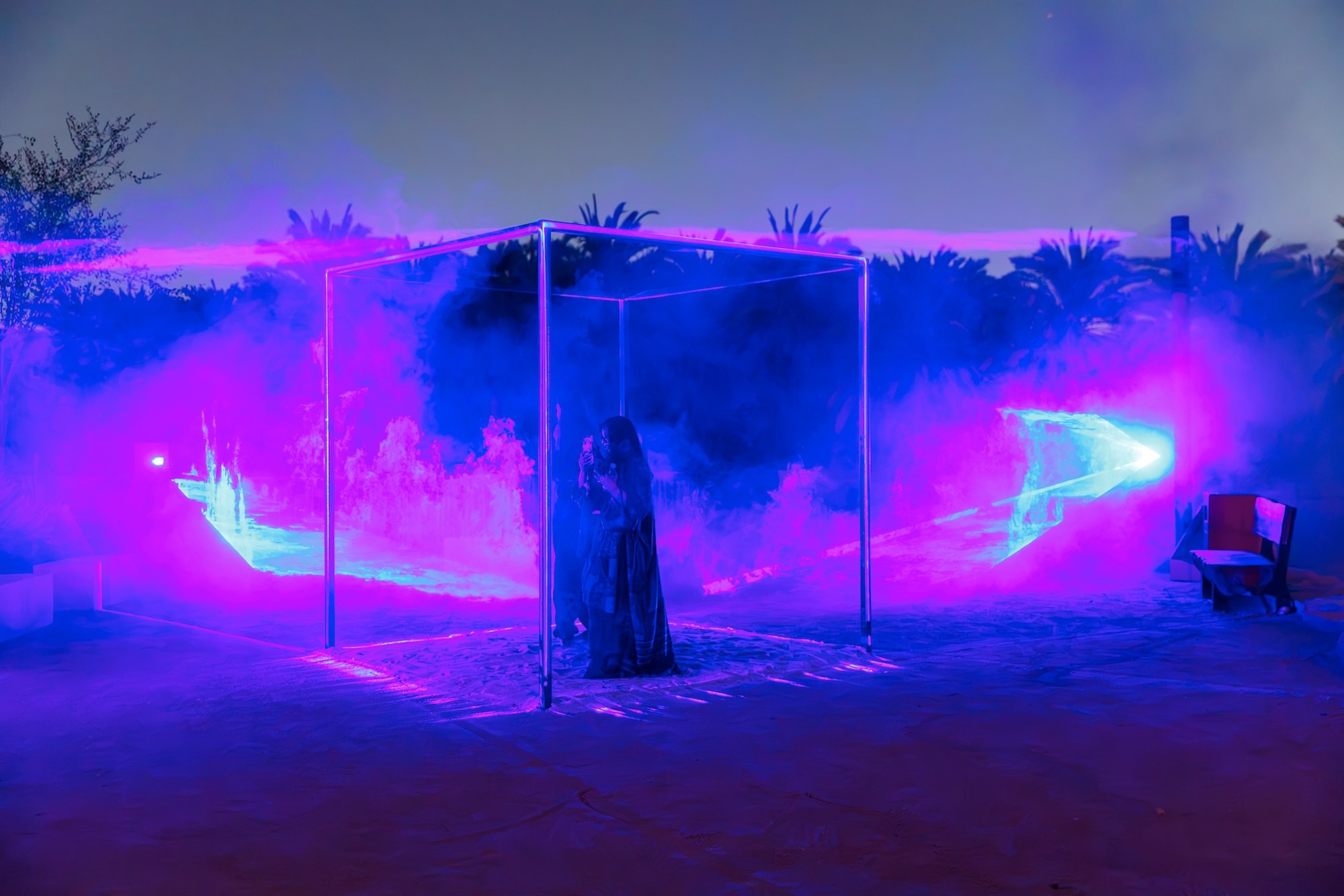
The second edition of CONTINUUM at Diriyah Art Futures showcases 16 emerging new media artists, with a strong showing from Saudi Arabia, Egypt, Kuwait and Yemen, until 7 November 2026.