A Look Inside the Levantine Art Scene
A taste of art from Lebanon, Syria, Jordan and Palestine
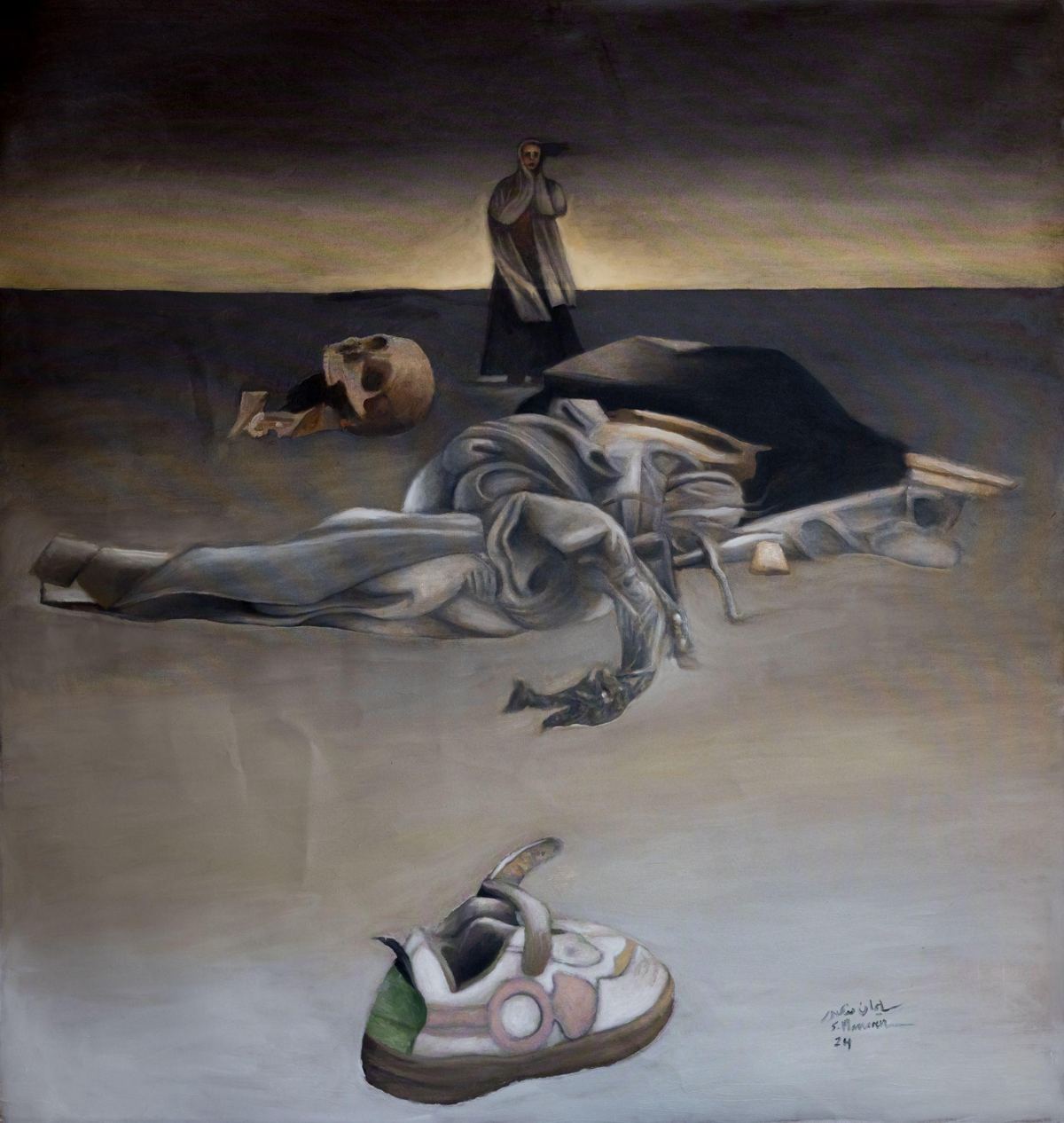
A taste of art from Lebanon, Syria, Jordan and Palestine
When we think about the art scene in the MENA region, most people automatically go to the Gulf, but did you know that there is a long history of artists, exhibitions and art history in the Levant? Lebanon, Syria, Jordan and Palestine arguably have an older art scene than much of the rest of the region and their artists and galleries are thriving right now! So, let’s get some insights about the Levantine art scene from the artists and curators living and working there now.
Of all the Levantine countries, Jordan is seen to be the most politically stable in the region right now. Rana Beiruti works as an independent and creative consultant in Amman. She was the co-founder of Amman Design Week and is on the advisory board of Darat Al Funun. “After a bit of a slowdown with COVID, the arts in Jordan are picking up again and growing rapidly, with lots of exciting events on the horizon”, she says, “There’s a lot happening in the music industry with some great young artists and festivals. Amman Design Week is returning in 2026 which gives us a lot to look forward to. There are many new artists and designers on the scene.”
Jordan has a number of galleries, with Darat Al Funun, MMAG and Wadi Finan in Amman being amongst the most popular in the country. “Darat Al Funun is still the core of the Amman art scene for me”, she explains, “Since 1988 it has been hosting exhibitions, residencies, and programs that are impactful and important. The current exhibition titled Dear Viewers by artist Raeda Saadeh is one of the more thought provoking exhibitions I’ve seen, and the current exhibition on artists from Gaza is very emotionally resonant. There is also MMAG which plays an important role by offering artists in residence studios and mentorship, and builds a nice community year after year. In terms of commercial galleries, Wadi Finan Gallery has been a great representative of Jordan and Jordanian artists over the years.” In fact, Beiruti is currently working on a book for Darat Al Funun covering the history of the institute and the history of art in Jordan since its founding. “I’m also consulting on several other institution building projects, including an upcoming art space in Aqaba on the Red Sea”, explains Beiruti, “I also have several upcoming exhibitions but it’s too early to talk about those.” And, in terms of Jordanian artists we should have on our radar, Rana cites Dina Haddadin, Hammzat Tahabsim, Taghlib Oweis, and Malik Thomas Jalil. In terms of design she also mentioned talented graphic artists like Hussein Alazaat, Aya Mobaideen, and Abeer Anabtawi.
Nearby in Palestine, creating art is a lot more difficult. Sliman Mansour, a leading figure of Palestinian contemporary art gave us his view on the art sphere in the midst of personal and political devastation. “The art scene in Palestine is an active one with a trend towards experimentation”, says Mansour, “There are several art schools that help in creating such a scene.” However, he explains that the problem is a lack of an art market and total lack of art critics and publications. That said there are some galleries that are very active, including three commercial galleries: Gallery One, Zawyeh Gallery, and Bad idDeir Gallery, all located in Ramallah. In addition, the non-commercial Palestinian Museum also has a very active exhibition space.
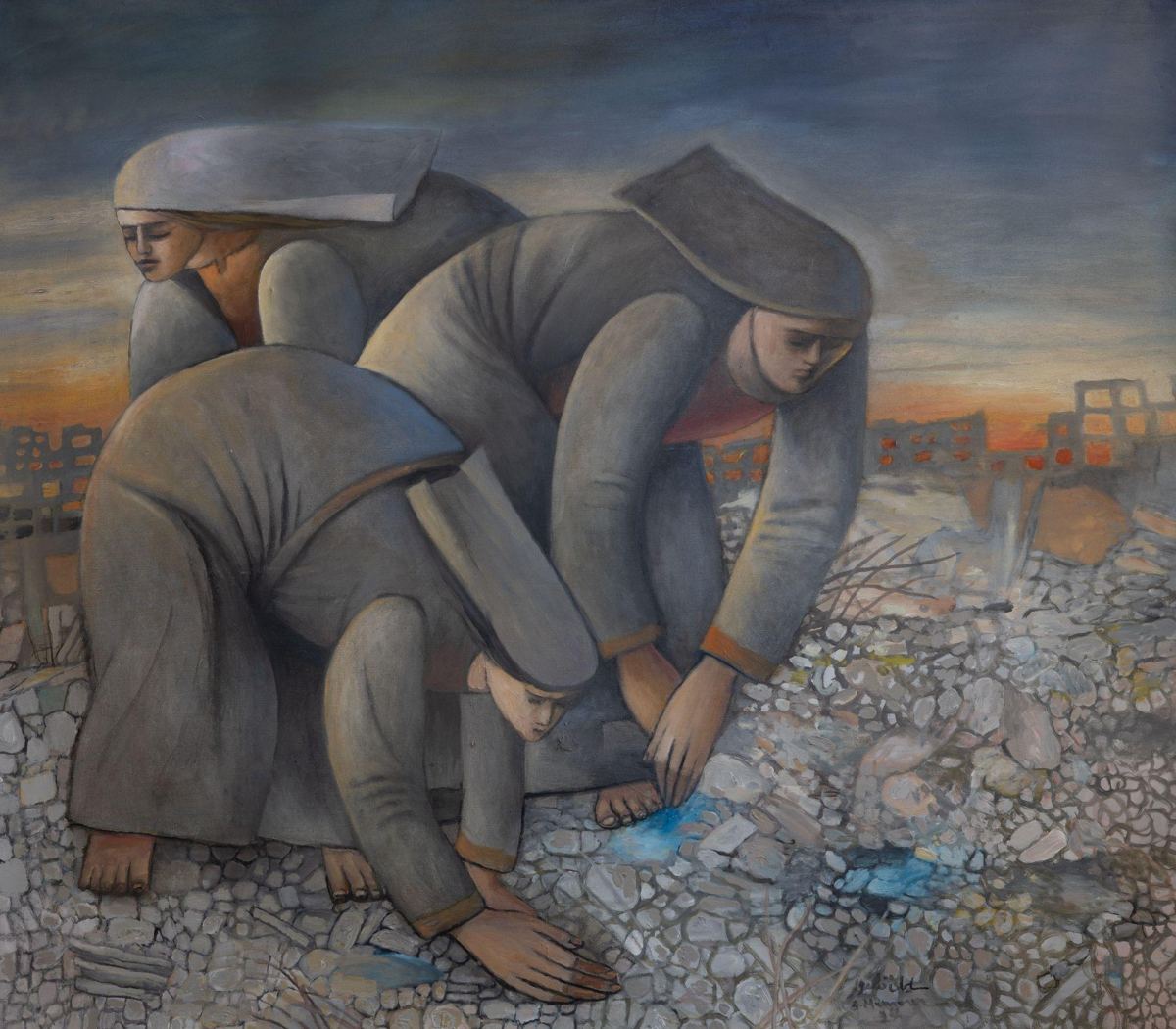
That said, the art scene in Palestine has suffered as a result of the situation in Gaza. “Artists including me are afraid to touch what's happening in Gaza because it's too big and too tragic, that makes it a big responsibility to do art about it”, says Mansour, “Maybe we need more time to absorb everything. Of course most artists are doing some work about Gaza but most of it is influenced by the images that we see from there.” With everything going on, it is hard to predict how artists from Palestine and its diaspora will respond within their work. Mansour does tell us which artists that we should know about though, from multiple generations. “I think some older artists are worth being on your attention like Vera Tamari, Tayseer Barakat and Nabil Anani”, he says, “Younger artists like Bashar Alhourub, Reem and Majd Masri, Bashar Khalaf, Wadea Khaled, Rula Halawani. And there are many young artists I cannot recall their names now.”
Nearby Syria is always experiencing upheaval right now following the fall of the Assad regime. “I'm not sure we have a culture of strategy. We don't have a culture of strategy. Culture is not, probably, does not seem to be a priority at this point in time”, says the Atassi Foundation’s Shireen Atassi, “So it is quite volatile. Understandably so, even though there are people who are lobbying, because obviously culture is always important. And mind you, it's even more important in times of war and instability than it is during stable times.” She explains that some artists who had left Syria are returning, or at least visiting the country, but many who might want to visit Syria cannot because they have had families abroad or have not received passports from their host countries. And, while there are artists who stayed in Syria, she is not sure what they have produced in an environment with few institutionalised galleries and collectors. That said, there have been some exhibitions taking place, notably the Path exhibition which took place in Damascus in collaboration with Madad Art Foundation and Ayyam Gallery, which first opened in Syria in 2006 before relocating to Dubai.
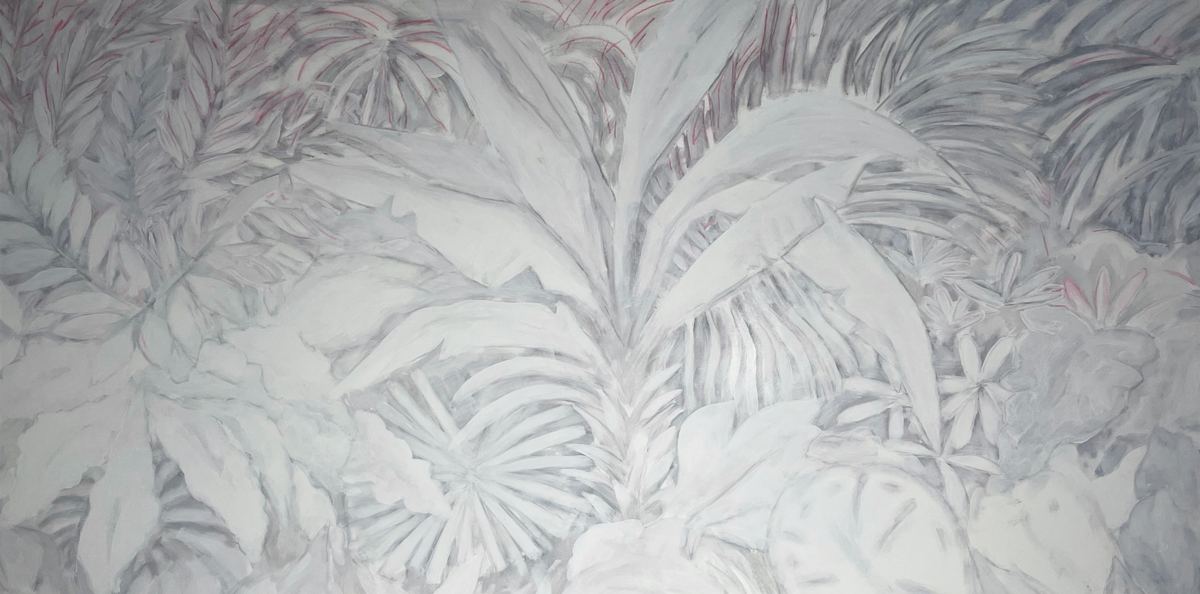
It seems like artists and the art scene in Syria are proceeding with caution right now. “It's taken so long for us to get here. I think it will take time before a new system, a new dawn, a new, I don't know, reality becomes stable and becomes, you know, long lasting”, says Atassi, whose foundation is also taking its time to ponder its next steps, “We need to find how we're going to be engaging. If we want to be engaging on the ground or are we going to continue doing what we do? Those question marks are not just specific to us. I think a lot of people, even the artists, are considering the same thing. What should I do? Do I stay in the diaspora or do I return? Can I return? There's so many things happening. It's really difficult.” She explains that for now the foundation is working out what is needed in the current period. “We have the belief that we need to be part of the coming period, part of the landscape in Syria. In what capacity, in what sense, in what shape, is something that is not finalized yet”, she says, “And I would say is very important, even in business, whatever you do, you don't want to be doing things in haste and based on emotional reactions. So we want to be reflecting the needs of the artists in Syria, the needs of the needs of the public in Syria. We need to find how we're going to be engaging. If we want to be engaging on the ground or are we going to continue doing what we do? So those are all question marks.”
Interestingly, Atassi also stresses that Syrian artists have been very active in diaspora, especially in nearby Beirut. “There's a lot of movement there”, she says, “They're mushrooming galleries and the art spaces in Beirut. There's much more where this is going.” The Beirut art scene has much to offer. From the Sursock Museum and Beirut Art Center to Ashkal Alwan, Tanit Gallery, Saleh Barakat Gallery, Marfa Projects, and Beit Beirut. Each holds a different gravity, from institutional to radical, reflective to historical. Local artist Jacques Vartabedian describes the Lebanese art scene as “fragile yet fertile”, adding, “It's a place where ideas grow in the cracks, and sometimes the cracks are the work. Without the comfort of steady structures, artists invent themselves as they go, turning urgency into language. The instability in Lebanon lends the work an edge that is rarely found elsewhere; we create art in a place that is constantly redefining its backdrop.”
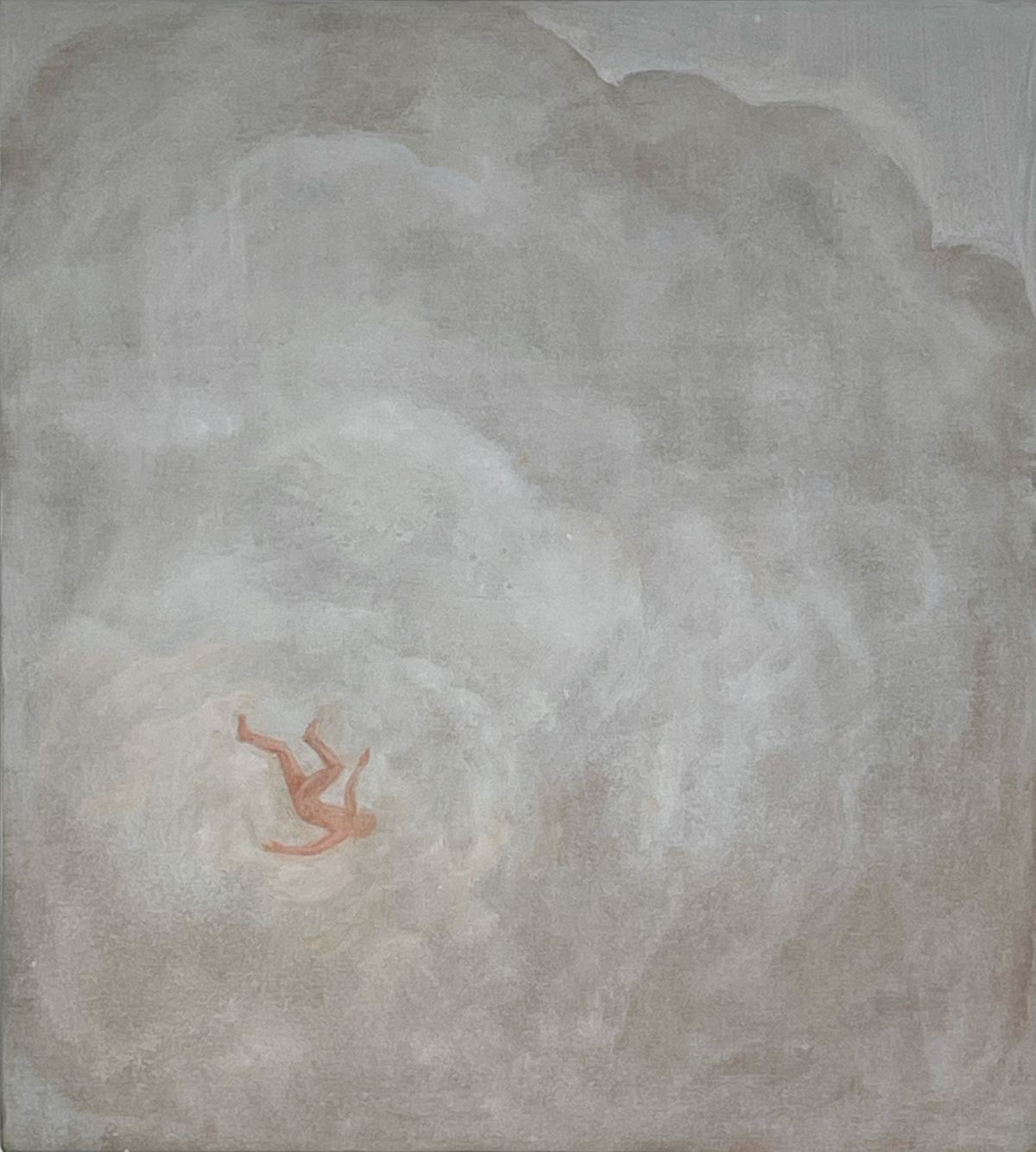
Currently, Vartabedian is showing his work in Sorry for Interrupting at Beirut’s Tanit Gallery. “It’s a series where clouds and impossible gardens trespass into each other’s territory, creating sudden ruptures in scale and space”, he says, “At the same time, I’m developing new research that extends these ideas into different ecologies, exploring how dislocation, fragmentation, and unlikely pairings can form a language of their own; one that resists coherence yet still finds a way to hold together.” Vartabedian also stresses that Beirut is a great place for artistic interaction. “Half the joy of being here is that there’s always another artist doing something unexpected”, he explains, “What excites me most are the conversations I’m having with peers, and how those shift as projects overlap and ideas cross paths.”
While the Levant has not had an easy time as of late, the art scene continues to push through and adapt to whatever situation it finds itself in. Contemporary artists from the region are determined to create no matter what, in the midst of political turmoil, art never ceases. The art community from these countries are committed to ensuring their work survives no matter what.
More from News
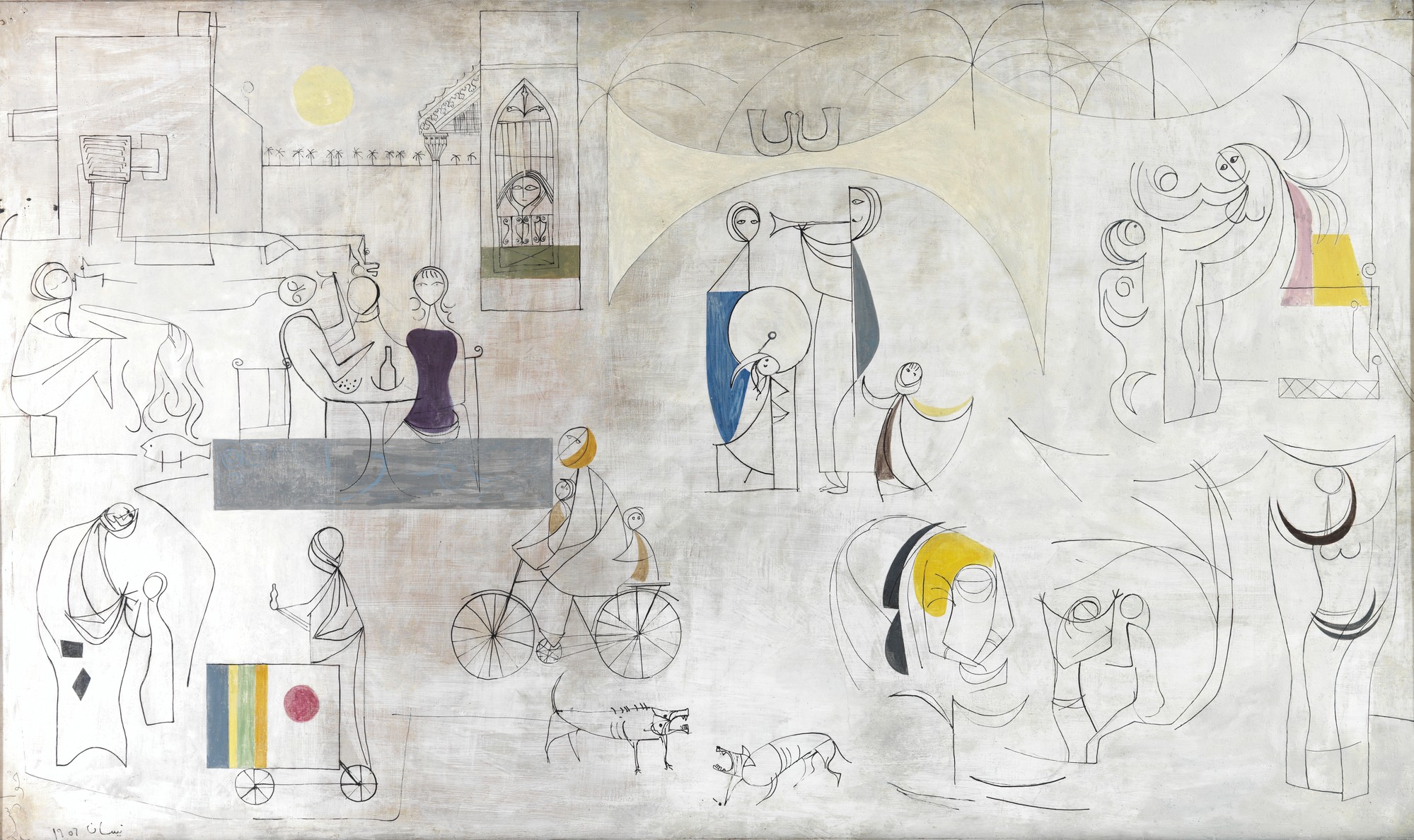
10 Institutional Exhibitions Opening in the MENA Region This October
From the Baghdad Modern Art Group at Mathaf to Salah Elmur at Jameel Arts Centre and a moving image biennale in the Medina of Tunis, here are the museum and art centre shows opening across the MENA region this October.
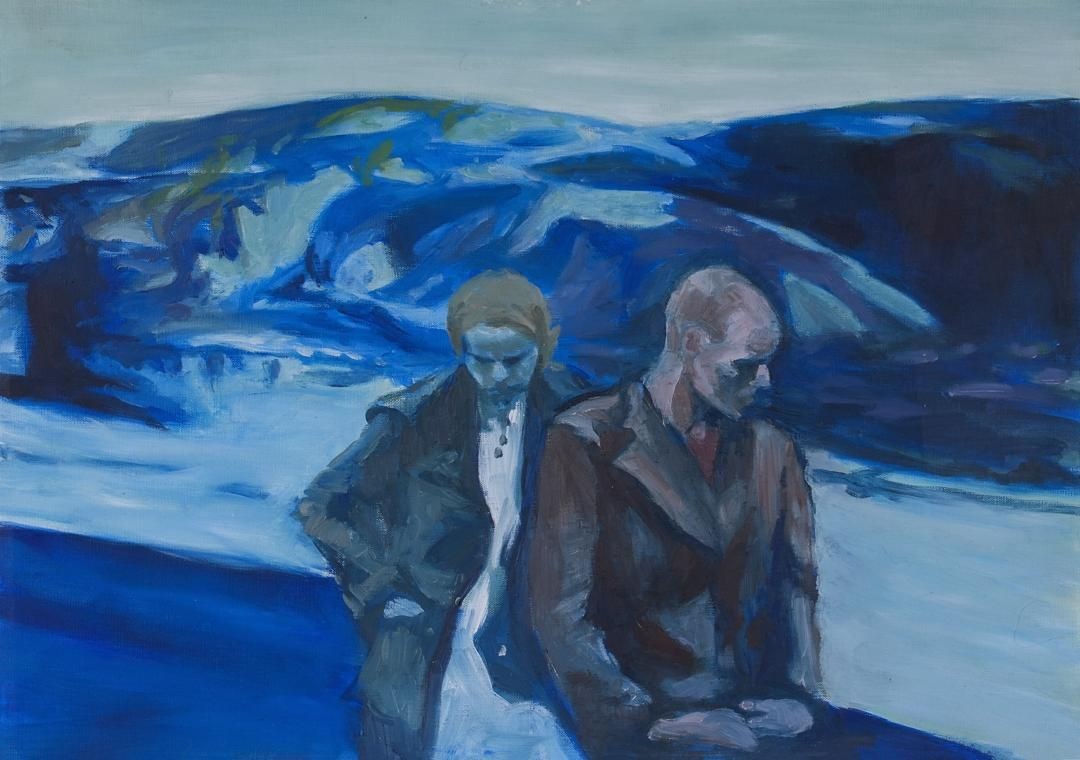
Why Did Contemporary Iranian Art Sell for £200 in London This Month?
Twenty Tehran galleries sent close to 200 works to Ab-Anbar in London, priced from £200 to £3,000. We look at what the show tells us about the market for art made in Iran today.
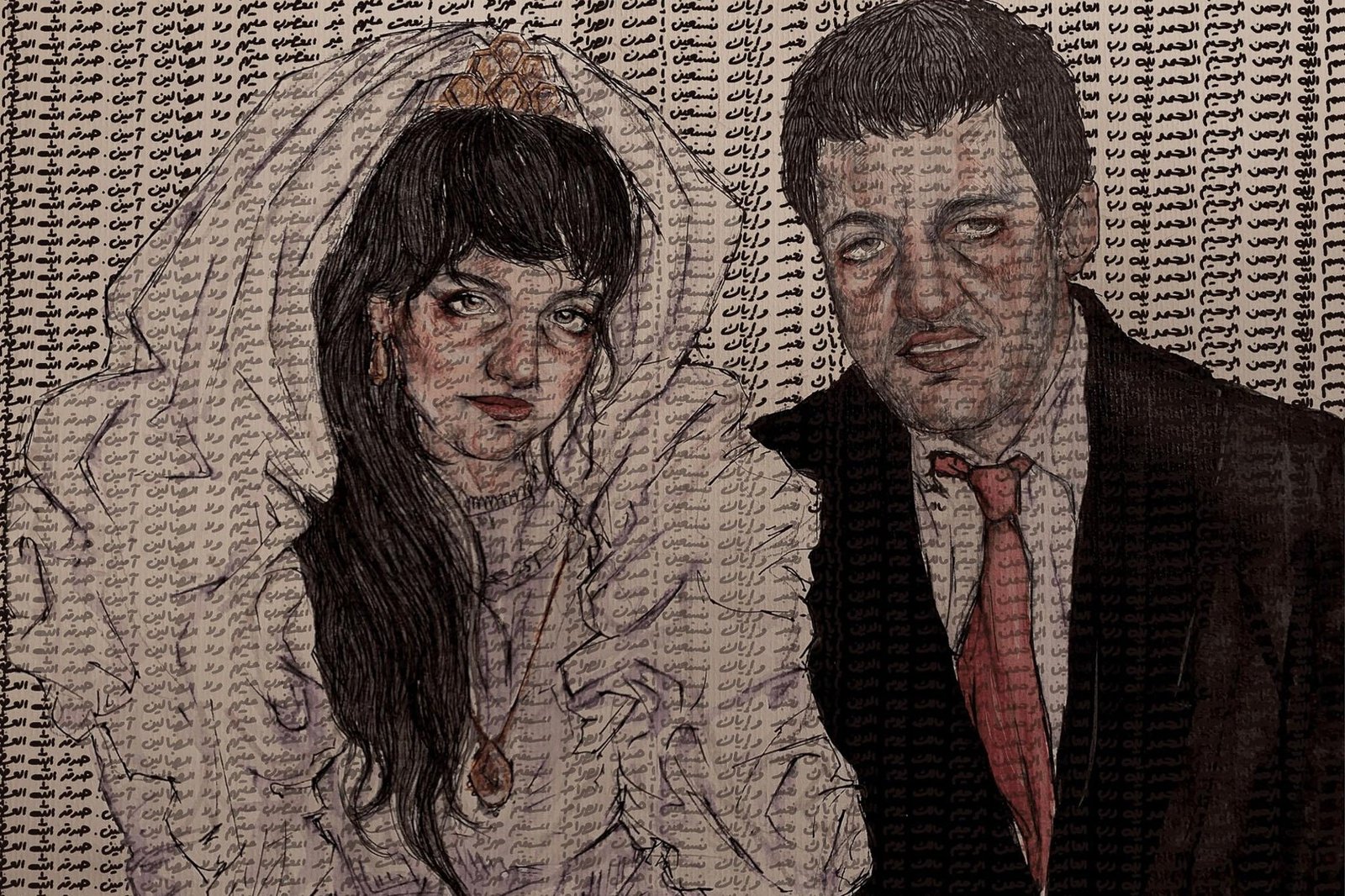
ArtZone Palestine Amplifies Palestinian Voices
Amidst the seemingly neverending destruction and devastation in Gaza, the MENA art world - and generally many artists across the world - have not been shy about amplifying Palestinian voices. A number of exhibitions a…