Opening soonTwo-person exhibition
Daniele Genadry and Fayçal Baghriche
Daniele Genadry, Fayçal Baghriche
- Place
- Taymour Grahne Projects
Warehouse 31a, Lane 4, Alserkal Avenue, Al Quoz 1, Dubai, United Arab Emirates - Dates
- 17 November to 12 December 2026
- Hours
- Monday to Saturday
11am to 7pm - Opening
- 16 November 2026, 6pm to 9pm
Press release
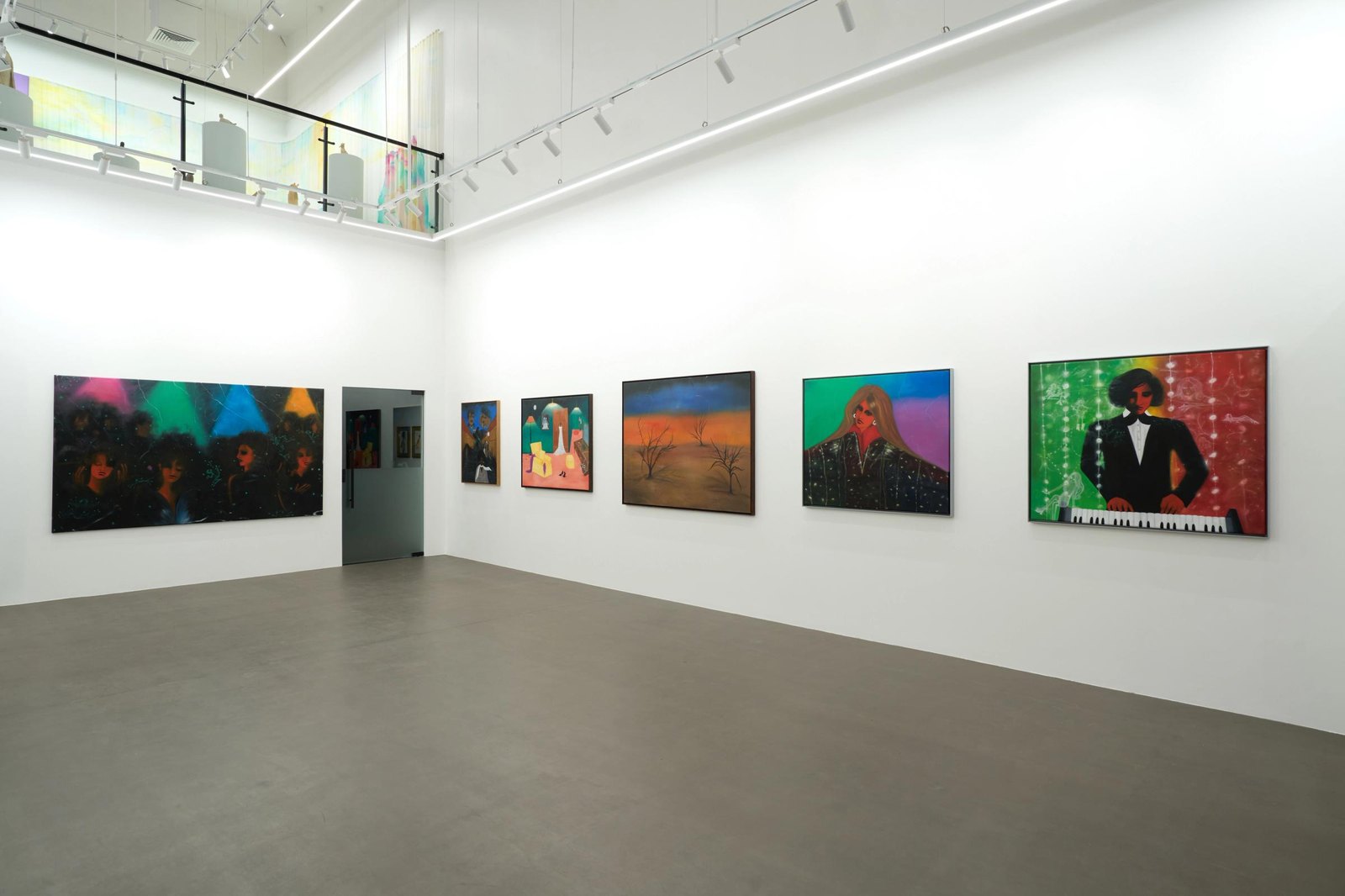
Taymour Grahne Projects on Alserkal Avenue in Dubai presents a two-person exhibition of Daniele Genadry and Fayçal Baghriche, from 17 November to 12 December 2026. It opens on 16 November, from 6pm to 9pm. Genadry, a Lebanese-American artist, shows landscapes in acrylic and oil on canvas, graphite drawings on mylar and a set of ten cyanotypes. Baghriche, a French-Algerian artist, shows a new group of porcelain and stoneware figurines. Lucas Morin, a curator at Jameel Arts Centre, wrote the exhibition text.
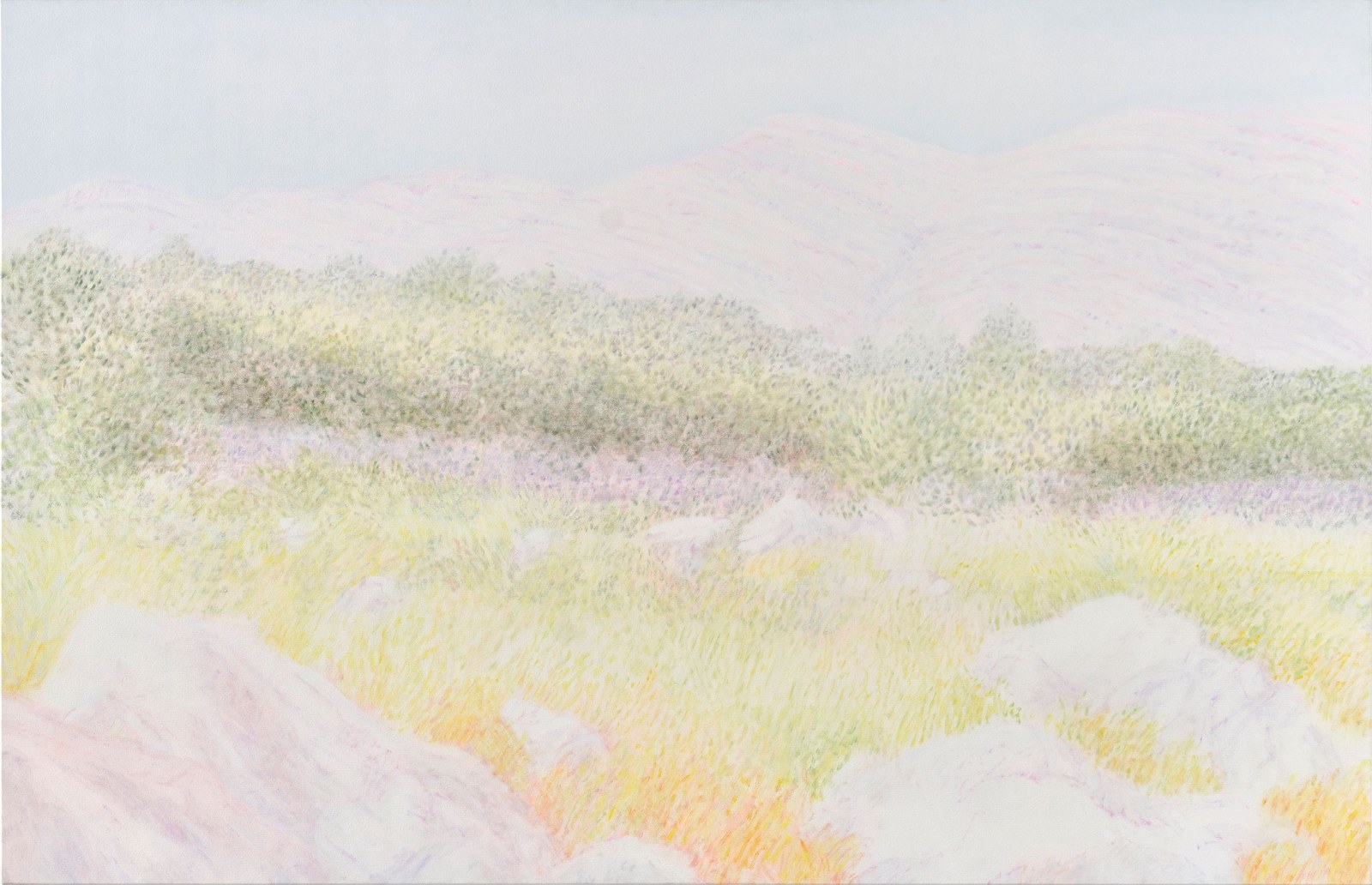
The largest work here is Genadry's Trees (Transparent Time) (2026), a triptych 4.5 metres high. Her triptychs often stretch a horizon sideways; this one stands upright to answer the height of the room. Trees frame a passage toward a waterfall far in the background. The waterfall comes from nineteenth-century photographs of Yosemite by Carleton E. Watkins and Eadweard Muybridge, and it also appears in Blind Light (2017), painted for Sharjah Biennial 13. In Lake Line (Dream V) (2026), trees cut across the horizon and leave the eye with no fixed point.
On the mezzanine hang paintings of a mountain in northern Lebanon. Dimensions of Time (2025) began as her own photograph, shot from a moving car and joined to a section taken while standing still. Cactus (Still Time) (2025) lays a geometric pattern over the same view. Grids, folds and margins run across many of the canvases, so the paintings never pass for simple views.
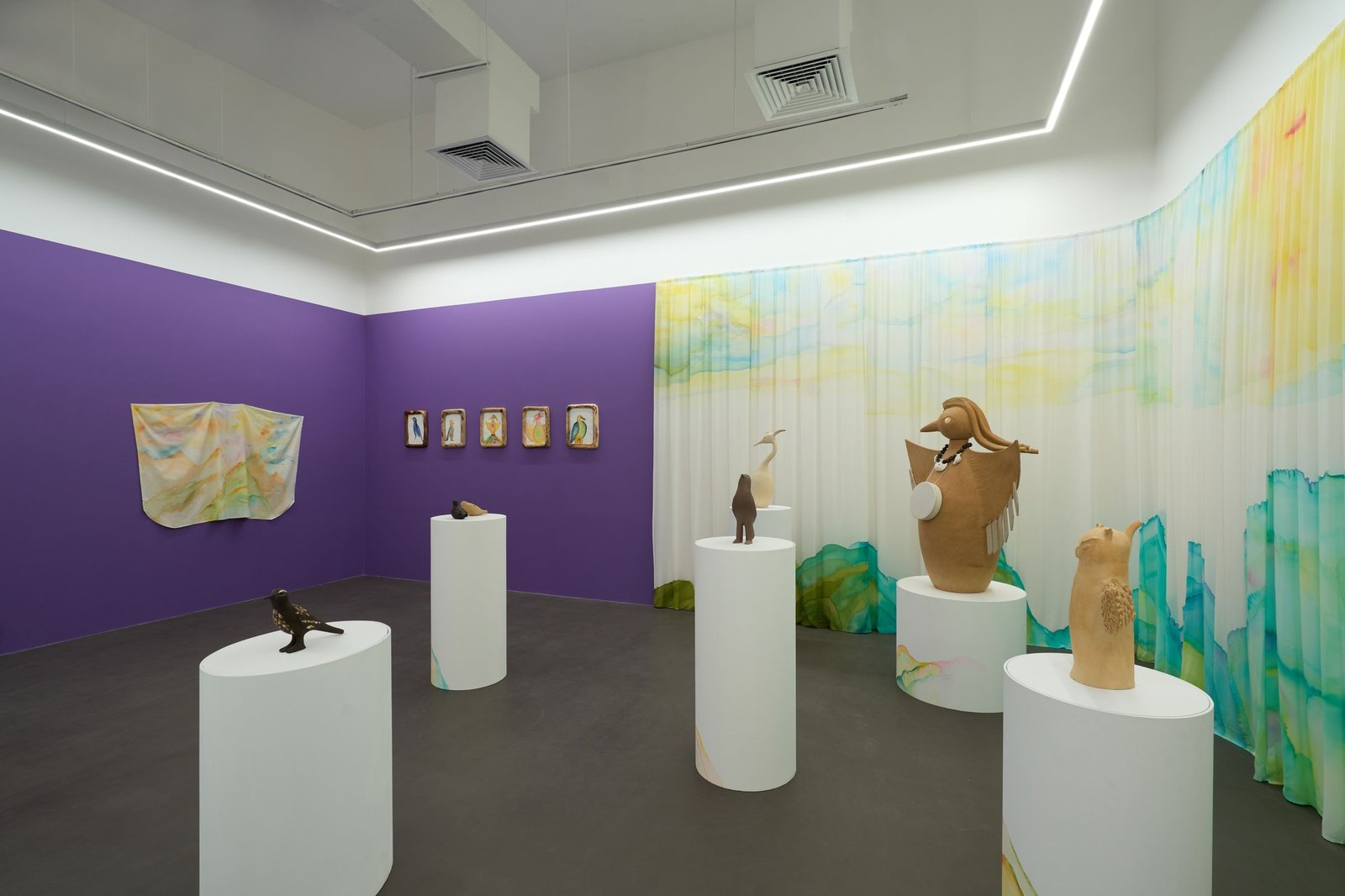
Baghriche's new series, The Village, starts from fèves, the small ceramic charms hidden in the galette des rois that French families share each January. He bought cheap factory-made fèves and kept those with flaws, such as crooked eyes or visible mould seams. He then enlarged them to roughly the size of a face, sculpting, casting, glazing and firing each piece himself. By his own account, he had never before been so closely involved in making a work by hand. The subjects run from the Virgin and an angel to a camel and Oum Kalssoum. The series follows Imperfections (2010), a work made from defective glass panes that a framer had marked in felt-tip pen as unusable.
Also on in Dubai
Ayyam Gallery
The Days Go On: 20 Years of Ayyam Gallery
Dubai, 16 November 2026 to 1 January 2027
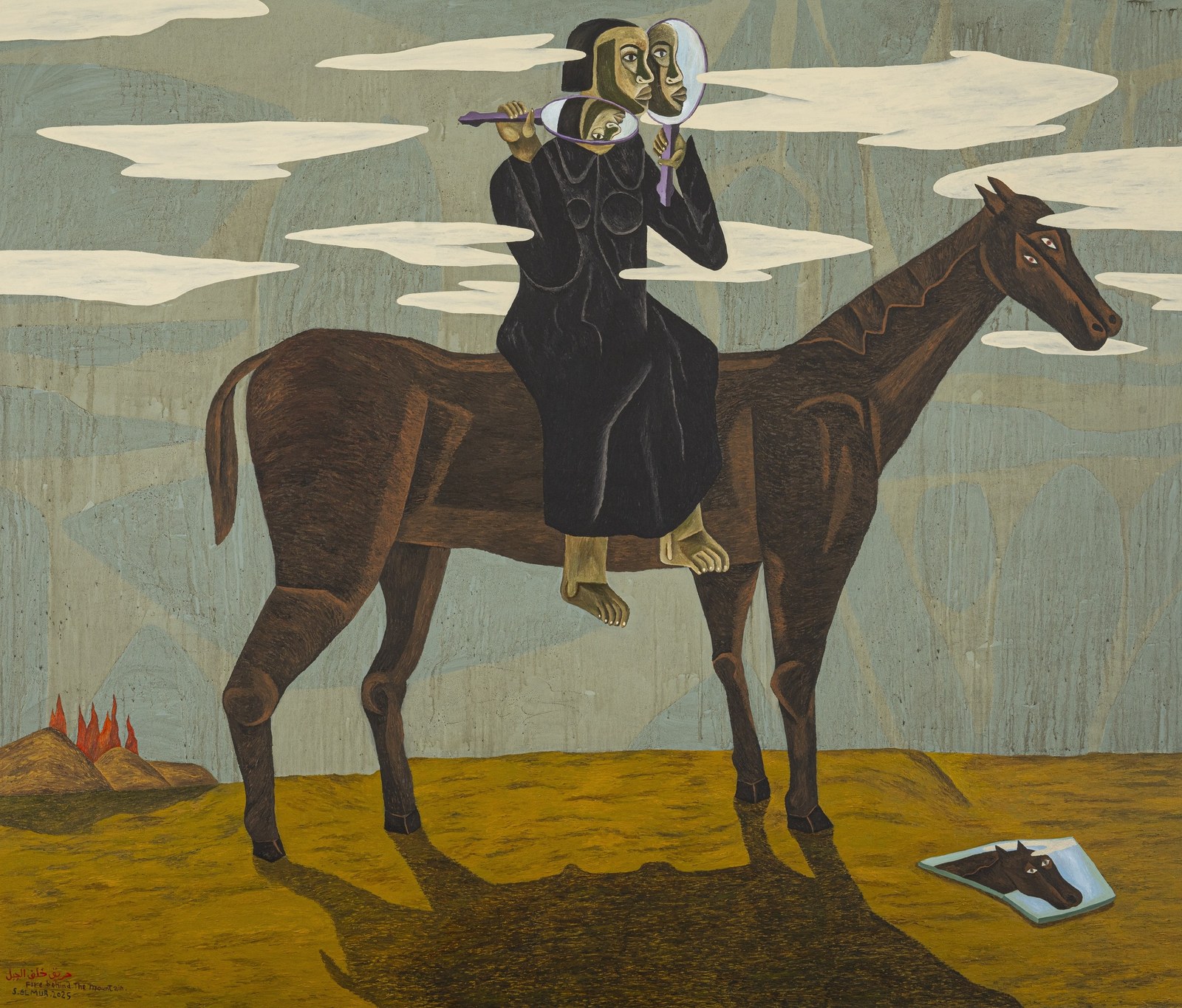
Jameel Arts Centre
Salah Elmur: Salah Elmur: Just as the Heart of a Mango is a Stone
Dubai, 31 October 2026 to 14 March 2027
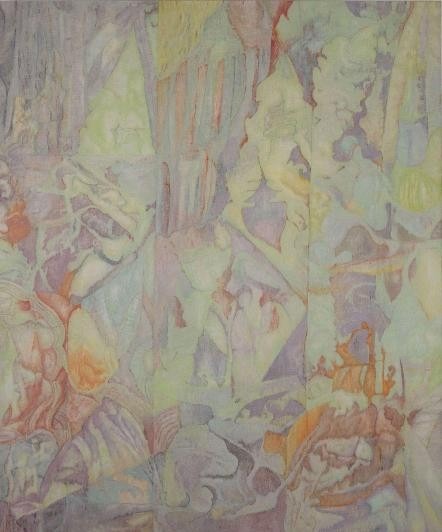
Dom Art Projects
Kirill Makarov: Unveiled: Painting in the Age of Post-Produced Reality
Dubai, 27 October 2026 to 10 March 2027
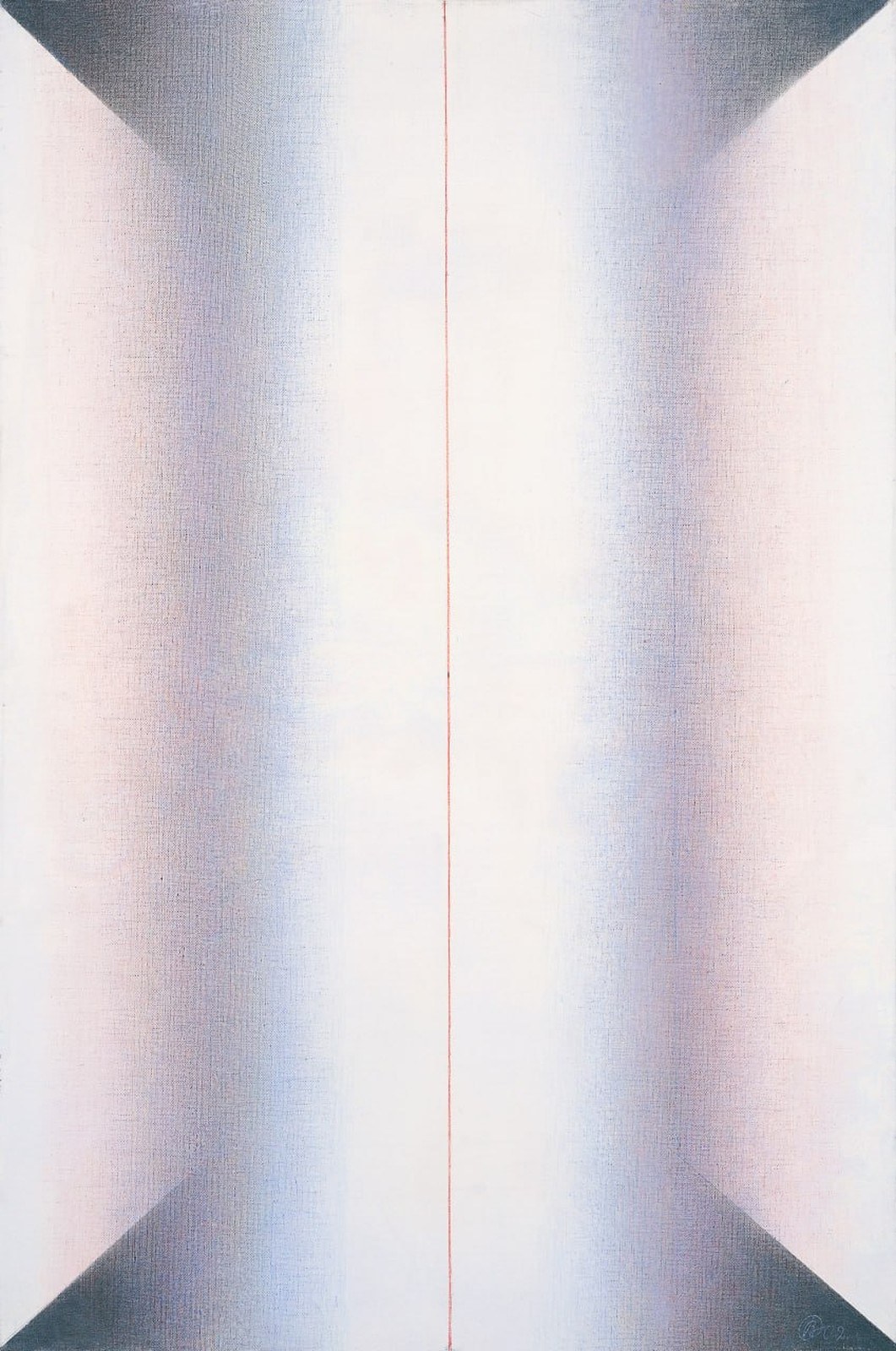
Dom Art Projects
The Matter of Light
Dubai, 27 October 2026 to 10 March 2027