Walid Raad Guides Visitors Through His 'Festival of (in)gratitude' in Paris
The Lebanese artist leads performed tours of his new installation at CENTQUATRE-PARIS for the Festival d'Automne until 22 November 2026, while his works on Yasser Arafat's bedrooms and Lebanese weapons shipped to Yugoslavia close at the Venice Biennale the same day.
From Beirut to Tunis to Ljubljana, with the artist as your guide
Walid Raad has never been one for a conventional exhibition, and his latest is no exception. Until 22 November, the Lebanese artist is in Paris, personally leading visitors through Festival of (in)gratitude, a new installation at CENTQUATRE-PARIS presented as part of the Festival d'Automne. And if you can't make it to Paris, his work is also on view at the Venice Biennale, which closes on the very same day.
For anyone less familiar with him, Raad was born in Chbanieh, Lebanon, in 1967, to a Lebanese father and a Palestinian mother, and is now based in the United States. He is best known for The Atlas Group (1989 to 2004), a project exploring the contemporary history of Lebanon through documents, photographs and videos whose authorship he deliberately blurred, and for Scratching on Things I Could Disavow, his long-running inquiry into the new art infrastructure of the Arab world. His work has been shown at documenta in 2002 and 2012 and at the Venice Biennale in 2003, and in 2015 the Museum of Modern Art in New York gave him a major survey, which travelled to the ICA Boston and Museo Jumex in Mexico City. In 2011 he won the prestigious Hasselblad Award.
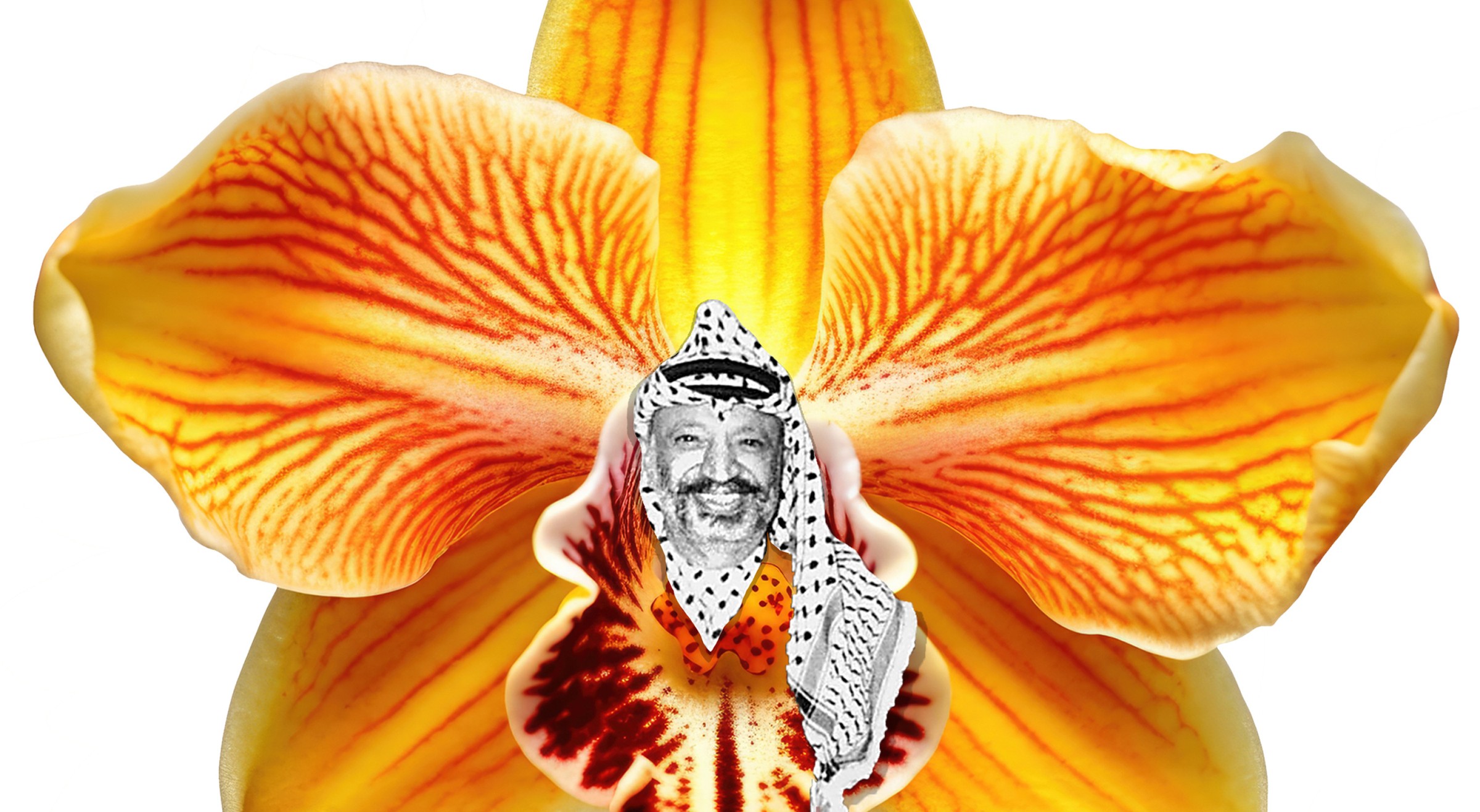
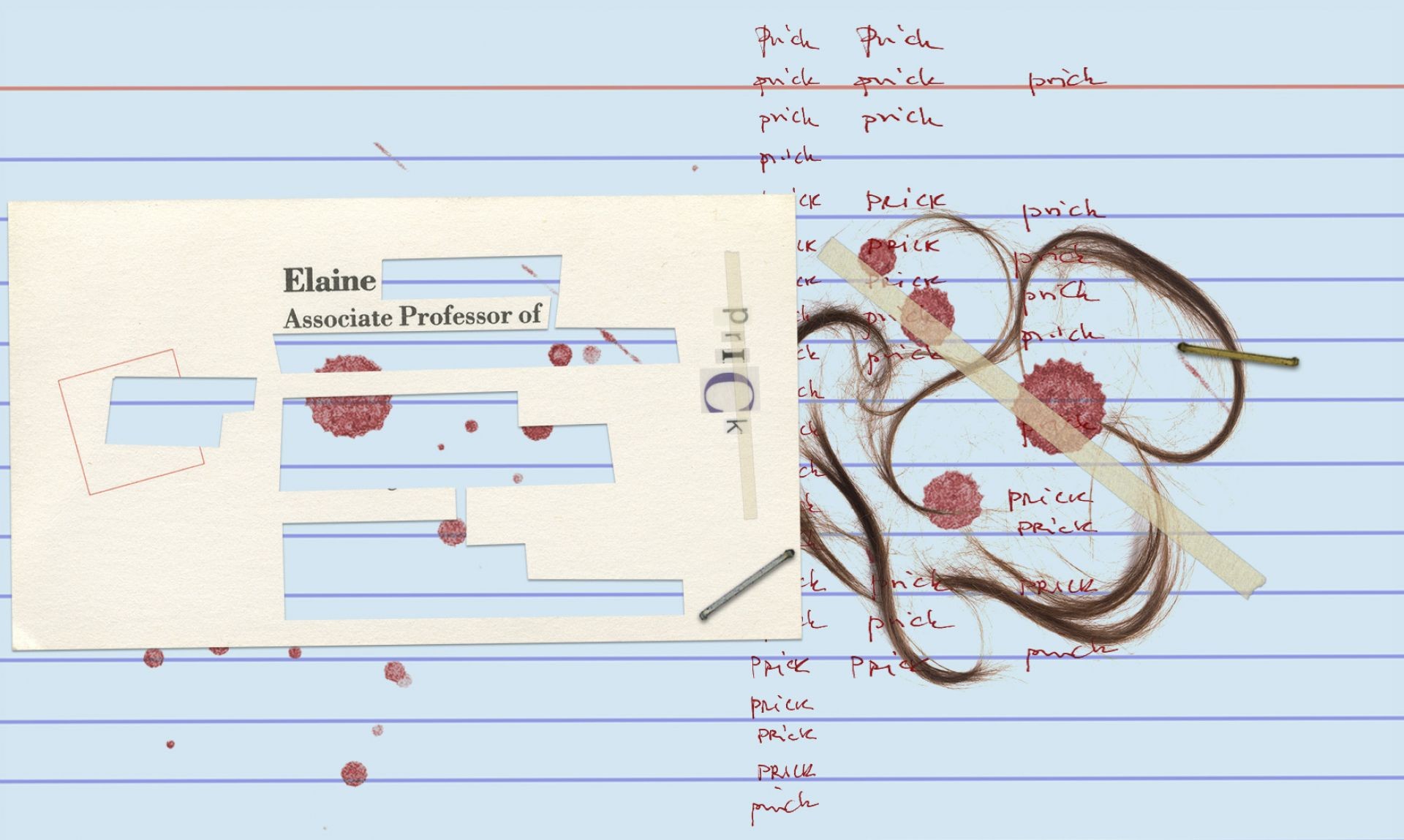
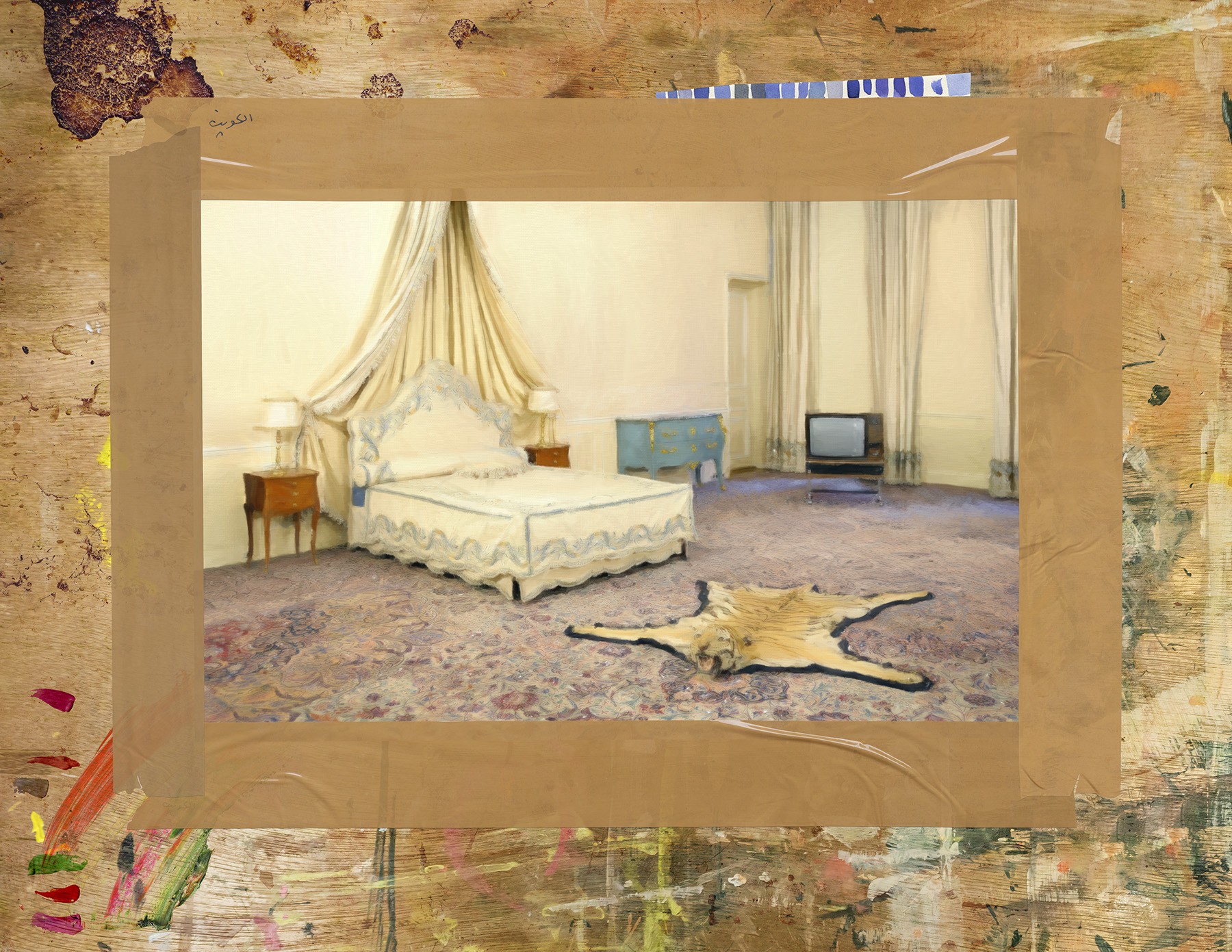
In Paris, Raad brings together recent works from three of his long-term projects, The Atlas Group, Sweet Talk and Scratching on Things I Could Disavow. According to the festival, "the point of departure is a crossroads in history which bears uncanny similarities to our present day", the years 1982 and 1983, with the Israeli occupation of Lebanon, the Sabra and Shatila massacre, and the expulsion of the Palestine Liberation Organisation to Tunis. Expect a typically Raad-esque web of connections, between the Volkswagen Beetle, the battleship USS New Jersey, Yasser Arafat's beds, real estate developers, Playgirl magazine and the storerooms of a museum in Slovenia.
Interestingly, this is very much a show you experience with the artist. In what the festival calls "visites performées", Raad himself leads 50-minute tours of the installation, in French and in English, on most evenings from Wednesday to Sunday. As the festival puts it, "between missile craters and memory gaps, we gradually abandon the temptation to distinguish what is created from what is found." The installation itself is free to visit in the afternoons, while the tours are ticketed.
The Paris installation has its roots in Ljubljana. An earlier Festival of (In)Gratitude, curated by Zdenka Badovinac, ran at the Moderna galerija in the Slovenian capital from November 2025 to May 2026, where Raad created the Museum of Mortal Guilt using material from the museum's archive. In the museum's words, Raad "imagines a surrogate world of violence against people, land and history, one filled with otherworldly doubt, idiosyncrasy, wit, and labyrinthine space and time." The title itself first appeared in Beirut, in Another Festival of (In)gratitude at Sfeir-Semler Gallery in 2024.
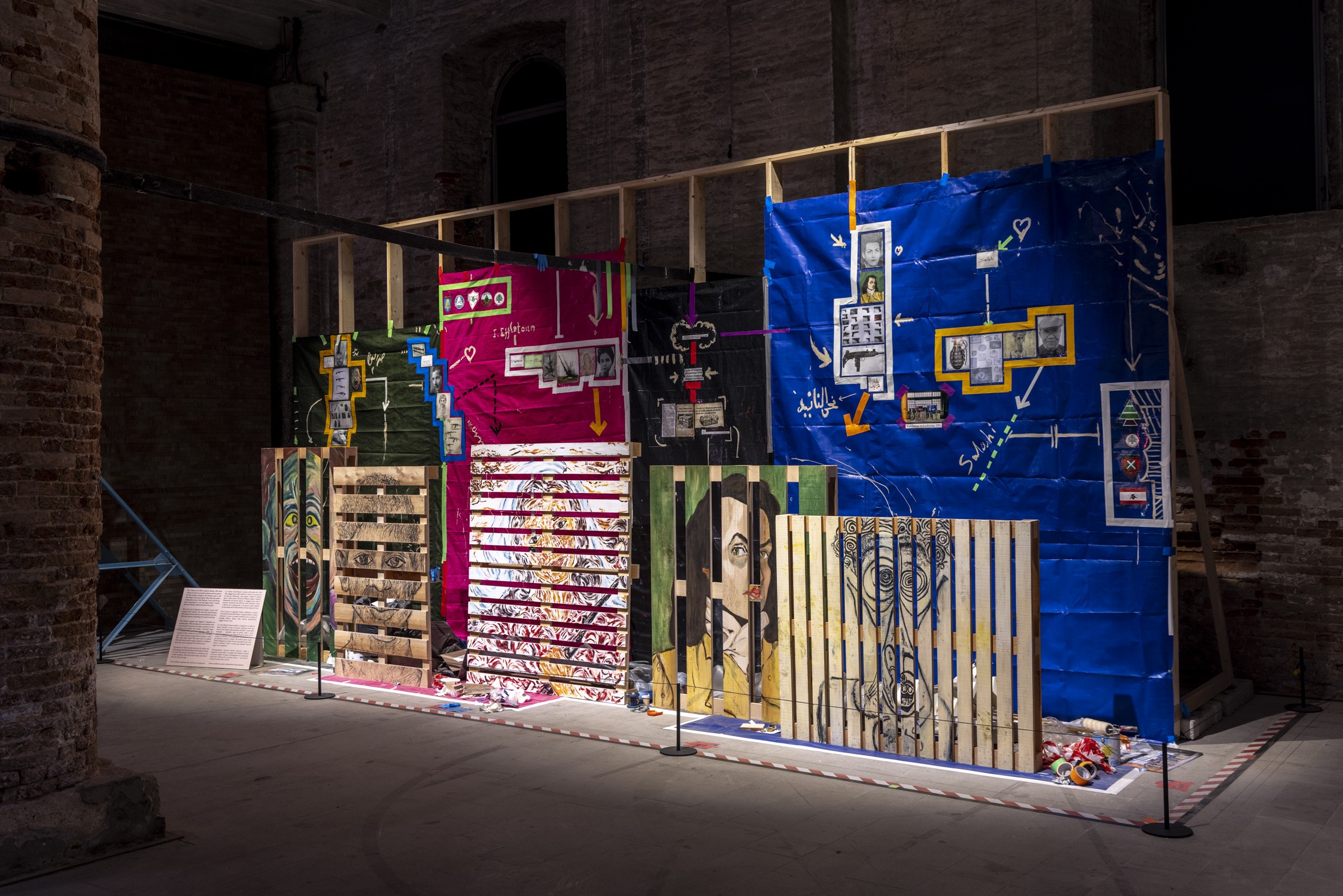
Those Slovenian threads also run through his presentation at the 61st Venice Biennale, In Minor Keys, conceived by the late Koyo Kouoh. In the Arsenale, Postscript to the Arabic Edition presents painted pallets said to have been found beneath Lebanese weapons shipped to Yugoslavia, arranged as they are stored in a warehouse outside Ljubljana. "One war ends, another begins. The weapons moved easily from one battlefield to the next. This time, however, something else traveled with them," Raad writes in the accompanying text.
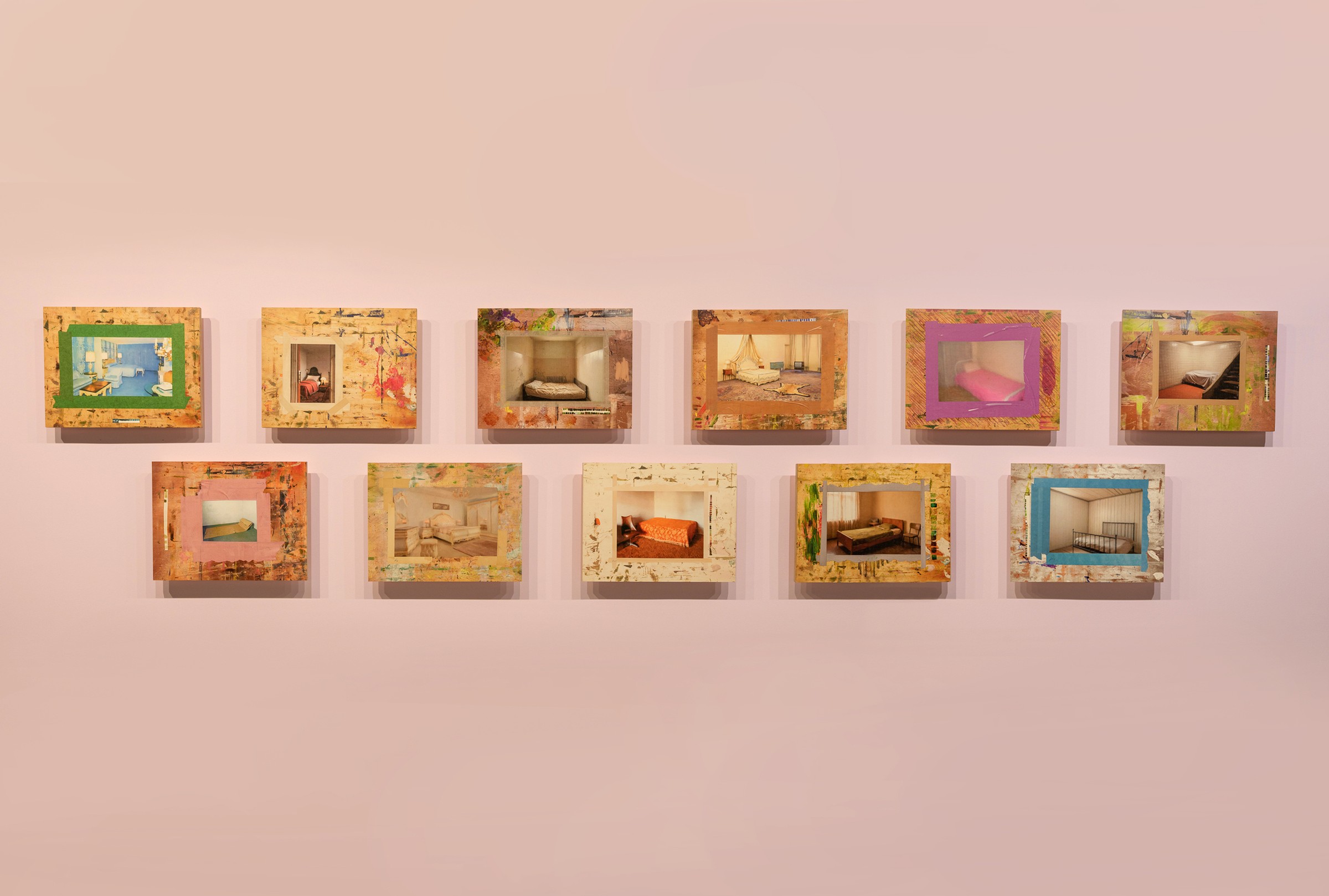
In the Central Pavilion of the Giardini, meanwhile, Far from quieting brings together 11 paintings on wood of bedrooms where Arafat is said to have slept. "I have spent the last 30 years searching for the houses and beds where Arafat is said to have slept," Raad writes. "This research has yielded a series of bedrooms that I have been painting and drawing, drafts that I cannot seem to finish." Critics have been won over: in e-flux Criticism, Ben Eastham called the work's unreliable narration "a lesson that should be carried away from the work into the world", while Artsy described it as "a clever reframing of fiction, anecdote, and geopolitical complexities".
So, what can we take away from this? More than two decades after The Atlas Group first made audiences question what they were looking at, Raad is still asking how wars live on in images, objects and institutions, and his return to 1982 feels especially poignant at a time when our region is once again living through war. We can't wait to take the tour.
Festival of (in)gratitude is at CENTQUATRE-PARIS, 5 rue Curial, Paris, until 22 November 2026. The 61st Venice Biennale closes on the same day.
Sources11 references
- Festival d'Automne à ParisWalid Raad, Festival of (in)gratitudefestival-automne.com
- Festival d'Automne à Paris, press kitfestival-automne.com
- Moderna galerijaWalid Raad: Festival of (In)Gratitudemg-lj.si
- e-fluxWalid Raad: Festival of (In)Gratitudee-flux.com
- La Biennale di VeneziaWalid Raadlabiennale.org
- Paula Cooper GalleryWalid Raad in the 61st International Art Exhibition of La Biennale di Veneziapaulacoopergallery.com
- Sfeir-Semler Gallery61st Biennale di Veneziasfeir-semler.com
- The Art Newspaper, Venice Biennale 2026 curatorial team, 25 February 2026
- e-flux Criticism, Ben Eastham, Venice Biennale 2026 review, 6 May 2026
- Artsy, Josie Thaddeus-Johns, Venice Biennale 2026, 7 May 2026
- Paula Cooper GalleryWalid Raad, CVpaulacoopergallery.com
More from News
Mounira Al Solh Stitches Myth, Migration and the Feminine into New Work
Lebanese artist Mounira Al Solh turns ancient Phoenician myth into some of the most quietly radical work coming out of the MENA region, from her Venice Pavilion to her collaboratively embroidered tents.
Yemeni Artists You Should Know
From its striking architecture, to its poetry and music traditions, Yemen has a rich artistic history. Yemen also has a contemporary art scene too. A new generation of Yemeni artists is redefining cultural narratives,…

10 Contemporary Turkish Artists You Should Know
The Turkish art scene is booming. Beyond institutions like Istanbul Modern, the Istanbul Biennial and Contemporary Istanbul, a flourishing contemporary art scene is making a lot of noise within the wider MENA art scen…