Textile Artists You Should Know from the MENA Region
From embroidery to costume
From embroidery to costume
Palestinian tatreez (embroidery), Egyptian cotton, Kuwaiti sadu (weaving) and Persian carpets. These are just some of the rich textile traditions that were born and continue to be made in the MENA region. While these crafts are steeped in tradition and may be seen as old-fashioned, there are a number of artists with roots in the region who are interpreting these artforms in a contemporary way. Keep reading to learn about just some of the textile artists you should know from the region.
Jordan Nassar
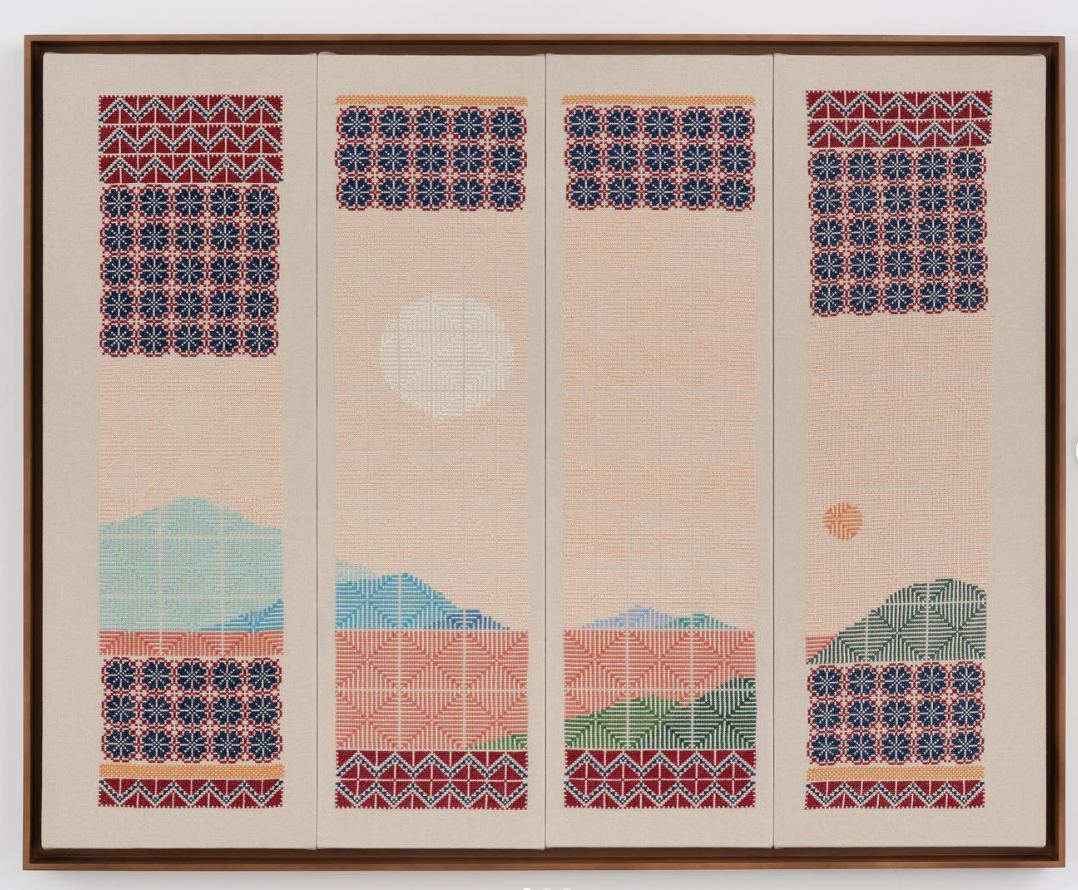
Jordan Nassar is famous for his landscape works utilising the art of Palestinian tatreez, particularly the fallahi style of embroidery which is known for its cross-stitched motifs. The American-born Palestinian artist creates compositions made up of repeated Palestinian embroidery motifs. Some have likened his work to a utopian vision of Palestine. The landscapes are not made from photographs, but from Nassar’s imagination. He works with Palestinian women living in the West Bank, allowing them to choose the colours in the works, and also preserving the matrilineal tradition of women embroidering in Palestine. The way in which the work themselves are made are also a comment on the relationship between the diaspora and the homeland and the idea of displaced cultural heritage.
Hana AlMilli
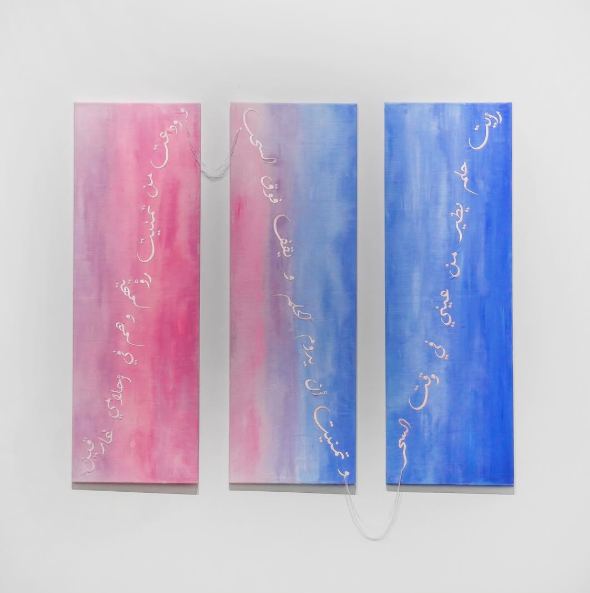
Riyadh-based Hana Almili has Turkish, Syrian, Kurdish and Saudi heritage. It therefore follows that her work often focuses on questions of identity. Asking questions about perpetual alienation, much of her work centres around the term “Al Ghorba” meaning “estrangement in a foreign land.” Almili’s practice is research based and recreates affected and resurrected identities through textile and assemblages. Her resulting work interrogates nostalgia through weaving, dyeing, photography and embroidery.
Jason Seife
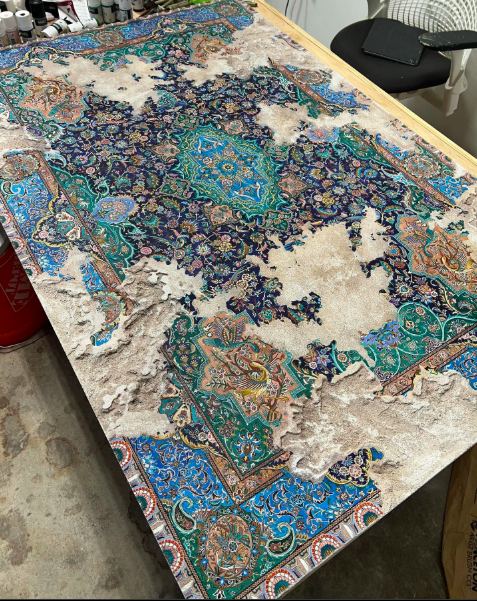
Jason Seife is known for his stunning painted recreations of Persian carpets. Born in Miami in the US Miami, the Cuban-Syrian artist was surrounded by carpets when he was growing up. His modern recreations of these rugs are done in colours that reflect his emotional state of mind when he creates the work. Initially starting on canvas, he now also makes work on concrete, having also released NFTs and even basketballs covered in carpet paintings. A bona-fide Instagram famous artist, he is making the carpets our grandparents had in their living rooms fashionable to a younger audience.
Amani Al-thuwaini
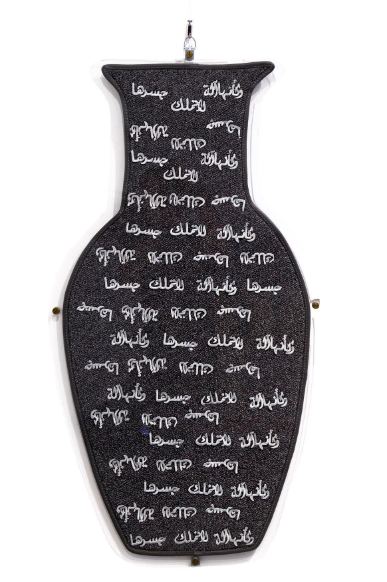
Amani Al-thuwaini is an interdisciplinary Kuwaiti-Ukrainian artist who often includes textiles within her work. She questions what constitutes a tradition and how it is displayed through material possessions. Much of her recent work explores marriage and dowry rituals in Islamic culture, creating “Dazzalab”, which looks at dowry heirlooms. She also uses her work to explore attitudes towards luxury and socio-politics in Kuwait and the Gulf. Her work incorporates insinuations of modernism, superficial display, commodity fetishism and gender. Her three-dimensional textile works are crafted as a candid response to the commodification and changes of traditions and customs; hybrids that represent a far more ‘globalized’ ritual.
Dana Barqawi
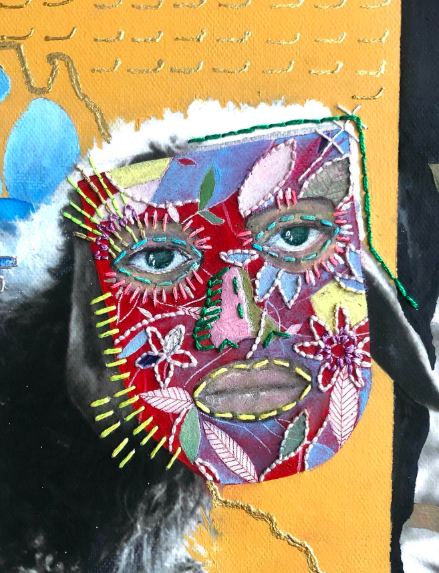
Palestinian-Jordanian artist Dana Barqawi is known for her work embellishing black and white photographs, often adding embroidery over the top. She chooses to create politically and socially engaged art, challenging colonial narratives, exploring indigenous identities, and aspects of womanhood and community. She has worked with NGOs and government bodies, having had international training spanning Europe, Africa and the Middle East. She often begins with archival black-and-white photographs of Palestinians from the late 19th and early 20th centuries, layering them with embroidery and drawing inspiration from traditional Palestinian garments and motifs.
Mounira Al Solh
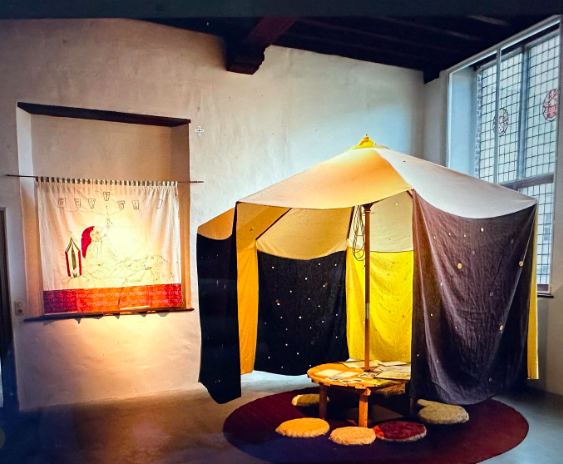
Mounira Al Solh is a Lebanese artist who often works on collaborative embroidery projects that transform personal and collective narratives into tactile, immersive installations. She is probably best known for her textile tent installations, reimagining traditional structures as sanctuaries for storytelling. These tents have commented on everything from 17th and 18th century bridal tents from Rhodes to 19th century Iranian imperial tents. Her tents are made by women embroidering collectively to express emotions and nostalgia. Throughout her work she has also incorporated embroidered text to explore the nuances of language, as well as using machine-stitched embroideries as a way to depict stories of women affected by conflict and displacement.
Susan Hefuna
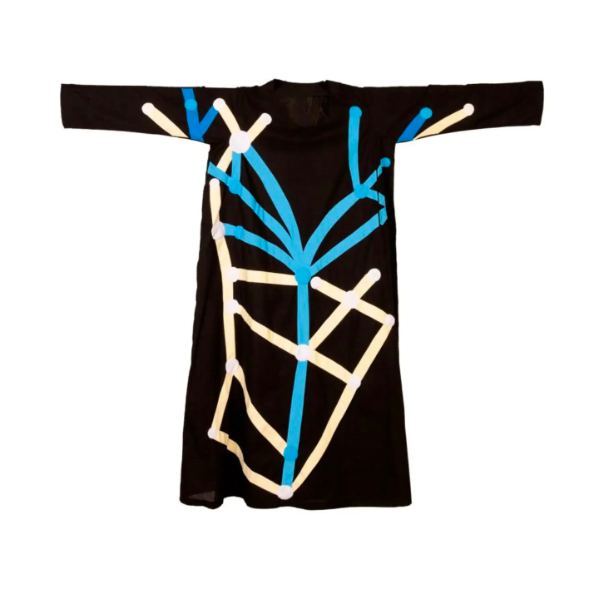
Susan Hefuna’s textile work is inspired by the Egyptian art of khayamiya, a decorative Egyptian art appliqué textile that dates back to Ancient Egypt. She has collaborated with local artisans and in 2023 presented an exhibition at the Grand Egyptian Museum called Traces of Egypt, which included 28 costumes made from Egyptian cotton. Black Egyptian cotton is a constant throughout Hefuna’s work, which she uses as a canvas to stitch patterns of text, lines and dots. These often have an architectural feel to them, echoing some of her earlier work with mashrabiya screens. Often mixing clothing and text, her work sits somewhere between fashion, performance and visual art.
Dana Awartani
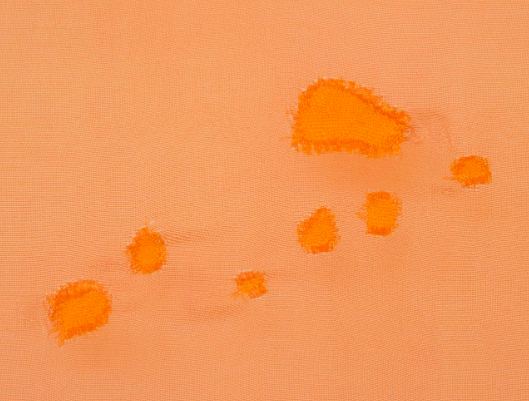
Saudi artist Dana Awartani works with a variety of media, often incorporating natural dyes and hand embroidery into her work, often to comment on loss and heritage. Her latest work - “Let me mend your broken bones” (2024) - meditates on sustainability and cultural destruction. Composed of naturally dyed silk fabrics that are saturated with a multitude of natural herbs and spices that have specific medicinal functions in South Asian and Arab cultures, the choice of material speaks to the work’s ethical and ecological terms of production, and further embodies acts of resistance against mental and technological colonial violence given the dual emphasis on artisanal production and indigenous medicinal knowledges. The series consists of fabric pieces with intentional tears and holes. These correspond to the silhouettes of physical violence enacted on buildings in Arab nations at the hands of violence and war. Awartani then mended these punctures through a darning process, a metaphor of the possibilities of collective healing while recalling a vulnerable tradition of repairing and revering objects.
Aya Haidar
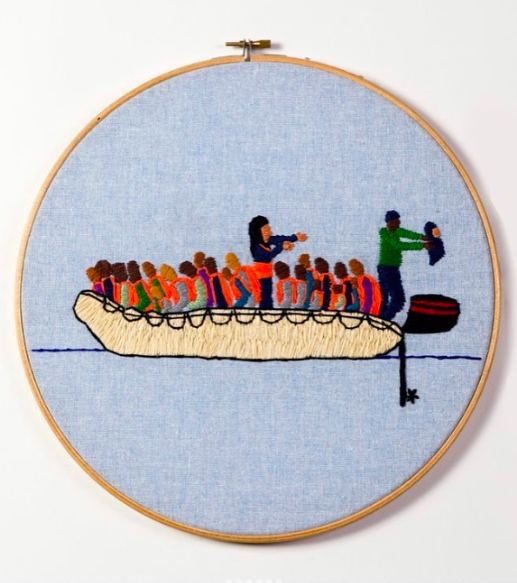
Lebanese artist Aya Haidar often incorporates textiles into her work as a means of social commentary. She is currently recycling found and disposable objects to make poetic works that explore labour, displacement, domesticity, womanhood, and memory. Haidar has stitched scenes of displacement on found shoes and made large textual textile pieces commenting on women’s place in the world. Her work often has a particular focus on the MENA region through her use of culturally specific objects. She has a particular interest in generational craft work that spans time, with a focus on skills and stories that are handed down, re-using objects to re-create narratives that explore memory.
More from News
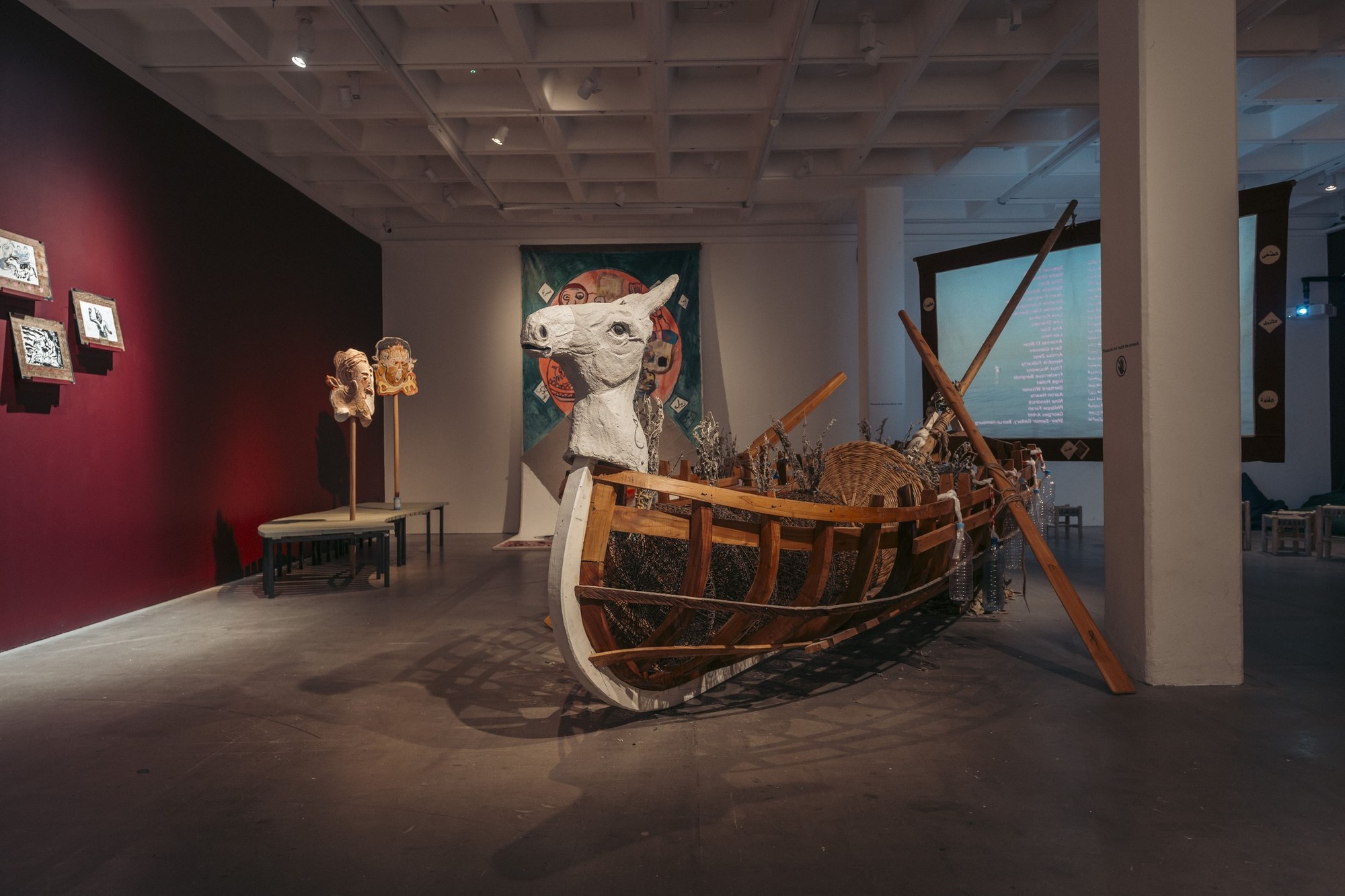
Mounira Al Solh Stitches Myth, Migration and the Feminine into New Work
Lebanese artist Mounira Al Solh turns ancient Phoenician myth into some of the most quietly radical work coming out of the MENA region, from her Venice Pavilion to her collaboratively embroidered tents.
Yemeni Artists You Should Know
From its striking architecture, to its poetry and music traditions, Yemen has a rich artistic history. Yemen also has a contemporary art scene too. A new generation of Yemeni artists is redefining cultural narratives,…
10 Contemporary Turkish Artists You Should Know
The Turkish art scene is booming. Beyond institutions like Istanbul Modern, the Istanbul Biennial and Contemporary Istanbul, a flourishing contemporary art scene is making a lot of noise within the wider MENA art scen…