Case Study: How Riyadh Finally Installed Mohammed Al Saleem's Lost Sculptures
Made for the capital in the 1980s, stored for three decades, now outside a metro station.
The case
Riyadh Art has just announced that seven monumental sculptures by the pioneering Saudi artist Mohammed Al Saleem (1939-1997) have joined its permanent collection of public art. Six are now installed at the Western Metro Station on Line 3, the Orange Line, of the Riyadh Metro, and the seventh will follow at a later date, the Saudi Press Agency reported on 24 October 2026. It is a quietly remarkable story. The works were made for Riyadh in the 1980s, never installed, and kept in the artist's workshop for more than three decades. So how did they finally reach the city they were made for, and what does it tell us about the way our region is building its collections?
The numbers
According to Riyadh Art, the seven sculptures were created in 1985 for a Riyadh Municipality public art competition. Desert X AlUla, which showed five of them earlier this year, says the artist set up a dedicated workshop and hired technicians to make the enlarged works entirely by hand, a process that took no less than two years. The municipality then changed course, putting its beautification budget into landscaping and greenery instead of sculpture, and the works stayed in Al Saleem's workshop from 1990 until 2022.
In 2022 the Royal Commission for Riyadh City acquired all seven from the artist's heirs and restored them under the supervision of his daughter, Najla Mohammed Al Saleem, and his foundation, Dar Al-Funoon Al-Sa'udiyyah. Six were installed in August 2026: Al Showkah Al Khumasiyah (The Pentagon Thorn), Shurfa (Parapet Merlon), Al Kurah (The Ball), Al Mouthalathat (The Triangles), Bur'aum Al Zahrah (The Flower Bud) and Al Ahilla (The Crescents). The seventh, Al Nafourah Al Halazouniyah (The Spiral Fountain), is still to come. With them, Riyadh Art says its permanent collection now numbers 82 artworks across the capital.
What happened
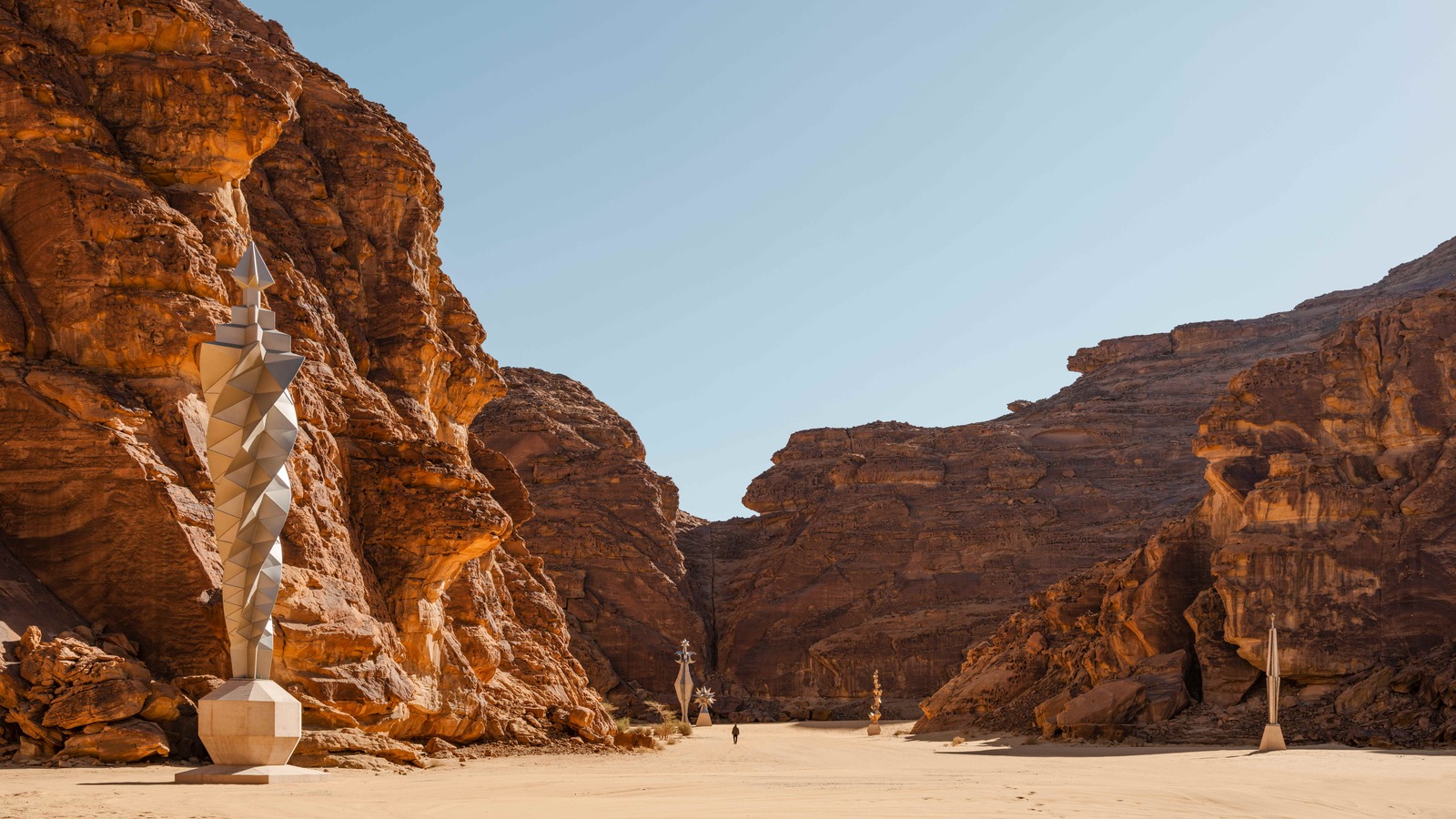
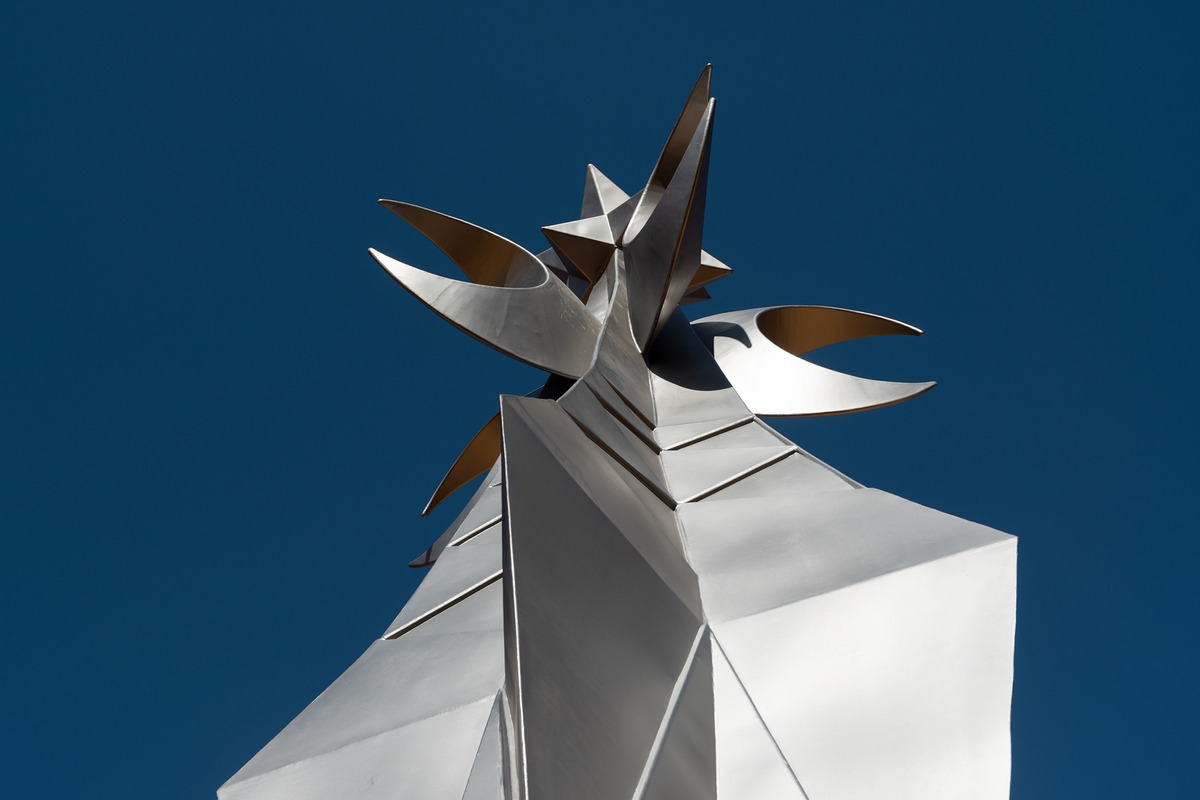
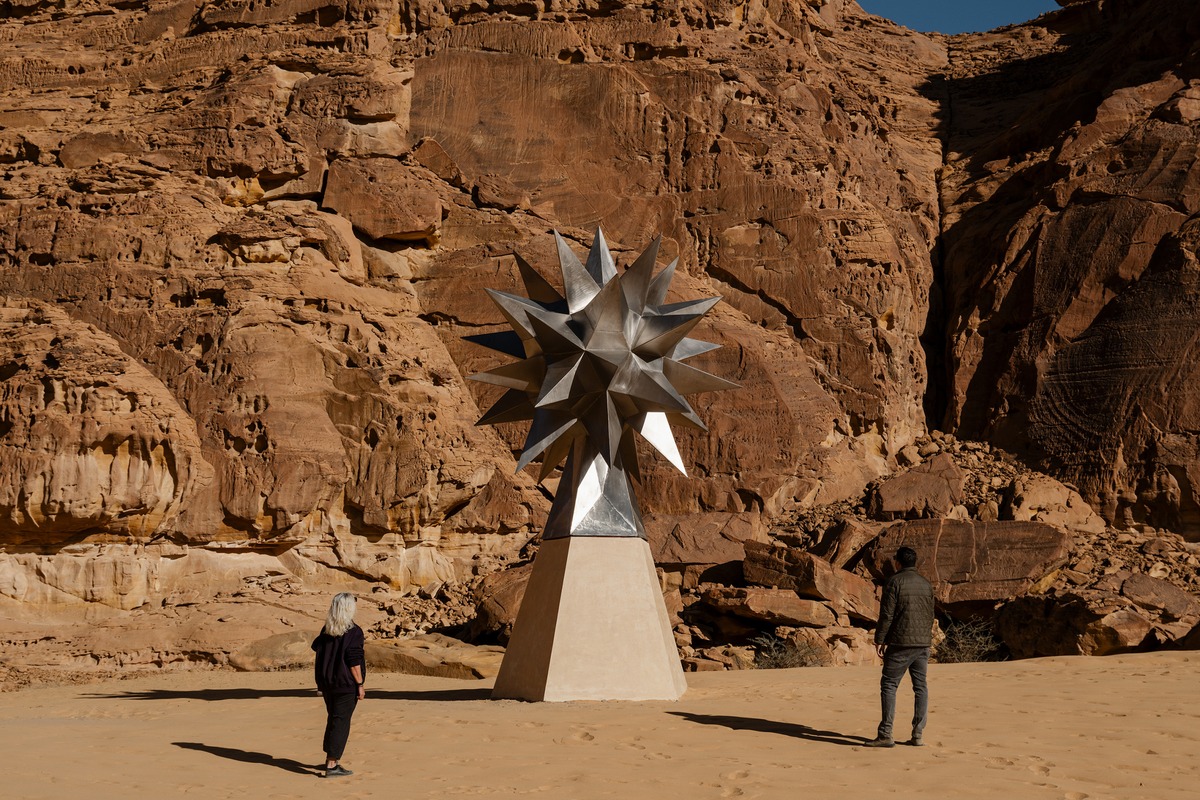
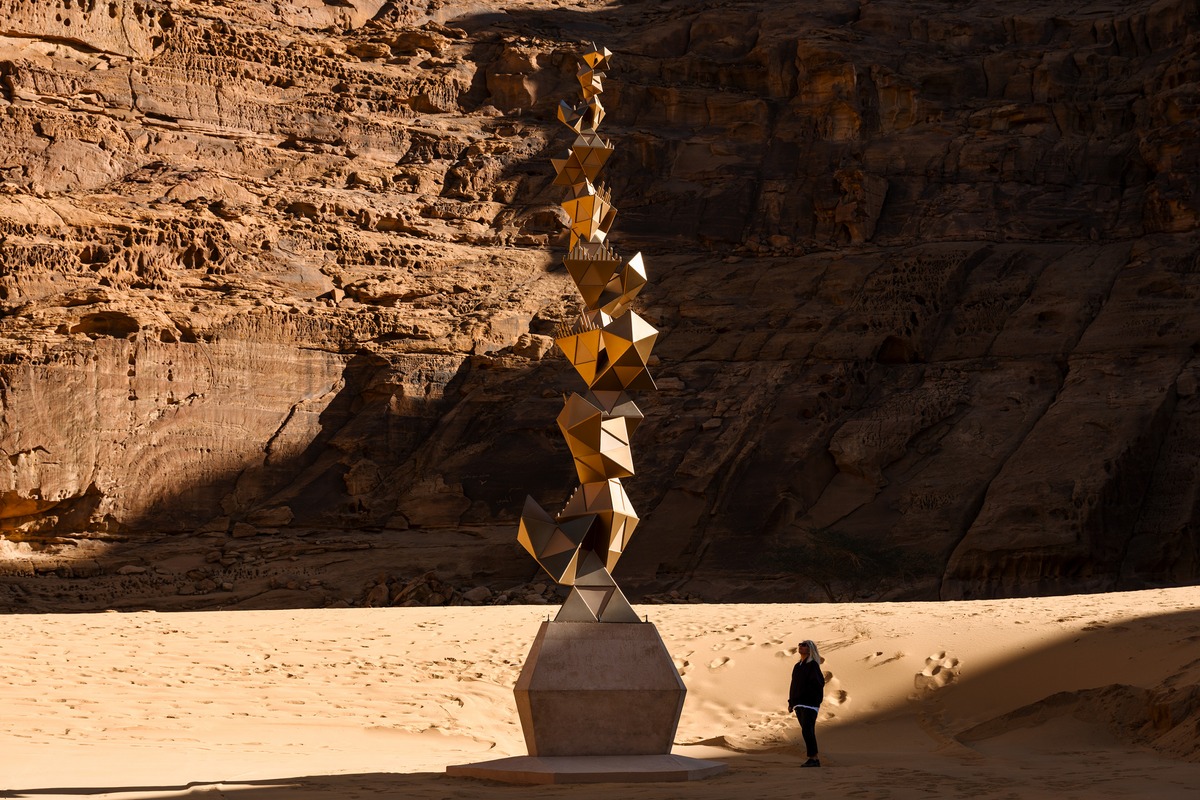
Before they went to the metro, five of the works had a very public trial run. At Desert X AlUla 2026, which ran from 15 January to 28 February 2026, The Thorn, Al Shuruf, The Triangles, Flower Bud and Al Ahilla stood in a sandstone canyon, on loan from the Royal Commission for Riyadh City. Desert X describes Al Shuruf as inspired by the traditional Najdi balcony, The Thorn as an abstract take on a desert plant, and The Triangles as layered geometric units drawn from Najdi decorative architecture.
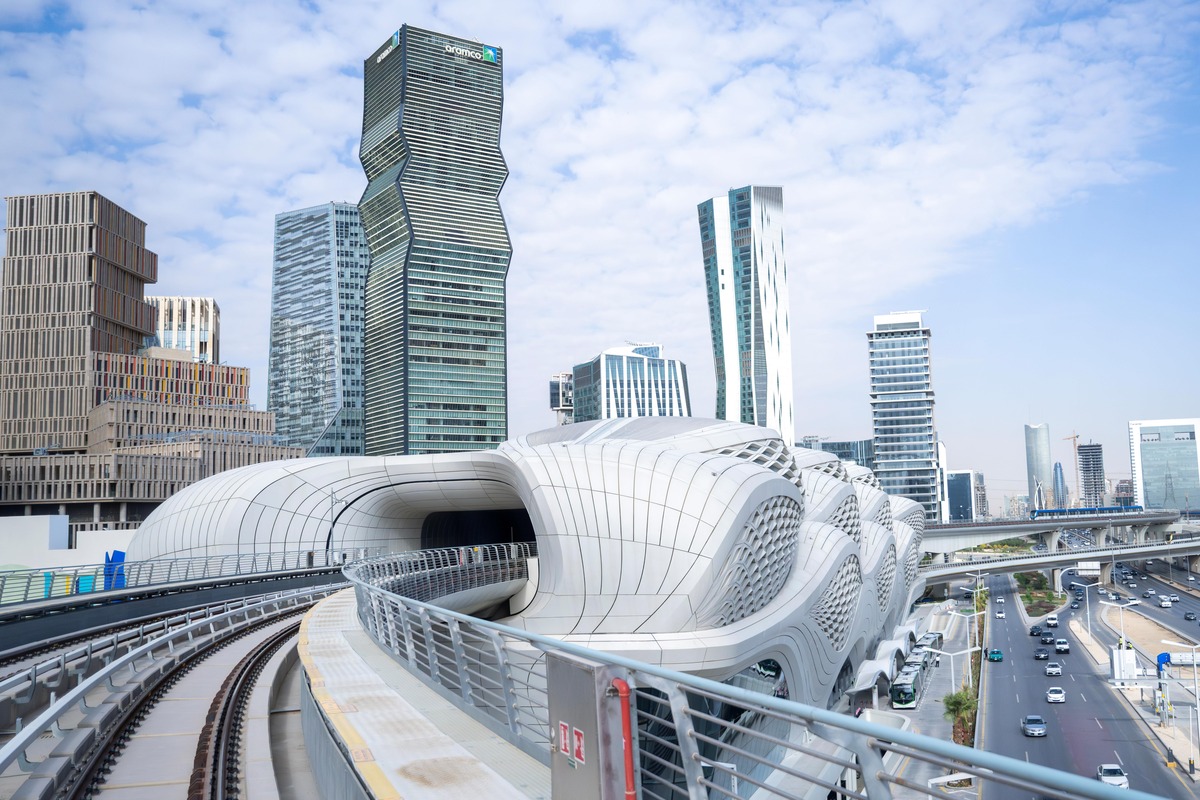
Their new home is a building in its own right. The Western Metro Station, designed by the Saudi architecture and engineering consultancy Omrania, reinterprets sand dunes in earth-coloured forms that shade pedestrians and frame its entrances, and the sculptures stand in its outdoor plaza. "Mohammed Al Saleem holds an important place in the history of modern Saudi art, and his work is deeply connected to Riyadh and the landscape and architecture of Najd," said Bader AlShenaifi, Senior Director of Riyadh Art, in a statement. "Bringing these works into the Riyadh Art permanent collection preserves an important part of Saudi Arabia's artistic heritage while giving Al Saleem's work a lasting presence in the public life of the city that inspired so much of his practice."
For anyone less familiar with him, Al Saleem was born in Marat, in the Najd region, in 1939 and worked as an art teacher before a scholarship took him to the Academy of Fine Arts in Florence in 1970. There he developed the style he called Desert Horizons, built on horizontal lines, reduction and the rhythms of the desert. He helped found the Saudi Art House, Dar Al-Funoon, in Riyadh, showed in cities from Cairo and Paris to Washington, and died in Prato, Italy, in 1997, according to Desert X.
Why it matters for the region
Riyadh Art, led by the Royal Commission for Riyadh City and launched in 2019, is one of the largest public art programmes anywhere. In April 2026, ArtReview reported 75 permanent works installed and a further 115 planned, with Alexander Calder, Anish Kapoor, Jeff Koons, Giuseppe Penone and Ugo Rondinone alongside Saudi artists such as Zaman Jassim. Much of that list is international. Encouragingly, the Al Saleem acquisition shows the other half of the strategy: finding and restoring the Kingdom's own modernist heritage, and putting it where people pass every day.
There is a lesson here for the wider market too. Saudi modernism has been one of the strongest stories at auction this year, and much of the work that shaped the movement still sits with families, estates and foundations. An acquisition made directly from the heirs, with the family supervising the conservation, is a model for how institutions in our region can bring such work into public hands without stripping it of its history. Interestingly, the works also took a detour through AlUla, where they reached an international audience before being installed in Riyadh.
What to watch
Three things. First, the installation of The Spiral Fountain, the only one of the seven still in storage. Second, whether more of the 115 planned works for Riyadh Art come from Saudi modernists and their estates, not only from international names. Third, how the Kingdom documents projects like this one: a published conservation report would be a valuable resource for every institution in the Gulf restoring modern works.
We're glad these sculptures have finally made it home.
Six of Mohammed Al Saleem's sculptures are on permanent public view at the Western Metro Station, Line 3 (Orange Line), Riyadh.
Sources5 references
- Saudi Press AgencyRiyadh Art Brings Monumental Works by Saudi Artist Mohammed Al Saleem to its Permanent Collection of Public Artspa.gov.sa
- Arab NewsRiyadh Art adds works by artist Mohammed Al-Saleem to its permanent collection of public artarabnews.pk
- Desert XMohammed AlSaleem, Desert X AlUla 2026desertx.org
- Arts AlUla via PR NewswireDesert X AlUla 2026: monumental land art exhibition opens in the ancient oasis of AlUlaprnewswire.com
- ArtReviewRiyadh Art Extends Its Citywide Permanent Collectionartreview.com
More from News
Ten Arab Artists in the Guggenheim Abu Dhabi Collection
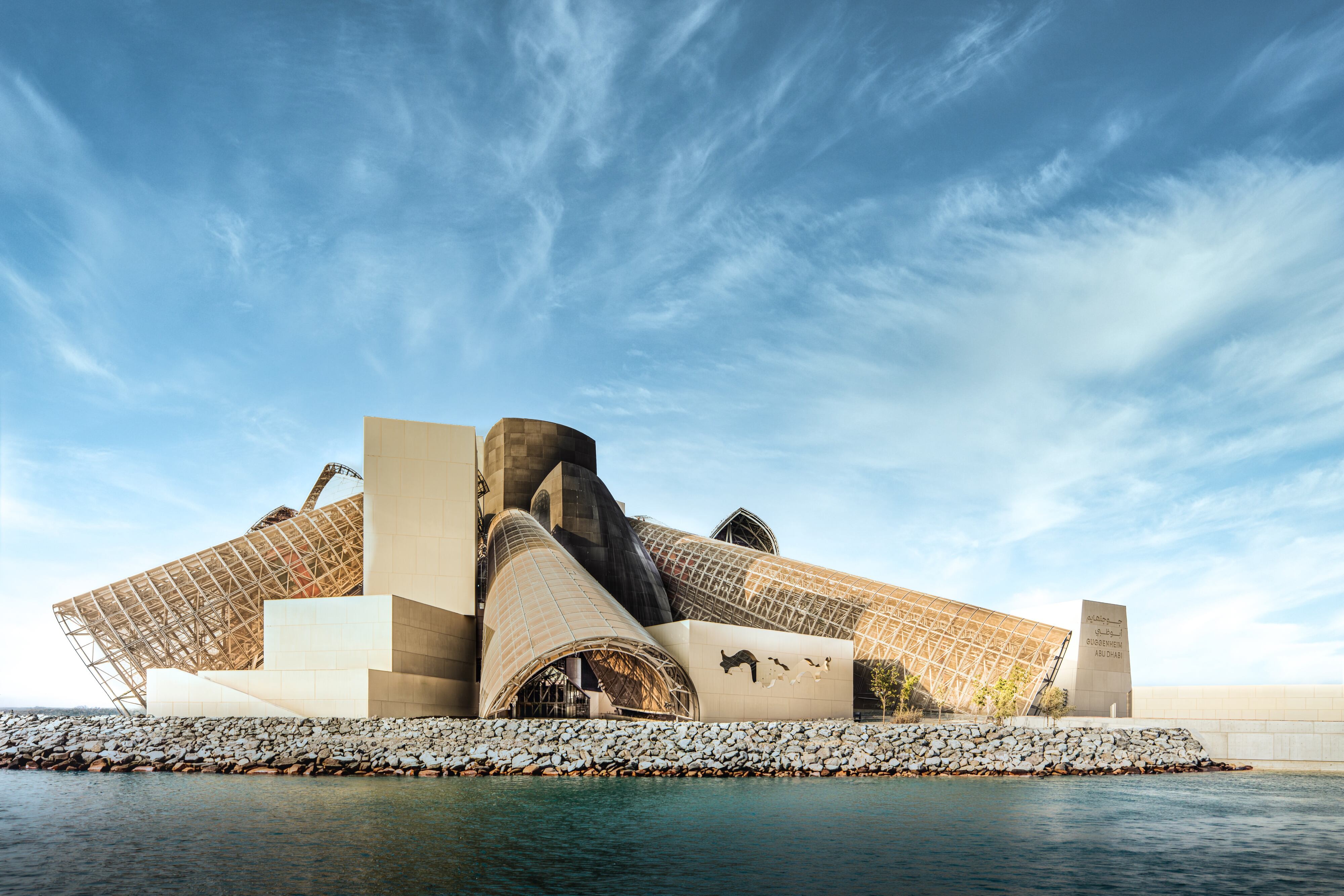
The Guggenheim Abu Dhabi opens on 11 December and tickets are already on sale, but the opening hang has yet to be announced. We look at the ten Arab artists we know are in its collection.
Misk and Ithra Keep Rewriting Saudi Art History, One Pioneer at a Time
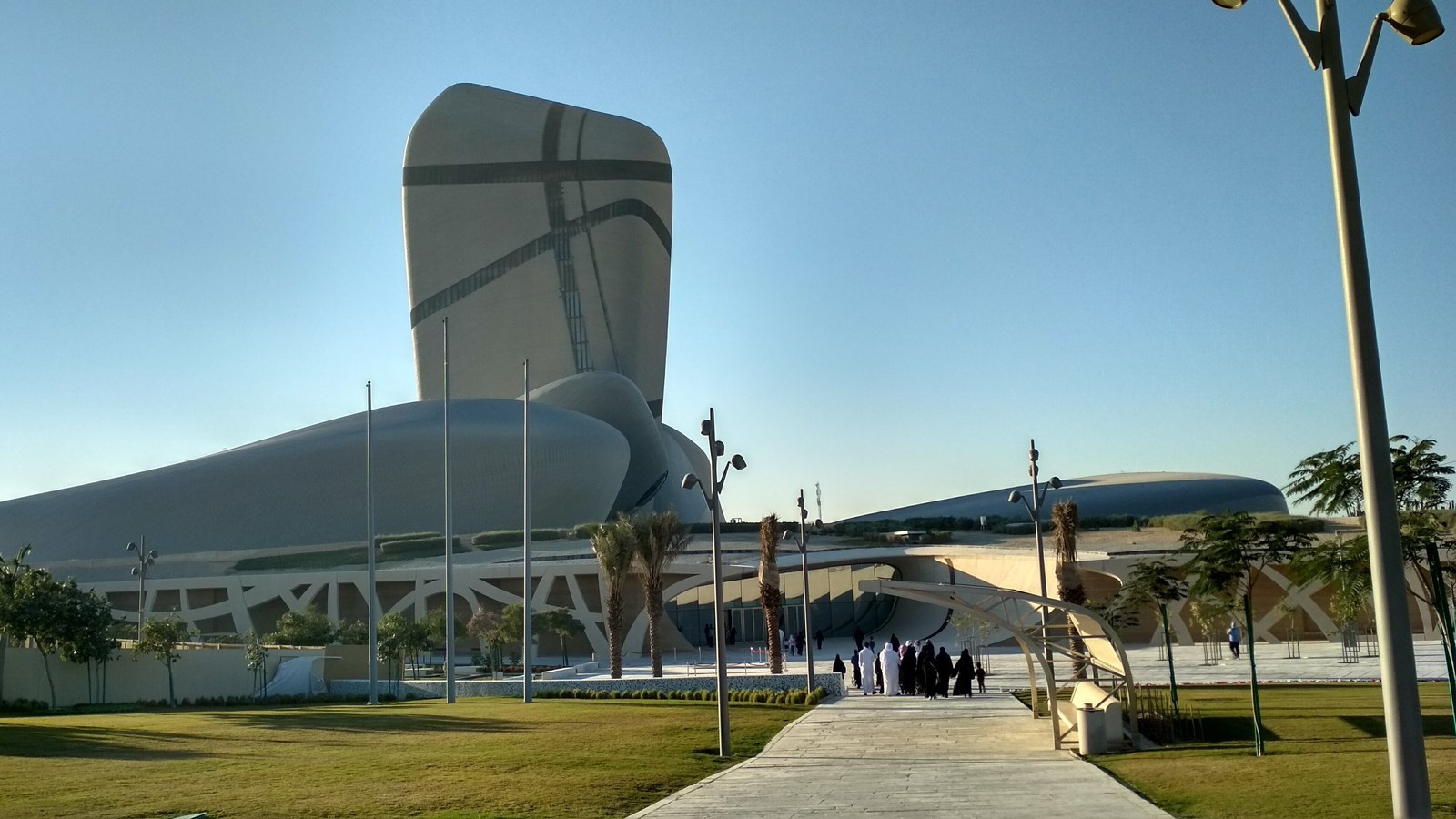
Saudi Arabia's Misk Art Institute and Ithra are spotlighting the pioneers and women who shaped modern Arab art, through dedicated solo shows and landmark group exhibitions.
‘Resonant Histories’ Connects India and the Arab World
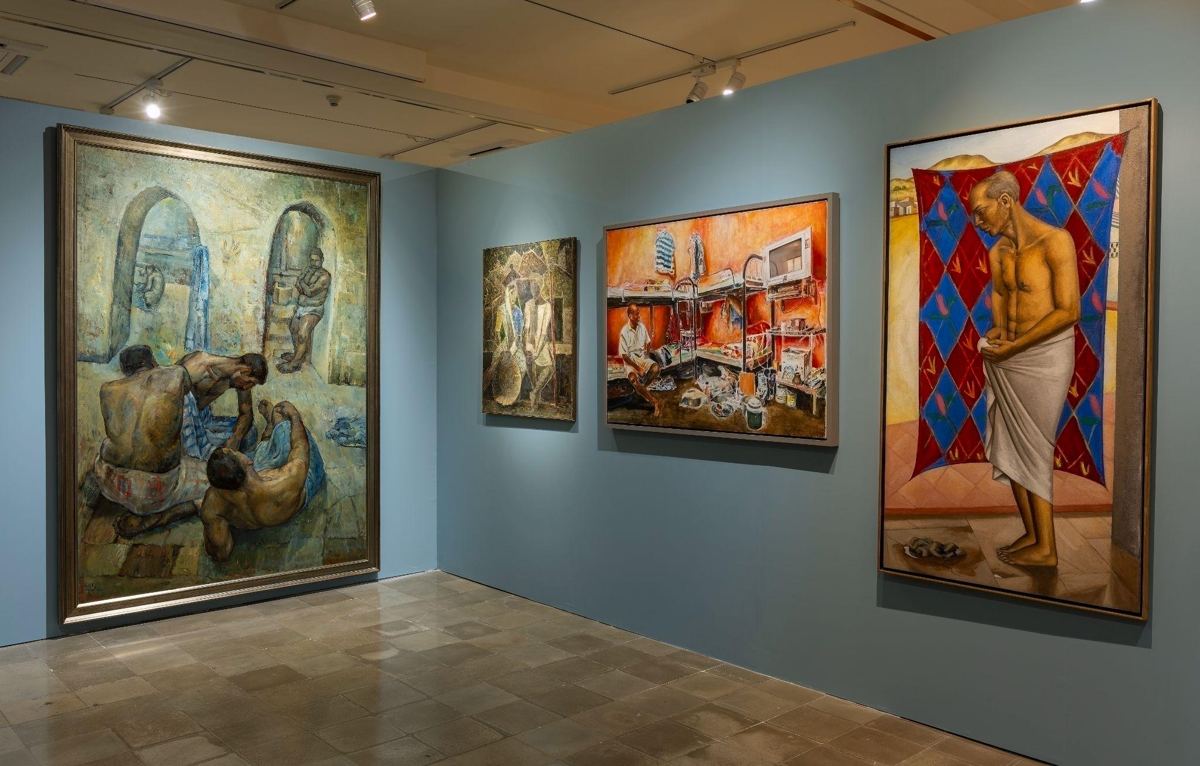
The first-of-its-kind exhibition traces the artistic conversation between India and the Arab world across the twentieth century.