Institutions
Misk and Ithra Keep Rewriting Saudi Art History, One Pioneer at a Time
Institutions
Misk and Ithra Keep Rewriting Saudi Art History, One Pioneer at a Time
There's no question that the Saudi art scene is evolving at a rapid pace, but some of the most meaningful work happening in the Kingdom right now is not about the new at all. It is about the overlooked. Across recent months, two of Saudi Arabia's leading cultural institutions, the Misk Art Institute in Riyadh and Ithra in Dhahran, have been quietly and deliberately spotlighting the pioneers and the women who shaped modern Arab art, through dedicated solo shows and landmark group series.
Take Misk first. For decades, as Arab News has noted, pioneers of Saudi art were overlooked and under-documented. The Misk Art Institute, an affiliate of the non-profit Mohammed bin Salman Foundation, has been methodically correcting that through its annual Solo Series at the Prince Faisal bin Fahd Arts Hall. The most recent edition brought two more figures into the light: Fouad Mougharbel and Saad Almasari, both artists and, crucially, educators.
"It's critical to highlight these pioneering artists, because they are the ones that paved the way for the art scene today," Aram Alajaji, co-curator of Almasari's exhibition "Geometry as Thought," told Arab News. Almasari, who has participated in more than 50 international exhibitions and once led the art department at the Ministry of Education, builds a visual language out of the geometric and ornamental systems of Islamic art; 36 of his works were shown, spanning painting, sculpture and ceramics.
Mougharbel's companion show, "Taibah: Remnants and Solace," curated by Shadin Albulaihed and Nada Alaradi, turned to his hometown of Madinah, preserving in paint and ceramic the tight alleyways and enclosed wooden windows of historic quarters that, as Alajaji put it, "no longer exist." A holder of a PhD in art education, Mougharbel co-founded the Madinah Artists Group and helped document Saudi art history in several books of his own.
The framing throughout is generational. "I hope that younger and emerging artists will feel inspired and want to learn more about their techniques," Alajaji said. "It would be nice for young artists to come and appreciate what was there before them."
If Misk has focused on documenting individual pioneers, Ithra has trained its landmark energy on the women.
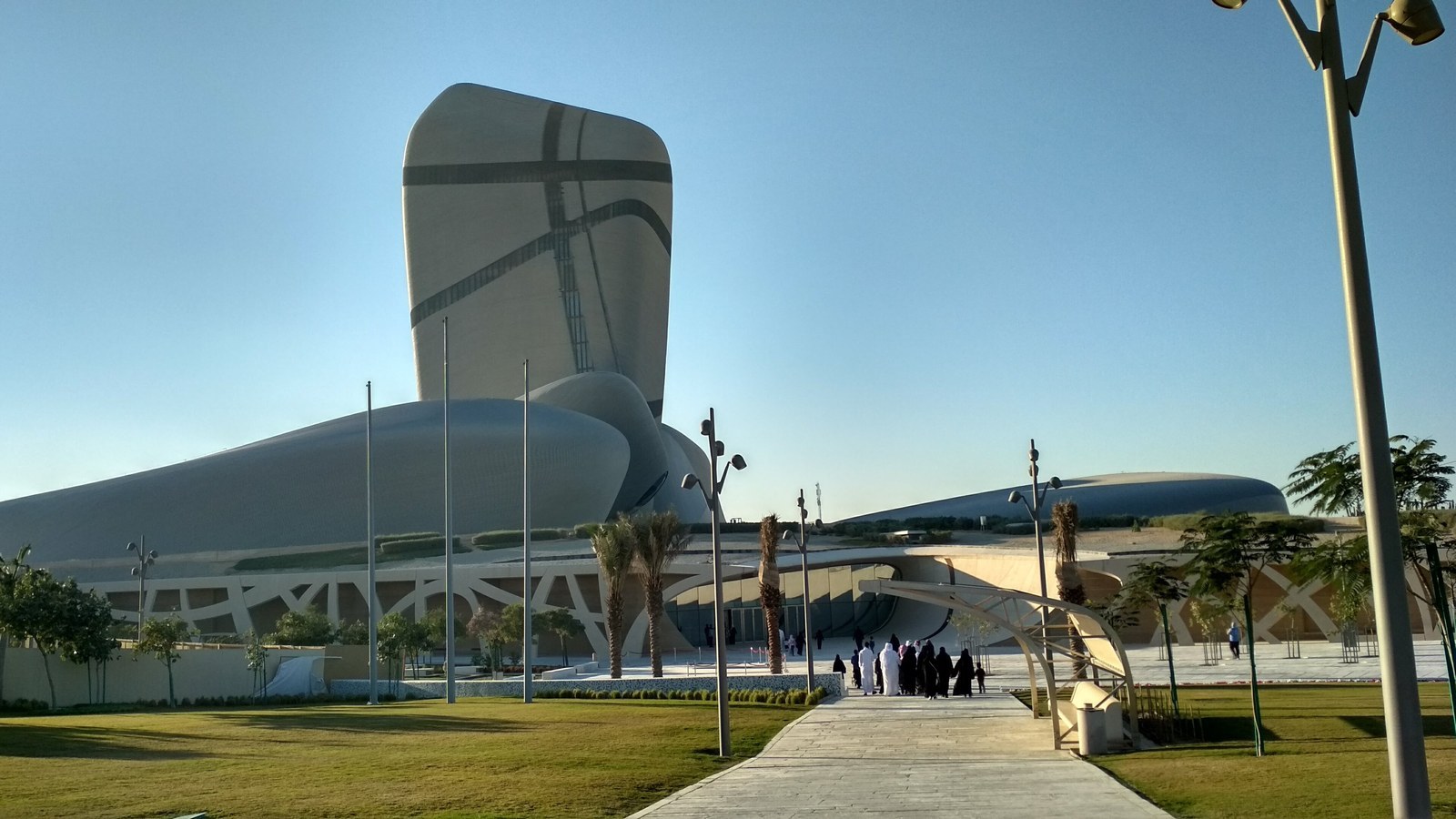
The King Abdulaziz Center for World Culture, known as Ithra and housed in Snohetta's pebble-shaped landmark in Dhahran, staged "Horizon in Their Hands: Women Artists from the Arab World (1960s to 1980s)," a genuinely landmark exhibition presented in collaboration with the Sharjah-based Barjeel Art Foundation and curated by Remi Homs. Bringing together 50 women artists whose work between the 1960s and the 1980s helped reshape the visual language of our region, it was Barjeel's first exhibition in Saudi Arabia, and it ran at the Ithra Museum until 14 February 2026.
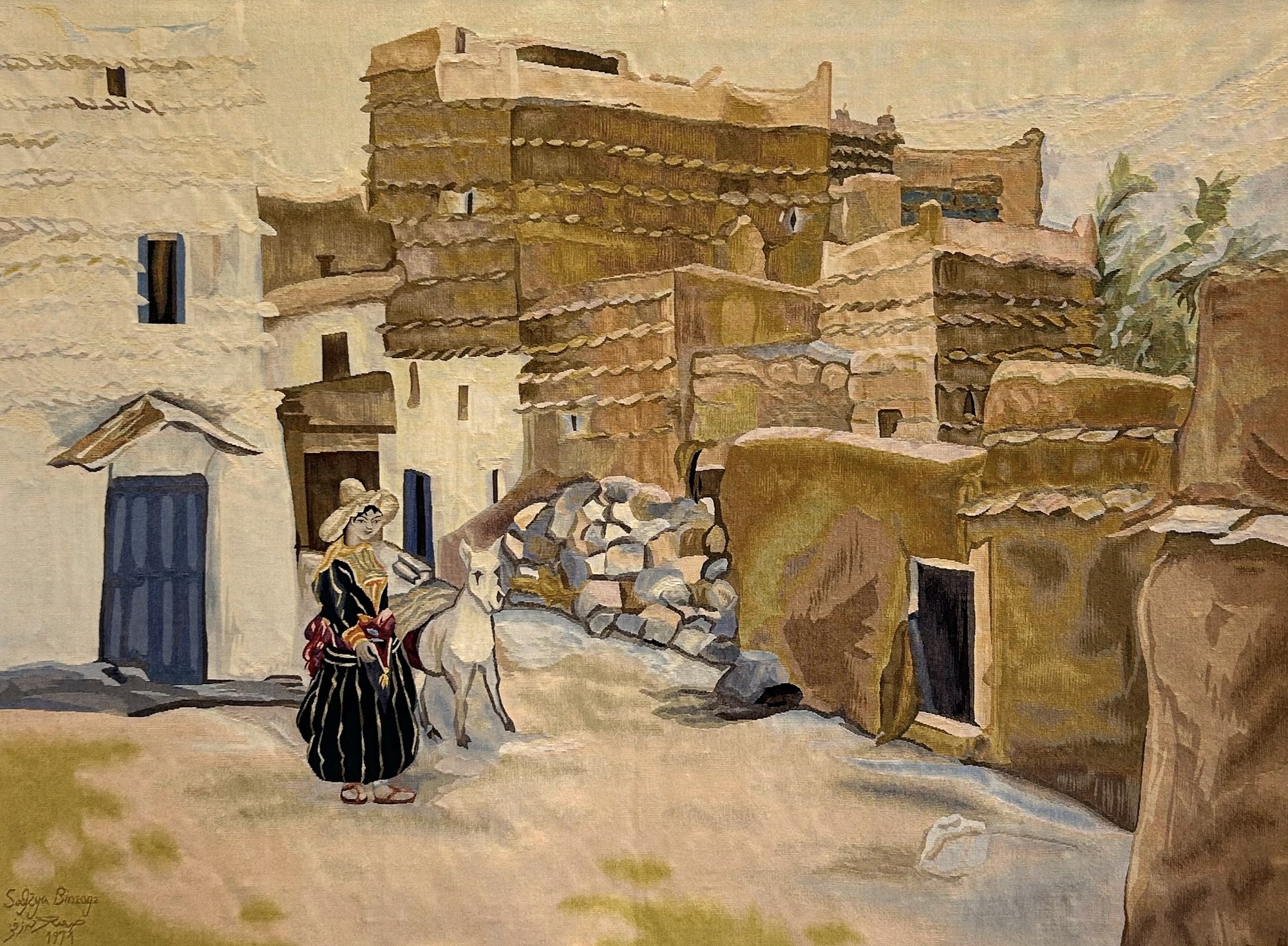
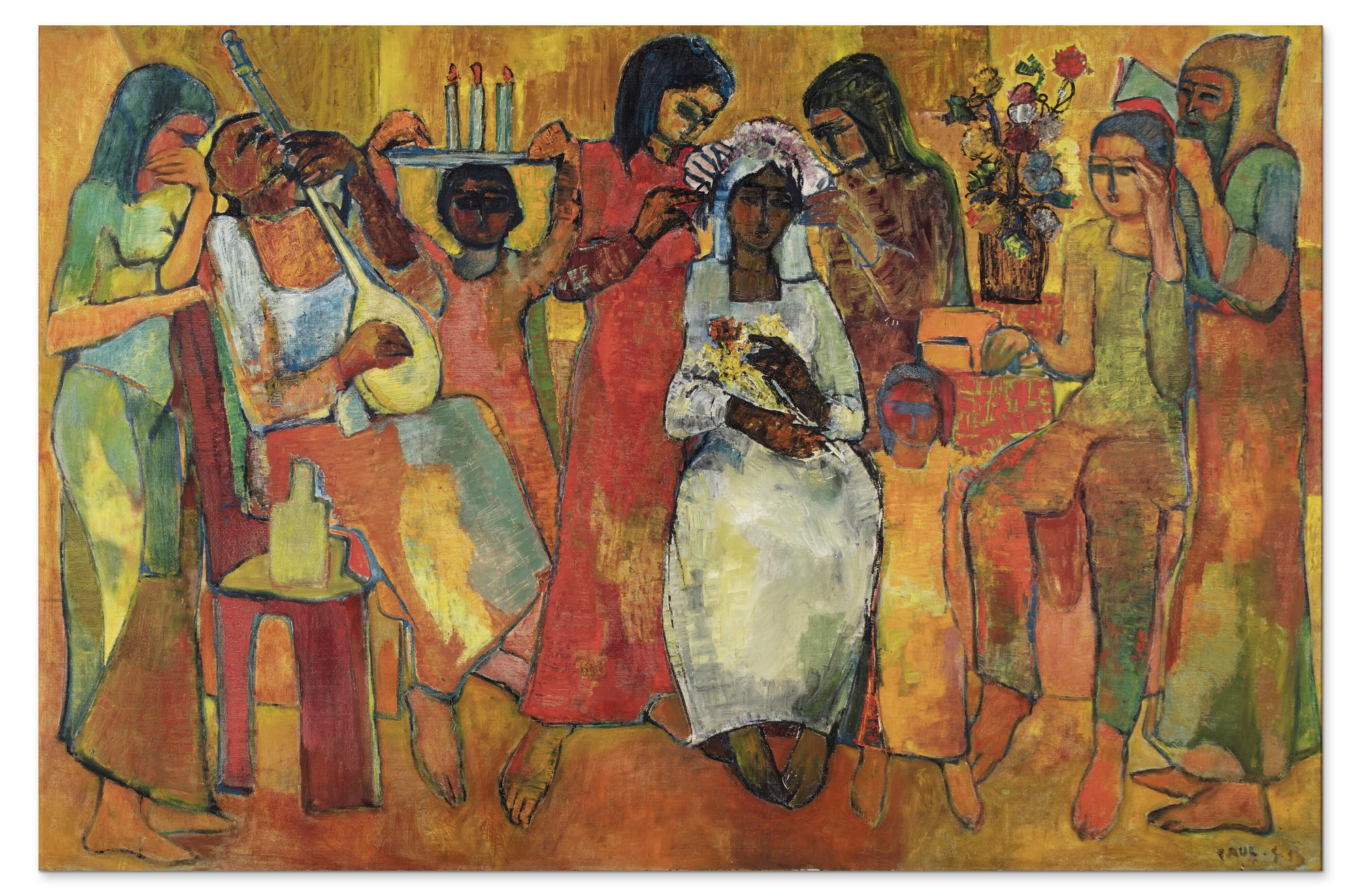
The names on show were the ones every art lover in our region should know. Among them: Saudi Arabia's Safeya Binzagr, the first woman in the Kingdom to hold a solo exhibition; Egypt's Inji Efflatoun (1924-1989), the revolutionary painter whose canvases pulse with defiance; the Moroccan icon Chaibia Talal (1929-2004), whose vivid, myth-inflected works radiate rural life; and Susan Hefuna, whose multimedia practice threads together Egyptian and German narratives. Across painting, sculpture, ceramics, glass, brass and tapestry, the show made a persuasive case that women did not merely participate in modern Arab art, they helped invent it.
"The collaboration with the Barjeel Art Foundation marks an important milestone in Ithra's mission to nurture creativity and shed light on underrepresented narratives," said Farah Abushullaih, Head of the Ithra Museum. Curator Homs framed the period itself as pivotal: these were the decades when many countries across our region gained independence, new nation-states emerged, and rapid modernisation reshaped everyday life, with women artists reframing tradition and claiming space within a male-dominated landscape.
So, what can we take away from all this? Two things, we think. First, that the Kingdom's institutions are treating art history as infrastructure, worth archiving, funding and building on, rather than as decoration. Second, and this is the part that moves us, that the women and elders so often relegated to footnotes are finally being given the walls, the wall texts and the catalogues they always deserved. As we so often say, it has been a good season for women artists, and for memory.
Both institutions show every sign of continuing the work: Misk's Solo Series is designed as an annual fixture, and Ithra's programme of exhibitions rolls on at Dhahran. We're eager to see who they choose to honour next.
More from News
Case Study: Why Christie's Is Taking Its Middle Eastern Sale to Abu Dhabi
Christie's will hold its first fine-art auction in Abu Dhabi on 1 November 2026. We look at the numbers behind Mawasim, what the move tells us, and what to watch as the capital's biggest art season begins.
Islamic Arts Biennale Names Four Lead Curators for 2027
The Diriyah Biennale Foundation has just named Nada Raza, William Robinson, Alain Fouad George and Idries Trevathan as lead curators of the third Islamic Arts Biennale, opening in Jeddah on 1 November 2027.
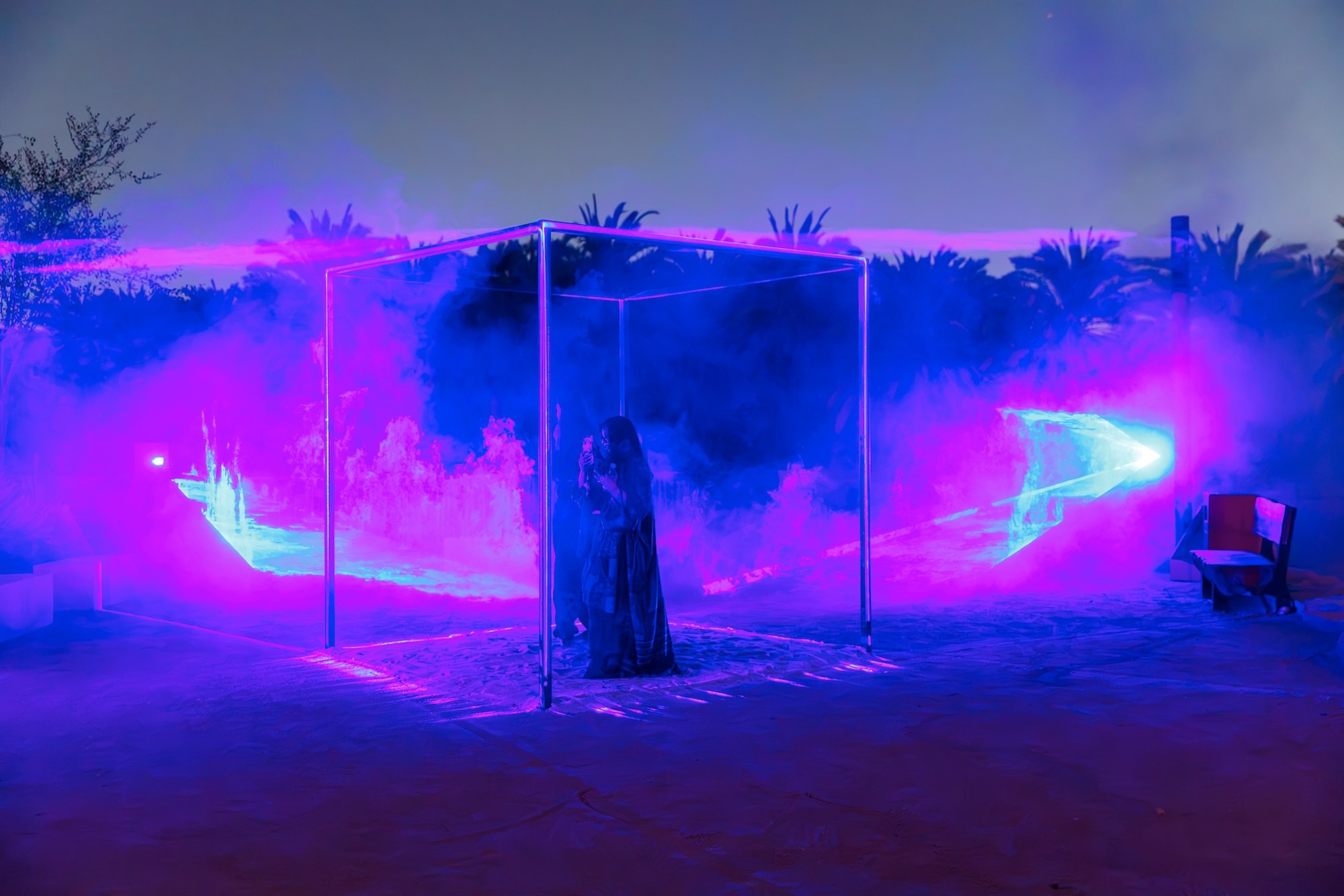
CONTINUUM '26 Puts a New Generation of Media Artists in the Spotlight in Diriyah
The second edition of CONTINUUM at Diriyah Art Futures showcases 16 emerging new media artists, with a strong showing from Saudi Arabia, Egypt, Kuwait and Yemen, until 7 November 2026.