Ten Arab Artists in the Guggenheim Abu Dhabi Collection
Tickets are on sale, but what will we actually see?
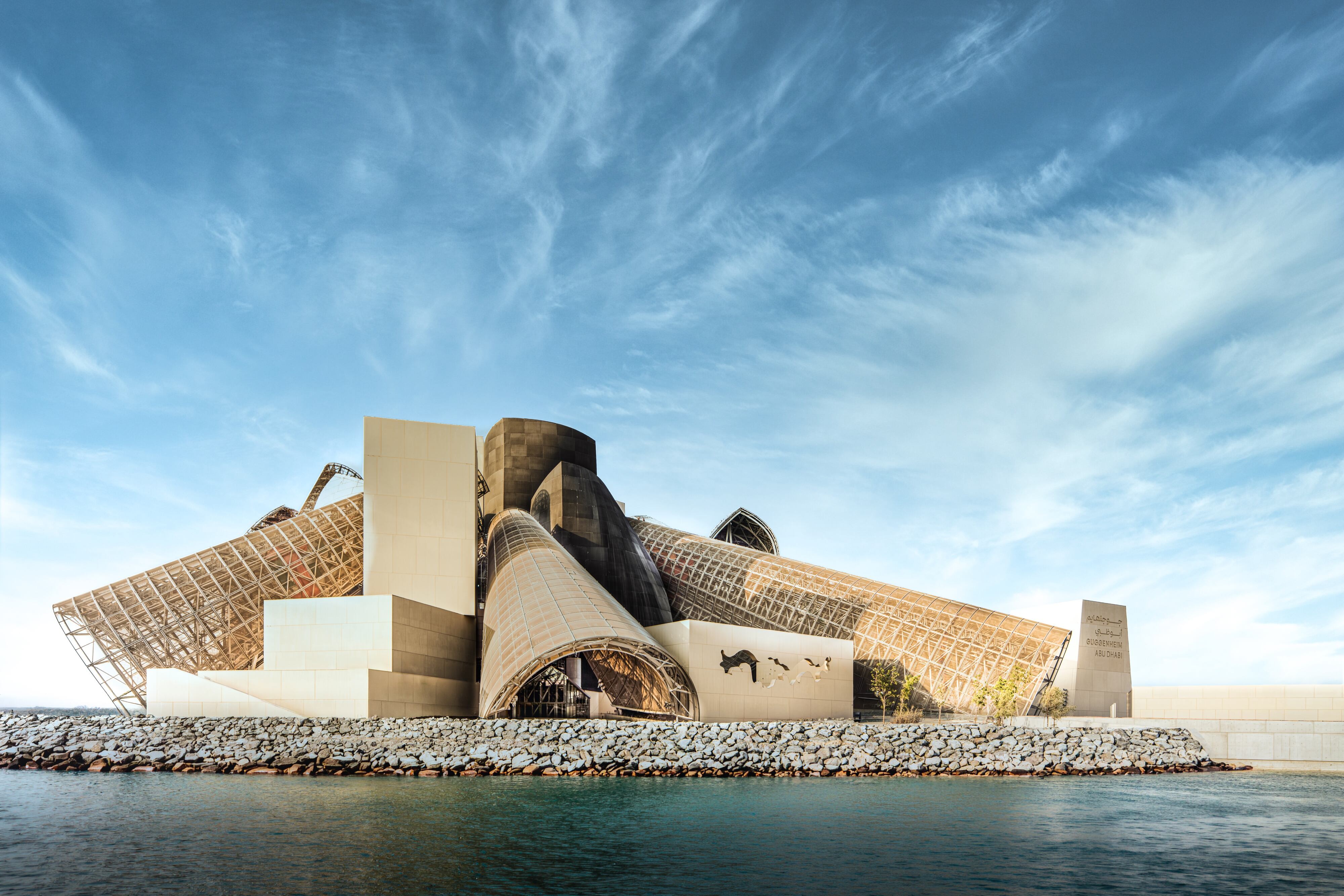
Did you know that the Guggenheim Abu Dhabi already owns Hassan Sharif's Walking No 1? Or Saloua Raouda Choucair's Untitled from 1973, Shakir Hassan Al Said's Writing on the Wall from 1978 and Ibrahim El-Salahi's Untitled from 1964? With the museum set to open on 11 December 2026, The National has just published a list of ten Arab artists whose work sits in its collection, and it makes for exciting reading for anyone who cares about art from the MENA region.
There's just one catch. As The National notes, the works going on display "have yet to be announced." Tickets went on sale on 18 September at Dh70, with free entry for under-18s, UAE residents aged 60 and over, people of determination and UAE university students. At the time of writing, that leaves 73 days between the museum selling admission and telling us what we'll be admitted to.
First announced back in 2006, the Guggenheim Abu Dhabi has been one of the most anticipated museum openings anywhere in the world. Designed by Frank Gehry and rising from the shore of Saadiyat Island, the building spans 80,000 square metres, with 11,600 square metres of indoor gallery space and 23,000 square metres of outdoor exhibition areas across 30 connected galleries. Its collection has been assembled over more than fifteen years, largely out of public view, which is exactly why every glimpse of it matters.
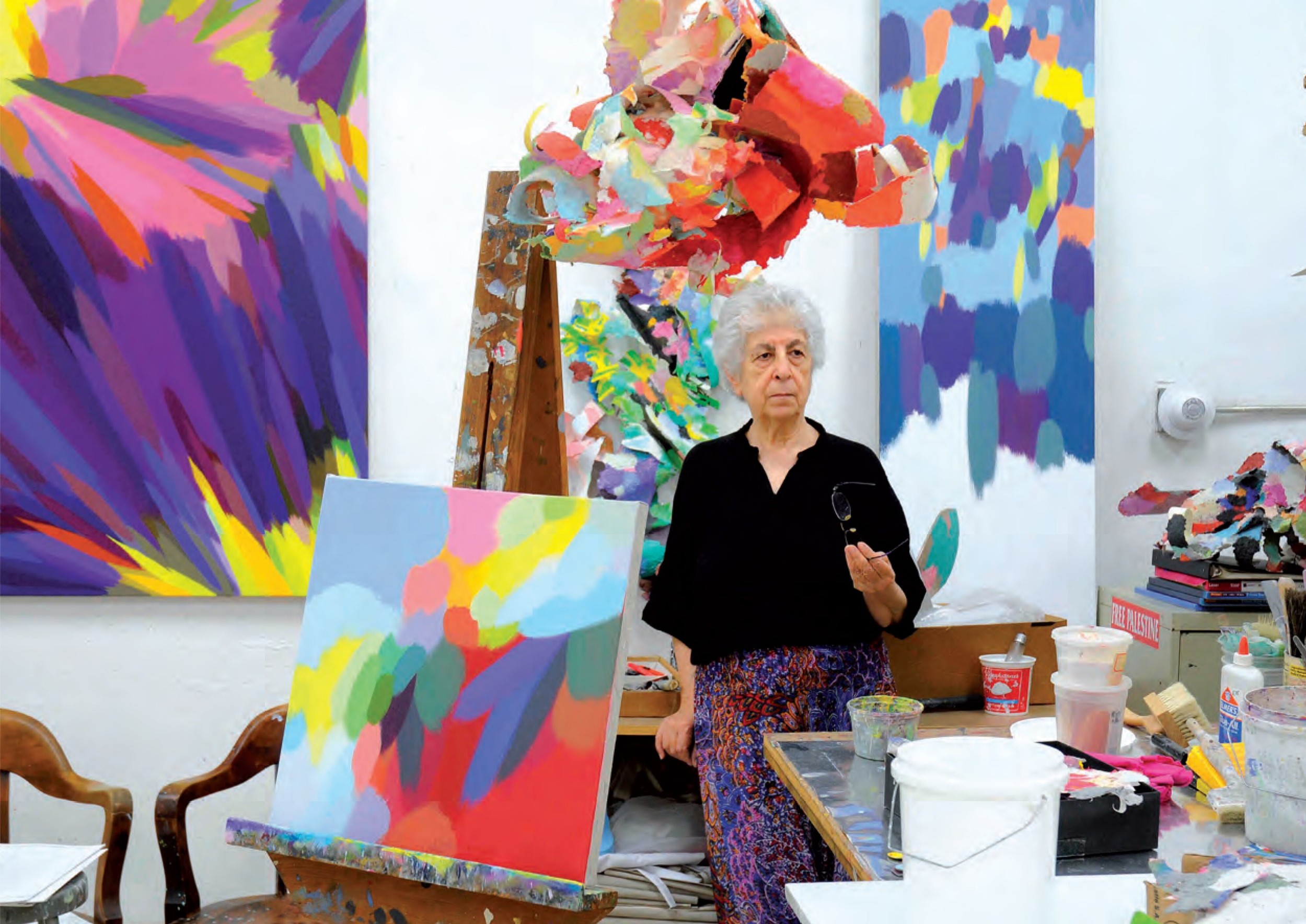
The list is worth sharing in full. Hassan Sharif (1951-2016), the Emirati pioneer of conceptual art, is represented by photographic documentation of his 1980s performances Walking No 1, Jumping No. 2 and Digging and Standing. Fellow Emirati artist Mohammed Kazem is represented by Directions 2002 and Directions 2005/2013. Palestinian artist Samia Halaby (b. 1936) is in the collection with Yellow Spiral (1971), and Lebanese artists Huguette Caland (1931-2019) and Saloua Raouda Choucair (1916-2017) are each represented by an Untitled from 1973.
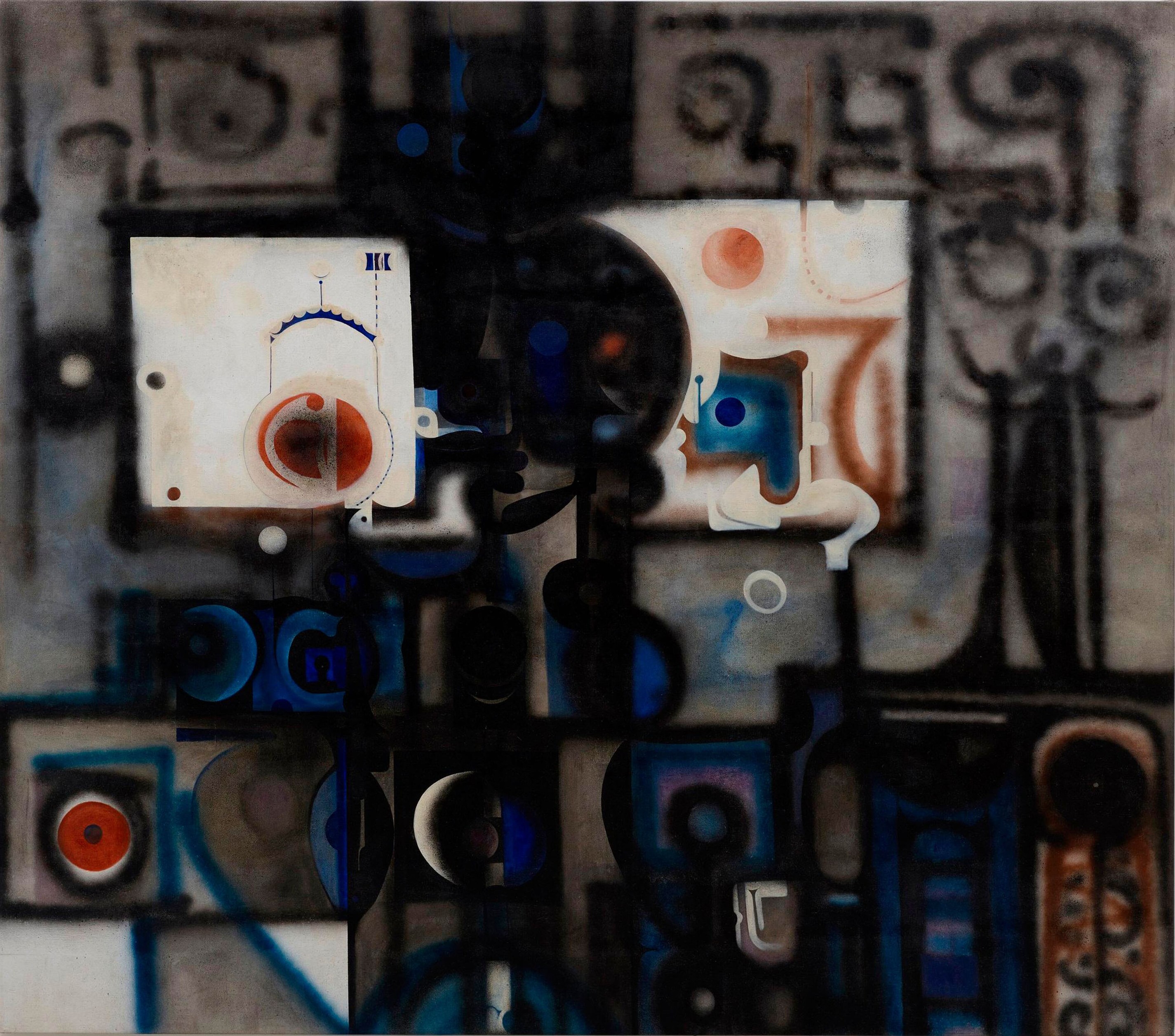
From Iraq, there's Shakir Hassan Al Said (1925-2004) with Writing on the Wall (1978). Egypt is represented by Ghada Amer (b. 1963) with The Words I Love the Most (2012) and by Youssef Nabil, with Natacha & Crown, Cairo 2000 and Lonely Pasha, Cairo 2002. Algerian artist Rachid Koraichi appears with Le Chemin des Roses (Path of Roses), made between 1995 and 2005, and Les Maitres invisibles (The Invisible Masters), while Sudanese modernist Ibrahim El-Salahi (b. 1930) is represented by Untitled (1964).
This is no token selection. Sharif is widely regarded as the founding figure of conceptual practice in the Gulf. Choucair spent decades making sculpture out of the principles of Islamic geometry, long before she received her long-overdue Tate Modern retrospective in 2013. Al Said co-founded the Baghdad Modern Art Group and championed Istilham al-Turath, which in simple terms means seeking inspiration from heritage in order to move forward. El-Salahi is one of the most important modernists Africa has produced. It's also encouraging to see three women artists, Halaby, Caland and Choucair, whose careers were so often overlooked, in such a significant collection.
In the coverage of the opening so far, the collection artists who have been named are Jackson Pollock, Mark Rothko, Andy Warhol and Jean-Michel Basquiat, with artists from the Arab world, Africa and Asia referred to more as a category than by name.
Interestingly, Noura Al Kaabi, the UAE's Minister of State at the Ministry of Foreign Affairs, has said that regional artists will not be "merely featured as supporting actors, but are at the heart of the exhibition," speaking to the German magazine Monopol, as reported by ARTnews. "We're telling a new story," she added.
We have no reason to doubt that intention, and this latest list makes it all the more exciting. Until now, one might have wondered whether the collection held enough regional work to lead with. We now know that it does. So if these ten artists end up in a side gallery while Pollock and Rothko take the first rooms, that will be a curatorial choice rather than a collecting constraint.
So what would it look like if regional artists really were at the heart of the museum? We'd love to see Sharif given a room of his own, early in the visit rather than at the end. We'd love to see Choucair and Caland, both of whom spent formative years in Paris, hung alongside the post-war abstraction they were in conversation with, rather than set apart in a national section. Al Said and El-Salahi on the same floor as the Abstract Expressionists would make both sides look more interesting. And we'd love to see a wall text that explains Istilham al-Turath properly, because an institution that translates is one that has done its homework.
Of course, there may be good reasons for the wait. Loans are often confirmed late, and an opening hang of this scale can shift until the last minute. It's also possible the museum is simply saving the big reveal.
Either way, the Guggenheim Abu Dhabi's opening is a landmark moment for the MENA region, and we're eager to see how these ten artists take their place in it. We'll be there in the opening week, and we can't wait to report back on what's on the walls.
The Guggenheim Abu Dhabi opens on Saadiyat Island on 11 December 2026.
Sources7 references
- The NationalTen Arab artists whose work is in the Guggenheim Abu Dhabi collectionthenationalnews.com
- The NationalGuggenheim Abu Dhabi tickets go on sale ahead of grand openingthenationalnews.com
- The NationalPollock, Rothko, Warhol and Basquiat: First details of Guggenheim Abu Dhabi collectionthenationalnews.com
- ARTnewsUAE Minister Says Guggenheim Abu Dhabi Will Tell a New Story About the Middle East, Despite the Ongoing Warartnews.com
- ARTnewsGuggenheim Abu Dhabi Collection Will Place Titans Like Basquiat and Warhol Next to Under-Recognized Artistsartnews.com
- The NationalGuggenheim Abu Dhabi to open on December 11thenationalnews.com
- GuggenheimGuggenheim Abu Dhabiguggenheim.org
More from News
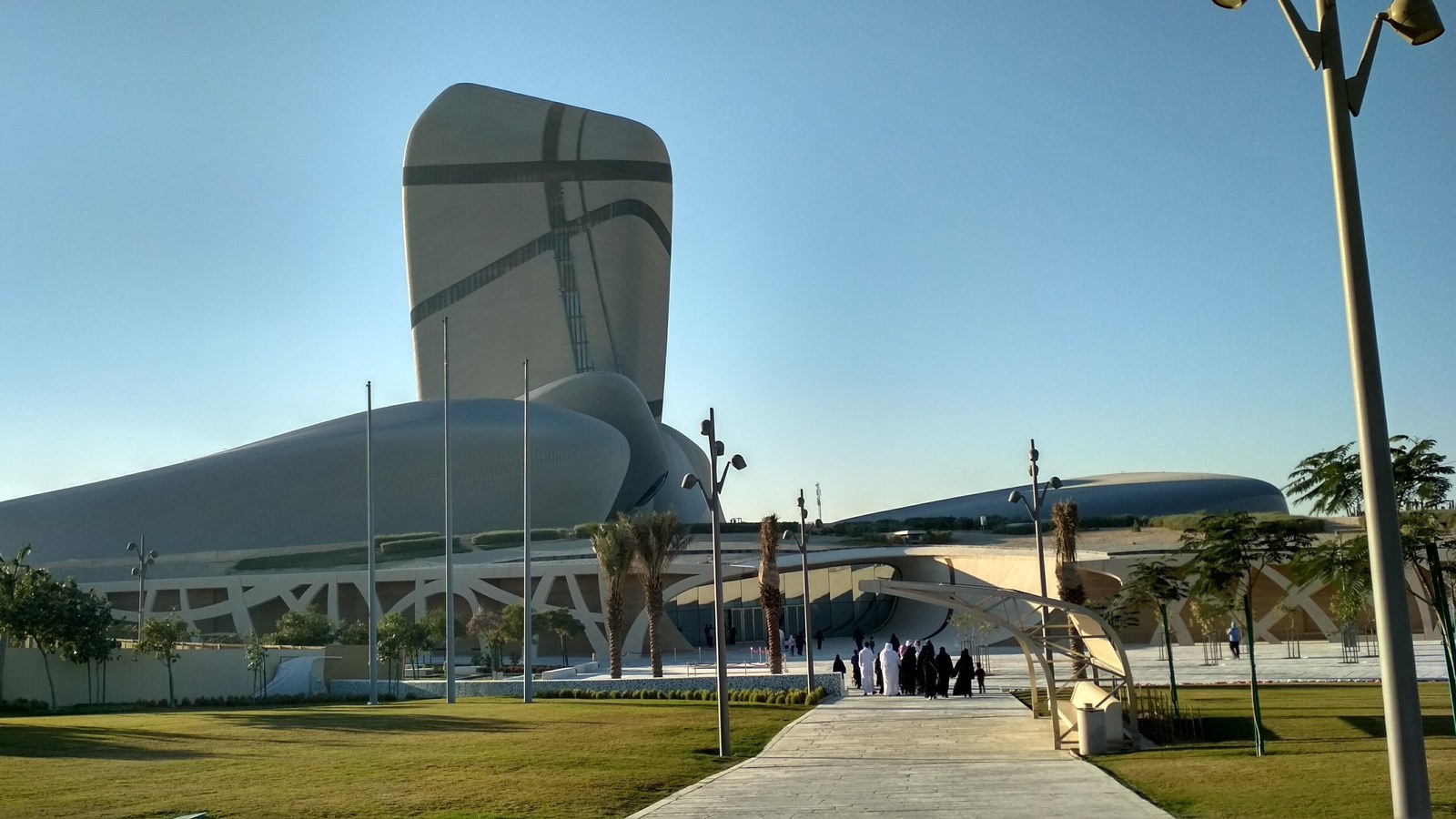
Misk and Ithra Keep Rewriting Saudi Art History, One Pioneer at a Time
Saudi Arabia's Misk Art Institute and Ithra are spotlighting the pioneers and women who shaped modern Arab art, through dedicated solo shows and landmark group exhibitions.
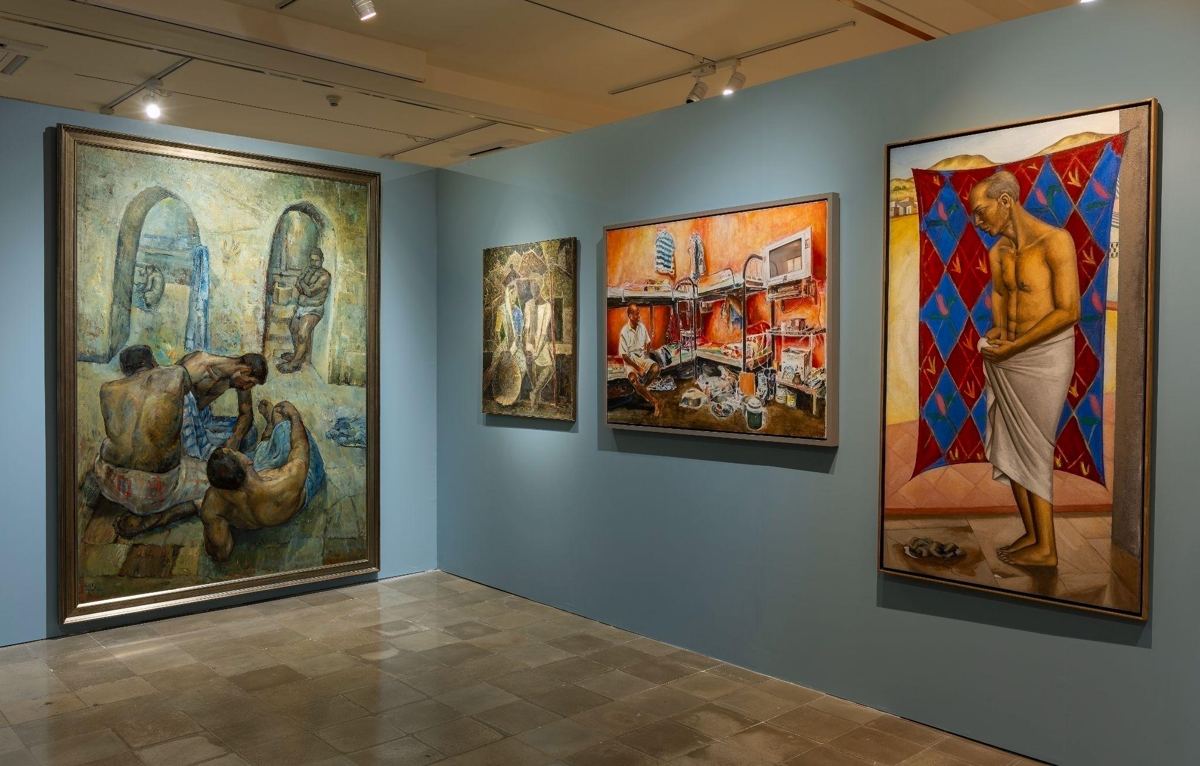
‘Resonant Histories’ Connects India and the Arab World
The first-of-its-kind exhibition traces the artistic conversation between India and the Arab world across the twentieth century.
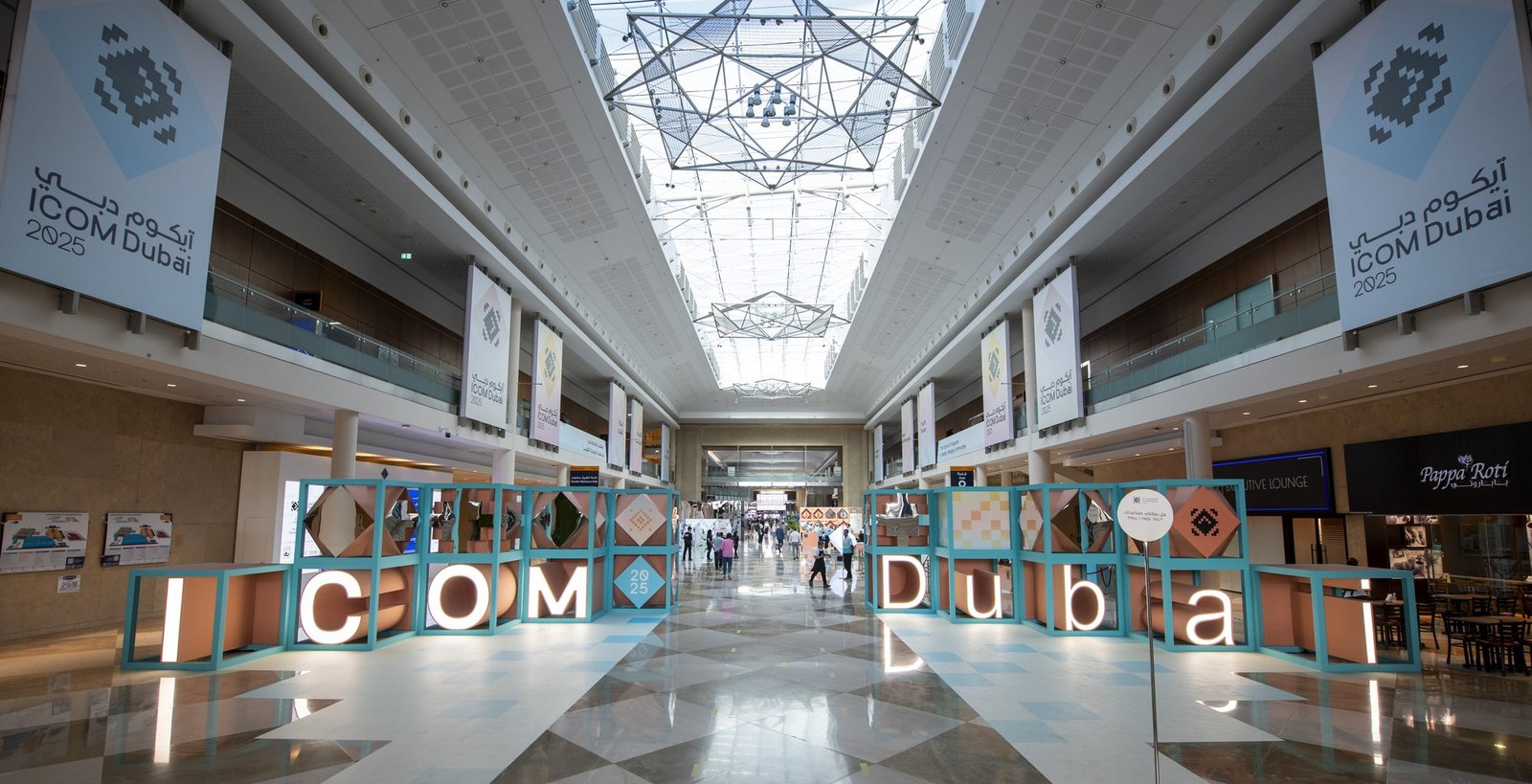
International Council of Museums Meets in the UAE
Held under the theme of "The Future of Museums in Rapidly Changing Communities", the 27th ICOM General Conference is taking place in Dubai between 11 and 17 November 2025, the first time it has occurred within the MEN…