Mawasim, Lot by Lot: What Christie's First Abu Dhabi Sale Tells Us About the Market
Christie's first fine art auction in Abu Dhabi made $8.94 million on 1 November 2026, with 60 of 69 lots sold. We go through the results: a Monir Shahroudy Farmanfarmaian mirror mosaic at the top, a strong night for women and Iranian artists, and the big names that went unsold.
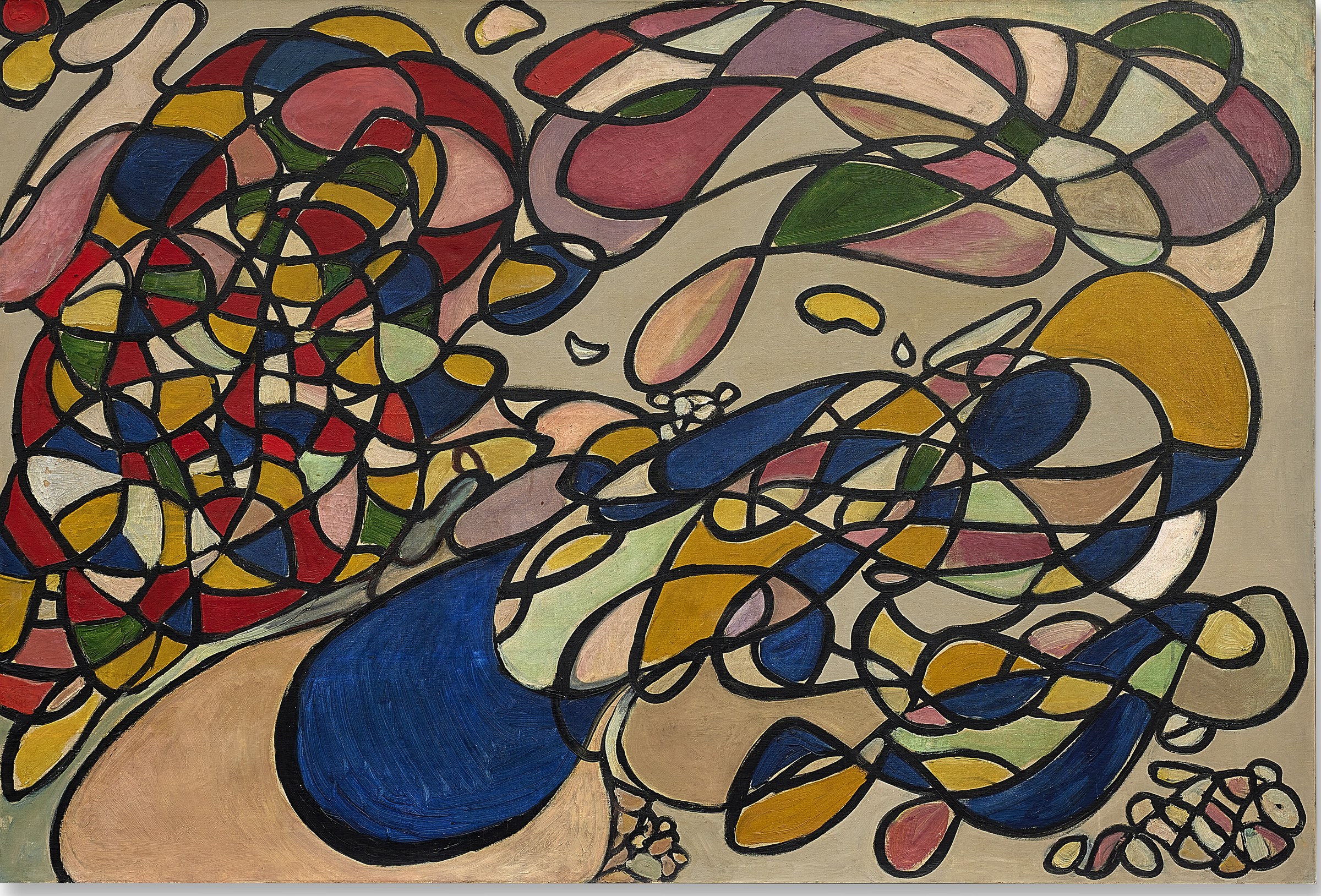
Women at the top, Iran on a roll and a few big names left unsold
The hammer has just come down on Christie's first ever fine art auction in Abu Dhabi, and the numbers are in. Mawasim: 20 Years of Modern and Contemporary Middle Eastern Art made a whopping $8,940,800 at The Abu Dhabi EDITION on Sunday evening, 1 November, which The National reports is Christie's highest evening sale total for modern and contemporary Middle Eastern art in over a decade. Of the 69 lots that went under the hammer, 60 sold, a sell-through rate of 87%. But the headline total only tells part of the story, so we went through the results lot by lot. Keep reading to find out what sold, what didn't, and what it means for our region.
A sale twenty years in the making
For anyone less familiar with it, Mawasim, which means "seasons" in Arabic, marks two decades since Christie's held its first sale in the UAE, in Dubai in 2006. Moving the flagship Middle Eastern sale from London and Dubai to the capital was a bold bet, timed just weeks before the first Frieze Abu Dhabi and the opening of the Guggenheim Abu Dhabi. The lots offered carried a combined estimate of roughly $6.4 million to $9.5 million before fees, so even once the buyer's premium is taken out, the total sits comfortably within that range. Including fees, 34 of the 60 lots sold went for more than their high estimate, and none for less than their low estimate.
"We were absolutely thrilled this evening to see bidding from across our global client base," said Anthea Peers, Christie's president for Europe, the Middle East and Africa, to The National. "This is only the beginning. We are very excited to build on tonight to make our contribution to the ecosystem of Abu Dhabi." Encouragingly, the house says that more than 30% of registrants were millennials or Gen Z, and 37% were new to Christie's.
For context, when Christie's sold works from the Dalloul Collection in London in November 2025, that live sale made GBP 4,112,260 (about $5.4 million at the time) across 39 lots. Abu Dhabi has comfortably beaten it.
A mirror mosaic steals the show
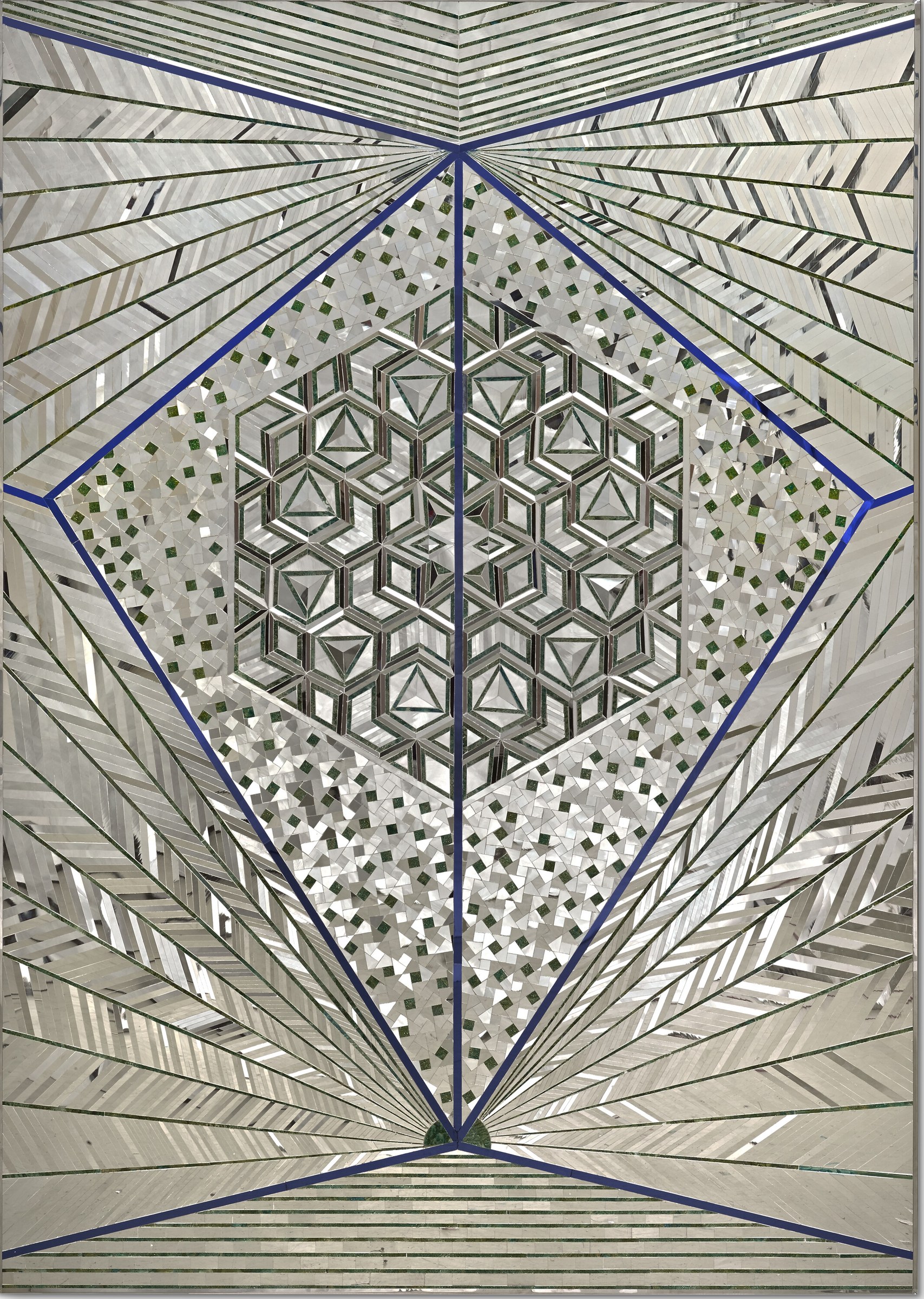
Iranian artist Monir Shahroudy Farmanfarmaian's (1922-2019) Variations on the Hexagon (2006), a mirror mosaic panel made when she was in her eighties, was estimated at $150,000 to $250,000. After almost seven minutes of bidding, according to The National, it sold for $844,800, more than five times its low estimate. Farmanfarmaian, who was born in Qazvin and spent decades between Tehran and New York, turned the mirror work of Persian architecture into abstract geometry, and the result here shows just how much collectors want her best pieces.
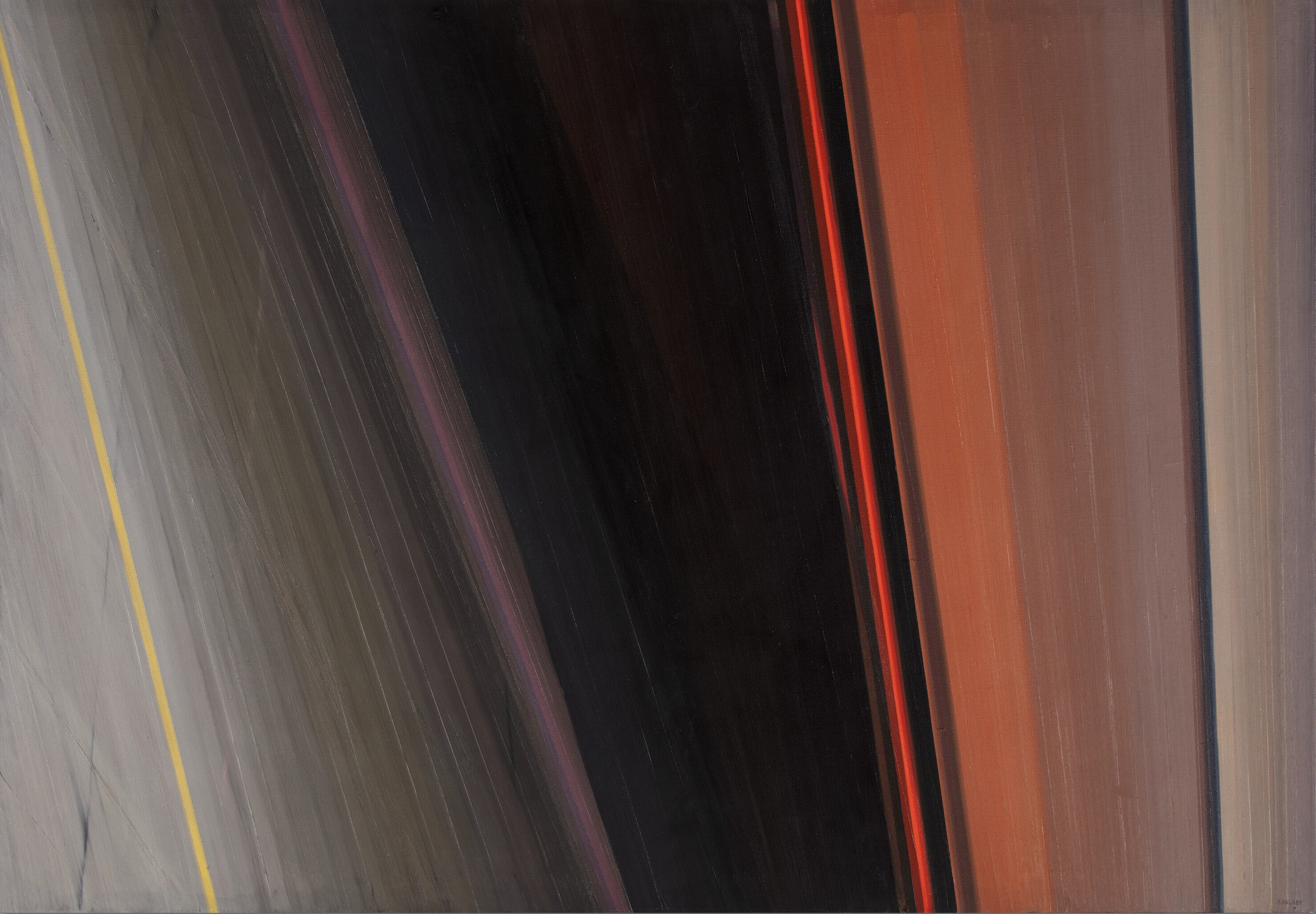
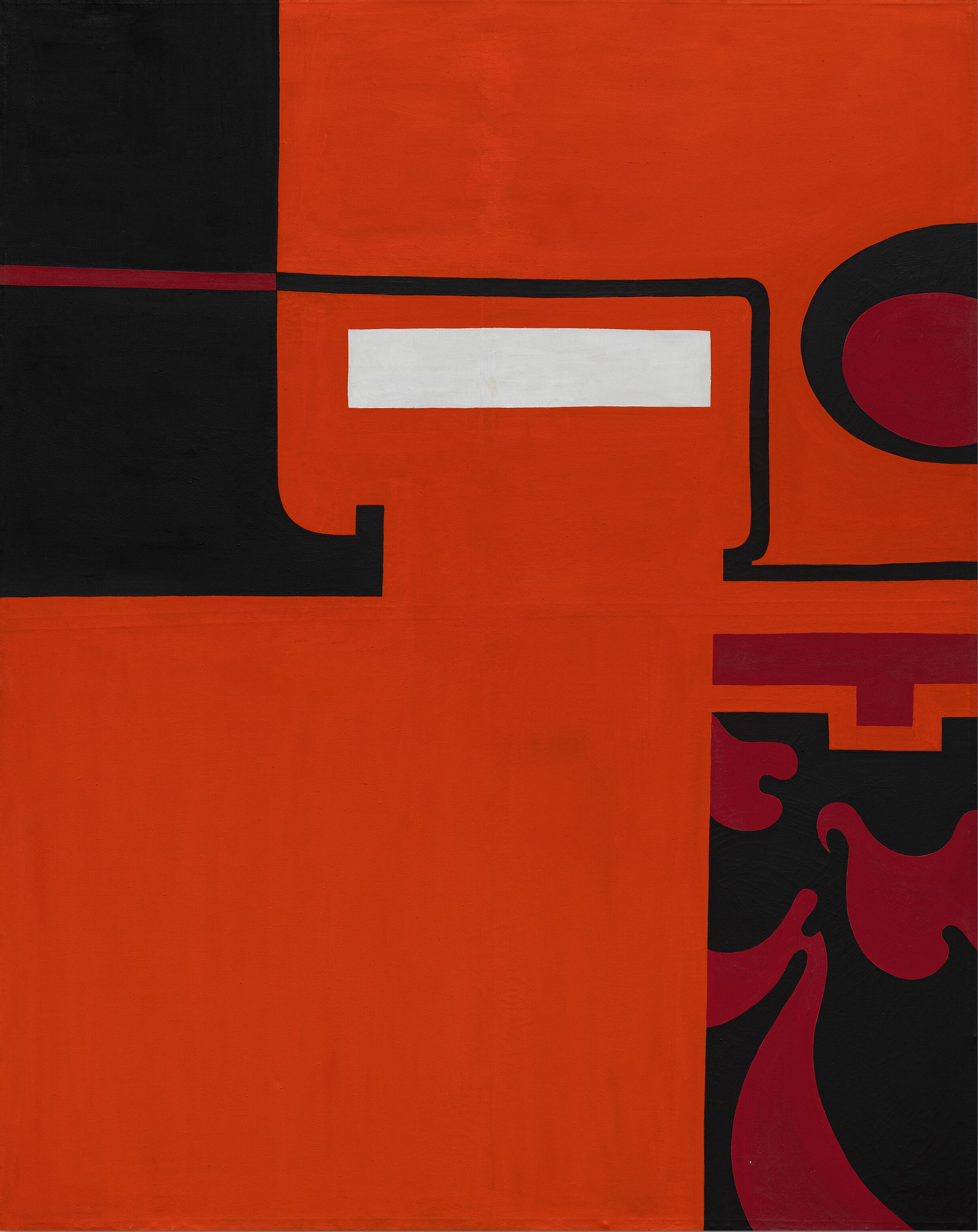
She was not the only woman at the top. Turkish-born Jordanian painter Fahrelnissa Zeid (1901-1991) took the second-highest price with Composition (1948-1949), which sold for $524,800 against an estimate of $500,000 to $700,000, and her later portrait Endless Thoughts (late 1970s), consigned by one of her former students, made $486,400 against $200,000 to $300,000. Palestinian-American artist Samia Halaby (b. 1936) followed with Yesterday (1978) at $358,400, above its $300,000 high estimate, and The National reports that Halaby and Lebanese-Armenian painter Paul Guiragossian set records for specific media. In total, the 24 lots by women brought in $3.32 million, more than a third of the sale, and 23 of them sold. It's been another very good season for women artists.
The big canvases
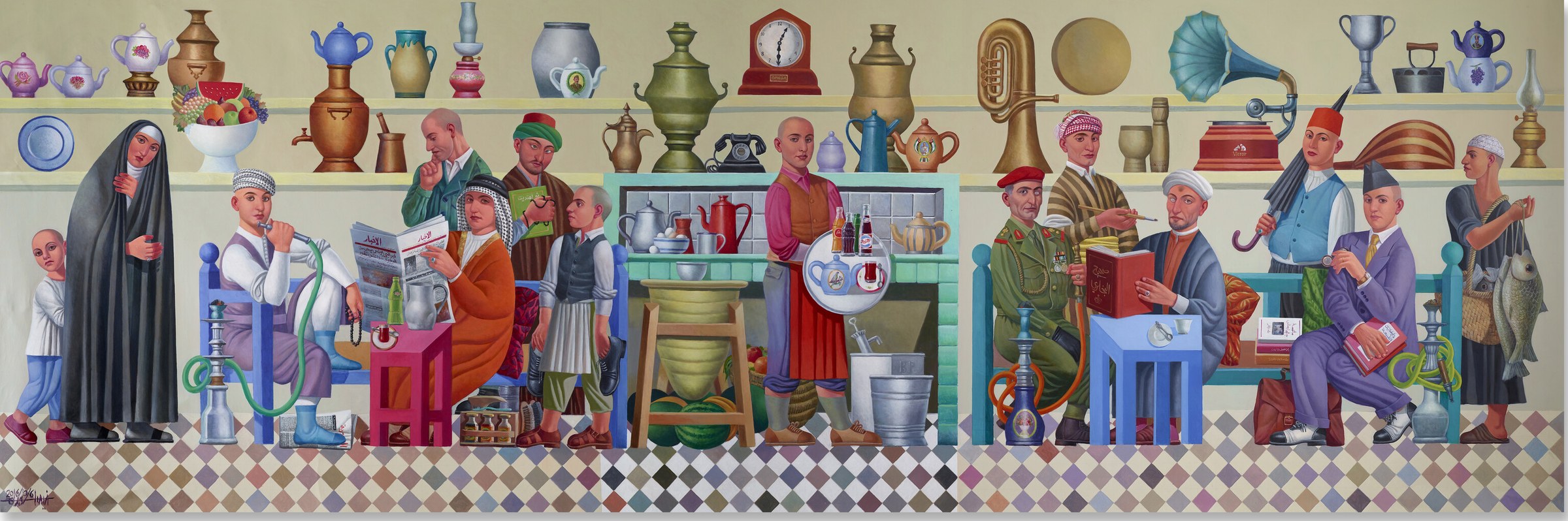
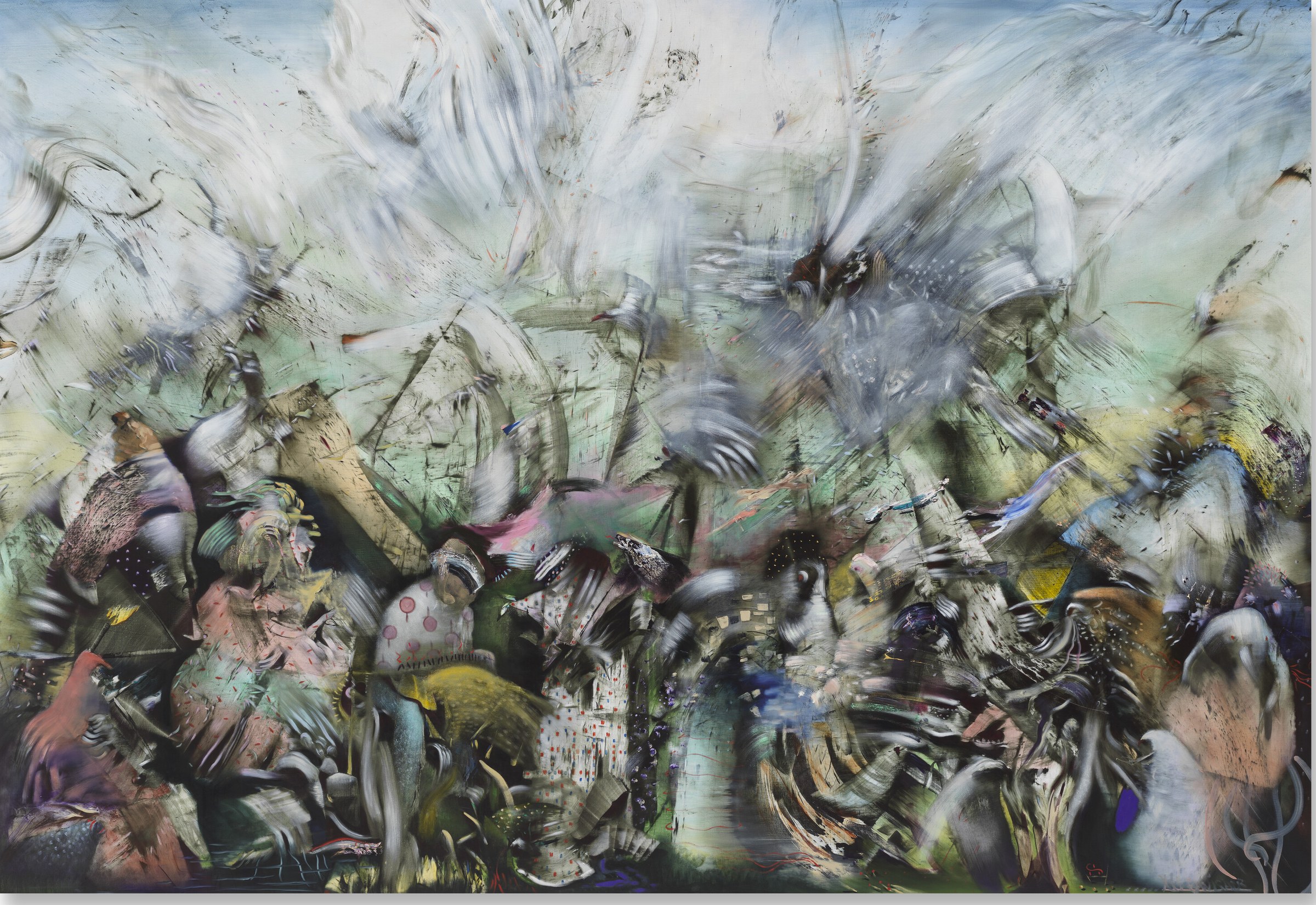
Two monumental paintings tied for third place at $512,000 each. Iraqi artist Faisel Laibi Sahi's (b. 1947) Baghdad Café (The Coffee Shop) (2016), a six-metre panorama of a Baghdad coffee house from the Dalloul Collection in Beirut, sold within its $400,000 to $600,000 estimate. So did Homo Deus (2018) by Tehran-born, New York-based painter Ali Banisadr (b. 1976), a three-metre canvas estimated at $350,000 to $550,000.
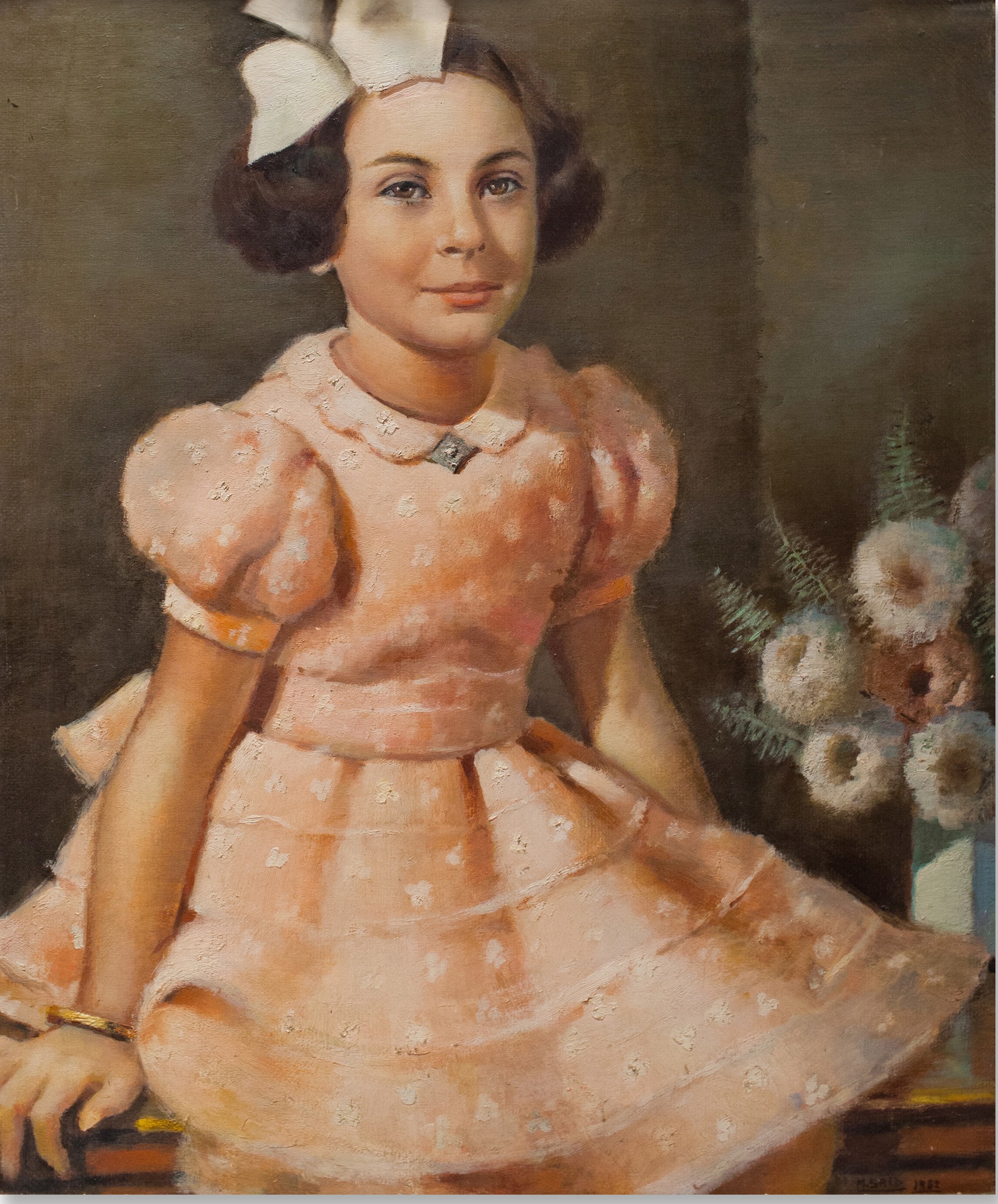
Three works then tied at $486,400. Alongside the Zeid portrait, Egyptian painter Mahmoud Saïd's (1897-1964) Portrait de Princesse Fadia (1952), from the former collection of Queen Farida of Egypt, sold within its $400,000 to $600,000 estimate. The sitter was the youngest daughter of King Farouk and Queen Farida, and The National notes that the portrait was finished only months before the end of Egypt's monarchy.
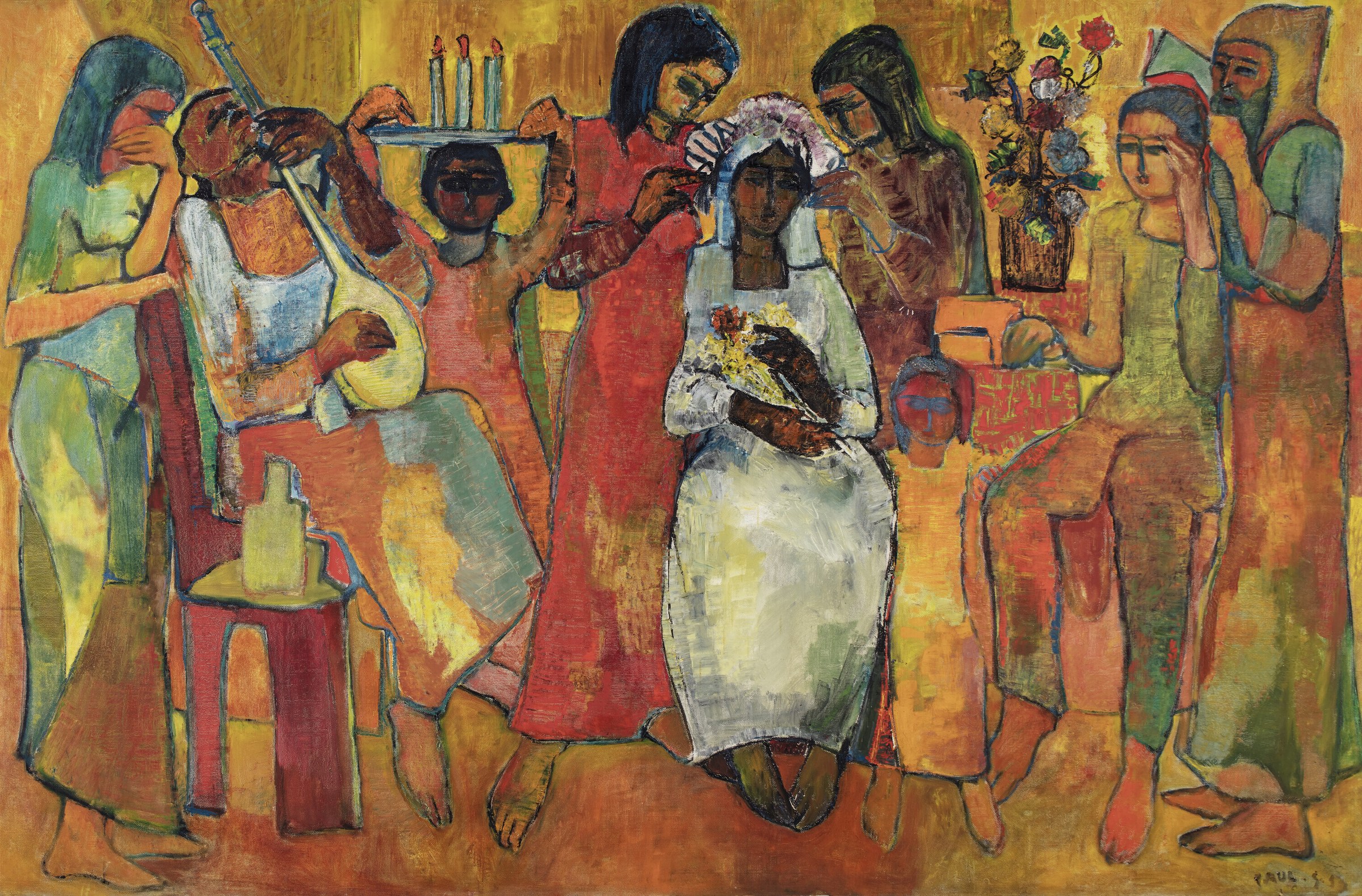
The third was Guiragossian's (1926-1993) Noces (Wedding) (1958-1959), a work bought directly from the artist by the Lebanese architect and collector Farid Trad. At $486,400 it sold within its $300,000 to $500,000 estimate. Interestingly, his smaller Nuit et Jour, La Fuite (Night and Day, The Flight) did better relative to its estimate, making $128,000 against $70,000 to $100,000. Elsewhere, Lebanese painter Ayman Baalbaki's (b. 1975) Babel Tower (2012), also from the Dalloul Collection, made $281,600, above its $250,000 high estimate.
Iran, Egypt and the Maghreb sweep the board
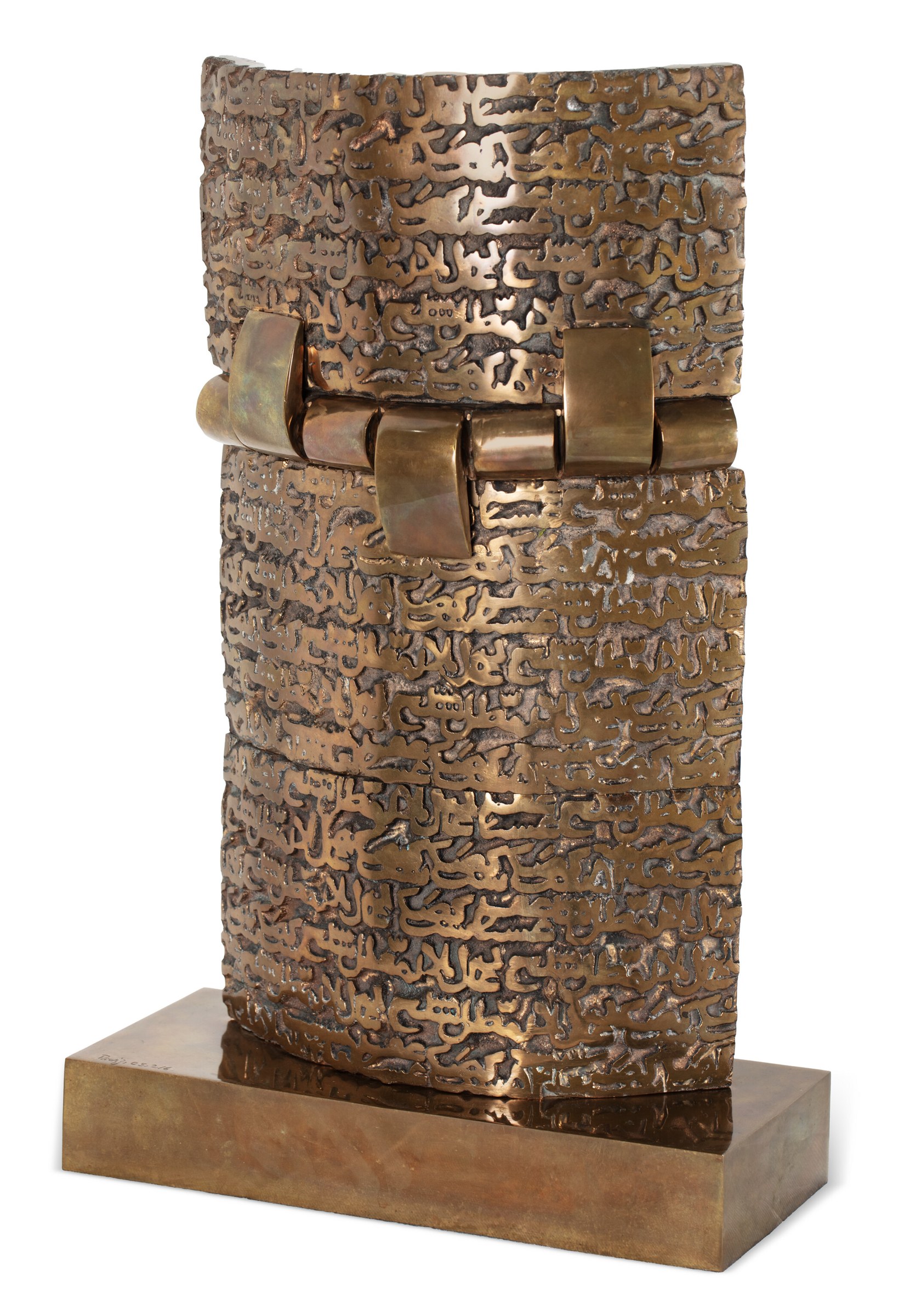
Perhaps the clearest trend of the night was the strength of Iranian art. All six Iranian lots sold, for a combined $2.05 million. Beyond Farmanfarmaian and Banisadr, the late Farhad Moshiri's (1963-2024) Untitled (2003), one of his jar paintings, made $230,400 against an estimate of $80,000 to $120,000, while Parviz Tanavoli's (b. 1937) bronze The Wall and the Script I (2005) more than doubled its high estimate at $192,000. Charles-Hossein Zenderoudi (b. 1937) and Sohrab Sepehri (1928-1980) also sold above estimate.
Maghrebi modernism did just as well. All seven lots from Algeria, Morocco and Tunisia sold, for $1.05 million. Two leading figures of the Casablanca Art School led the way, with Mohammed Chabâa's (1935-2013) Untitled (1965), from the artist's estate, at $211,200 and Mohamed Melehi's (1936-2020) Untitled (1962) at $204,800. Algerian artist Rachid Koraïchi's (b. 1947) Bleu, couleur invisible (2014) made $153,600, and the sale's very first lot, a 1977 gouache by Algerian artist Baya (1931-1998), set the tone at $128,000 against an estimate of $40,000 to $60,000.
Egypt was also a clean sweep, with all seven Egyptian lots sold for $1.11 million. Hamed Nada's (1924-1990) Wa Hamaha al-Ghizlan (And the Gazelles Protected Her) (1974) made $204,800, more than two and a half times its low estimate, and Inji Efflatoun's (1924-1989) Untitled went for $96,000, against $40,000 to $60,000.
What's more, some of the most impressive results came lower down the sale. Palestinian-Lebanese painter Juliana Seraphim's (1934-2005) Femme Fleur (1973) made $83,200, more than three times its low estimate, and an Untitled (1994) by Lebanese-American painter Helen Khal (1923-2009) did the same at $121,600. Syrian painter Anas Albraehe (b. 1991), the youngest artist in the sale, saw his Untitled (2020) from the Bab Alhawa series reach $57,600 against an estimate of $20,000 to $30,000.
The Emirati moment
On home ground, all six works by Emirati artists sold. The figures are modest next to the modern masters, but the results are meaningful: Mohammed Kazem's (b. 1969) Even the Shade Does not Belong to Them (2018) made $61,440, against $25,000 to $35,000, and Hassan Sharif's (1951-2016) Press Conference No.2 (2008) reached $83,200. According to The National, Rami Farook, Fatma Lootah and Afra Al Dhaheri all made their auction debuts. For a city that wants to be a market as well as a museum capital, this matters.
What didn't sell
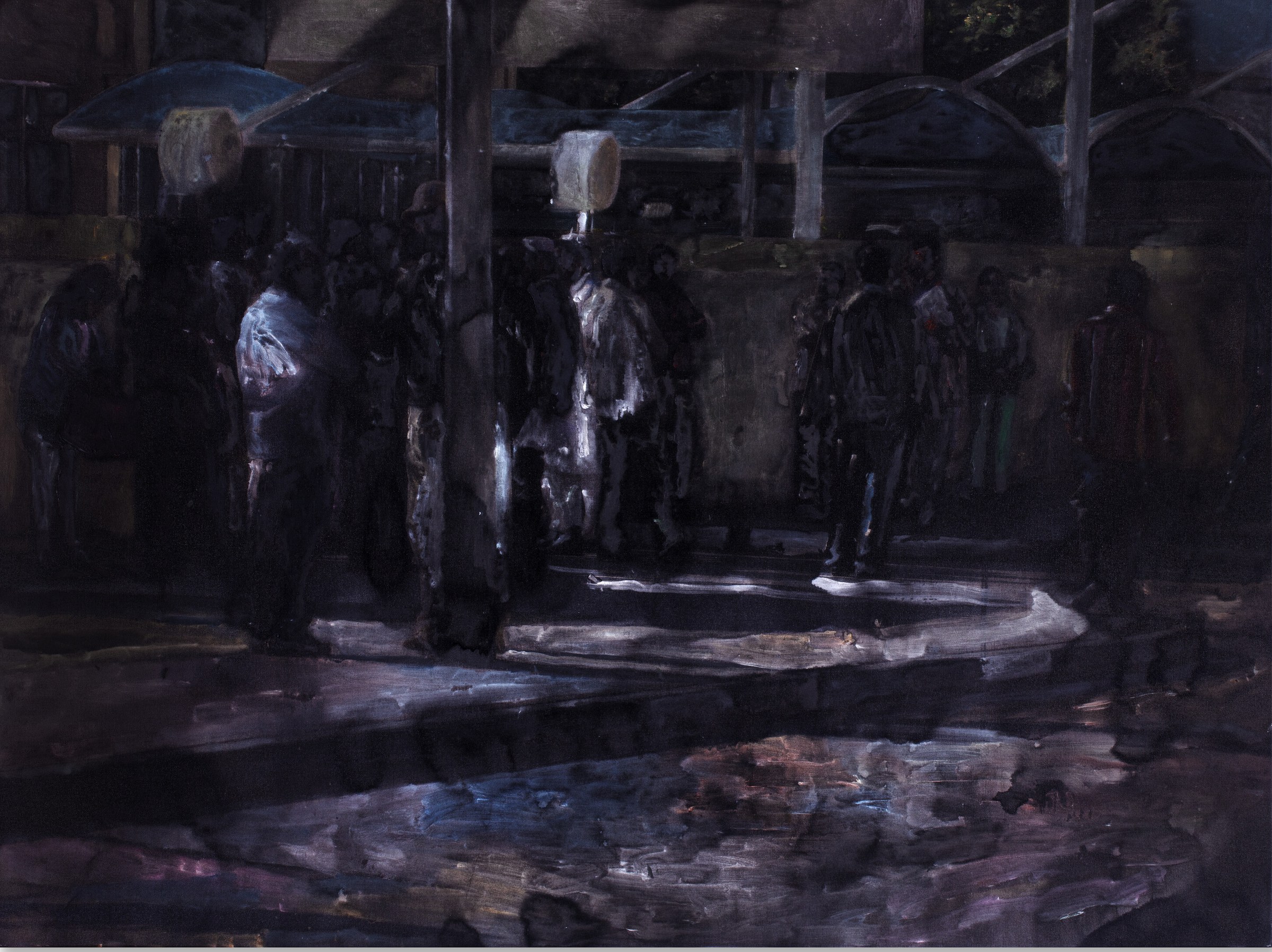
That said, the nine unsold lots are just as revealing, and some of them were among the most expensive in the sale. Lebanese painter Nabil Nahas's (b. 1949) three-part Inka Dinka Doo (2013), estimated at $300,000 to $400,000, did not find a buyer, even though he is representing Lebanon at this year's Venice Biennale and Christie's chief executive Bonnie Brennan had singled him out ahead of the sale. Nor did Syrian artist Marwan's (1934-2016) large Kopf (Head) (1987), estimated at $200,000 to $300,000, although a smaller Kopf sold for $57,600.
Saudi art had a harder night. Both works by the pioneer Abdul Halim Radwi (1939-2006), offered by his estate, went unsold, including Afaq Halima (Space) (1989), estimated at $250,000 to $350,000, as did Dana Awartani's You Are The Universe in Ecstatic Motion I. Only two of the five Saudi lots sold, Ahmed Mater's Golden Hour (2011) at $102,400 and Manal Al Dowayan's Time Betrays at $19,200. Iraqi painter Mohammed Sami's (b. 1984) My Son's Clothes III (2018), estimated at $150,000 to $200,000, also failed to sell, along with works by Mahmoud Sabri, Aref El Rayess and Sliman Mansour's Palestinian Door. Mansour, who died this year, was still well represented, with his 1966 Self Portrait selling for $128,000.
In our case study last month we argued that buy-in rates are a more honest indicator than headline records, and promised to watch this sale closely. Mawasim's buy-in rate was 13% by lot. That compares very well with recent London sales, including Bonhams' online sale in February 2026, which sold just 62% of its lots. The pattern is telling, though: buyers paid strongly for museum-quality modernism with good provenance, and held back on some of the highest estimates for contemporary painting.
Provenance sells
Speaking of provenance, it clearly made a difference. All 13 lots from the Dalloul Collection, Beirut, sold, for a total of $1.78 million, and all five works deaccessioned by Sharjah's Barjeel Art Foundation found buyers too. Princess Fadia came from a royal collection, Noces from the family of its first owner, and the Chabâa from the artist's estate. As Brennan told The National before the sale, "We have to get pricing right. The market is savvy and well educated."
So, what can we take away from this?
The first fine art auction in Abu Dhabi has been a success by almost any measure: a total within its estimate even after fees, an 87% sell-through rate, a crop of new and younger bidders, and Christie's highest Middle Eastern evening sale total in over a decade. Women artists took the top two lots and more than a third of the total, Iranian, Egyptian and Maghrebi modernists sold every work offered, and Emirati artists were welcomed on home ground. The unsold lots are a reminder that even a booming market has its limits. With Frieze Abu Dhabi from 19 to 22 November and Sotheby's first fine art sale in the capital, Breaking Ground, on 10 December, we can't wait to see whether the momentum holds.
All figures are in US dollars. Prices include the buyer's premium; estimates do not.
Sources9 references
- Christie's, "MAWASIM: 20 Years of Modern and Contemporary Middle Eastern Art", sale resultschristies.com
- The NationalChristie's debut Abu Dhabi sale totals $8.94 million, setting nine auction recordsthenationalnews.com
- The NationalAbu Dhabi is gaining ground in the art market, says Christie's CEOthenationalnews.com
- The NationalFive highlights to look out for at Christie's first Abu Dhabi fine art auctionthenationalnews.com
- Khaleej TimesChristie's brings Dh477m in art to Abu Dhabi for landmark auctionkhaleejtimes.com
- ArtmenaCase Study: Why Christie's Is Taking Its Middle Eastern Sale to Abu Dhabiartmena.com
- ArtmenaCase Study: What Buy-In Rates Reveal About the Middle Eastern Art Marketartmena.com
- ArtmenaChristie's Autumn 2025 MENA Sales Analysisartmena.com
- ArtmenaSotheby's Announces Its First Fine Art Auction in Abu Dhabiartmena.com
More from News
Sotheby's Announces Its First Fine Art Auction in Abu Dhabi
Sotheby's will hold Breaking Ground, its first fine art auction in Abu Dhabi, on 10 December 2026, with Monet and Warhol alongside Emirati pioneers and women artists from across the Arab world, two of them making their auction debuts.
Case Study: What Buy-In Rates Reveal About the Middle Eastern Art Market
An art market economist argues in The Art Newspaper that the clearest signal of demand is what fails to sell. We test the idea against a year of Middle Eastern sales at Bonhams, Christie's and Sotheby's.
Case Study: Why Sotheby's Is Selling a Qatari Collector's Paris Home
In November, Sotheby's Paris will sell the contents of Sheikh Hamad bin Abdullah Al Thani's residence on Avenue Charles-Floquet. We look at the numbers, the Hôtel Lambert precedent and what to watch.