Baghdad Modern Art Group Exhibition
Landmark exhibition of Iraq’s Baghdad Modern Art Group opens in the US
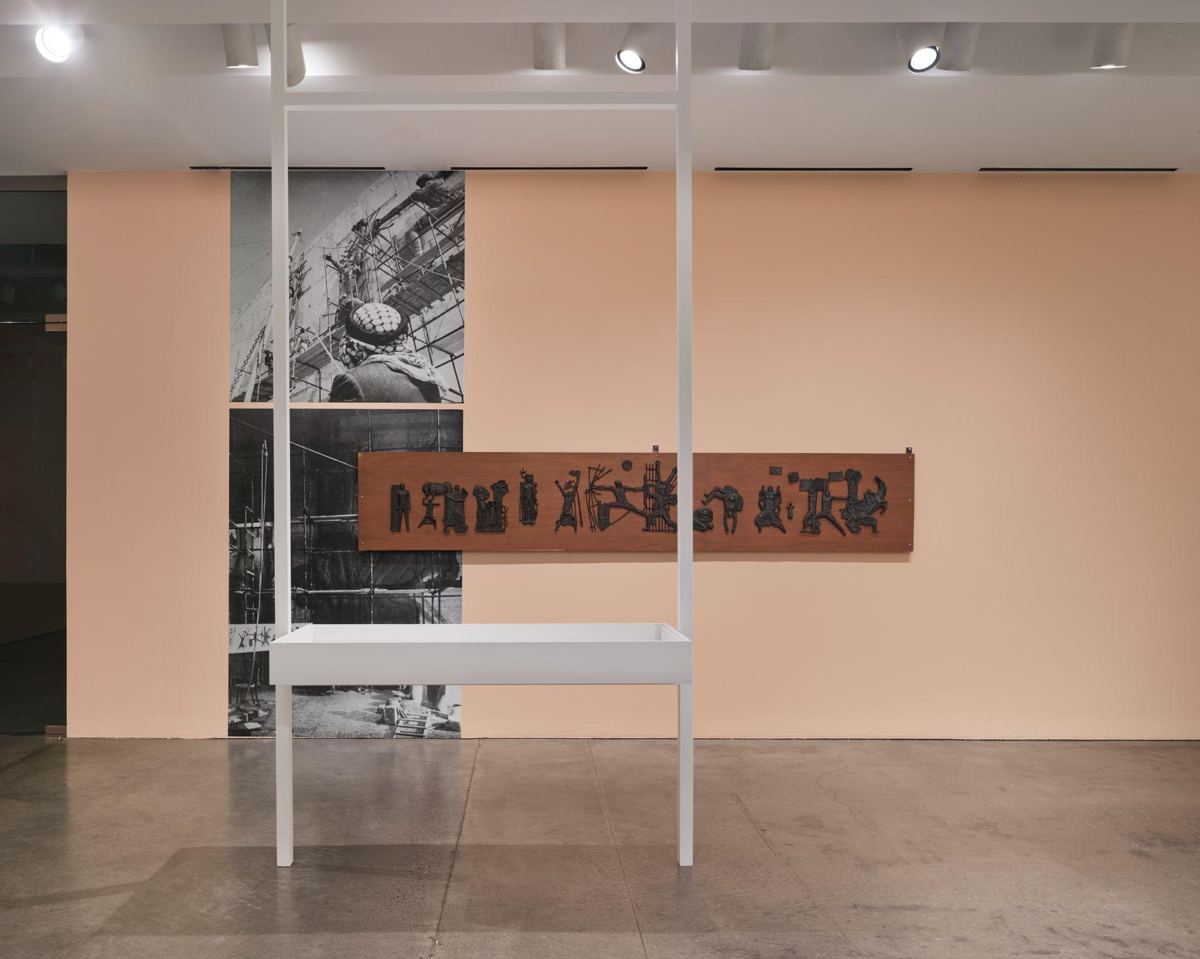
The 20th century saw a number of modern art groups forming in Iraq. The first was called “The Pioneers” (Al Ruwad), which operated between the 1930s and 1960s. This was followed by “The Primitive Group” (Jum'at al Ruwwad), which was active in the 1950s. However, the most famous Iraqi modern art group was the “Baghdad Modern Art Group”, which was founded by Jawad Saleem (1919-1961) and Shakir Hassan Al Said (1925-2004) in 1951. The group remained a creative force through the early 1970s and is now the subject of its first US exhibition at the Center for Curatorial Studies, Bard College’s (CCS Bard) Hessel Museum of Art.
All Manner of Experiments: Legacies of the Baghdad Modern Art Group will run until 19 October 2025, featuring painting, sculpture, and drawing as well as archival material which includes newsreel footage, the Group’s manifesto, exhibition posters, and artist-designed brochures. Curated by Nada Shabout, along with specialist in modern Iraqi art Tiffany Floyd, and Artistic Director of CCS Bard Lauren Cornell, it is the first exhibition to historicise and contextualise the Group and to provide the opportunity for a Western audience to learn about modernism from the vantage point of a post-colonial Iraq.
The exhibition takes its title - All Manner of Experiments - from the Group’s manifesto. “They declare what it is that they want to do, and they're like, you're probably wondering how to do this, and we do it by all manner of experiments”, explains Shabout, “Which is sort of also very much expressed by the spirit of the group, or the approach of the group, that it is experimental.”
It was essential for Shabout to contextualise 1950s Iraq for the exhibition viewer. “Clearly all we see on the news is a falling apart or very distraught city and sort of pre-civilisation at times. But the Baghdad of the 1950s was definitely a city of hope, a city of optimism, despite the 1950s being not very stable politically. There were a lot of protests. There was a lot of oppression”, she explains, describing a time of treaties between political powers, the overthrowing of the monarchy, and protests on the streets. “However, it was also a time that they could see beyond this into something better”, she stresses, “People only protest if they think there's hope beyond the current moment…the Iraqis were trying to come to terms with who the country is, what is the potential, and particularly that generation of Iraqi artists who sort of grew into this position of maturity wanted to forge specific aesthetics that expressed them, that spoke of their own optimism and aspiration.” In light of this, the exhibition includes images of artists doing impromptu art on cardboard and displaying it in the streets in celebration of the revolution. “So, the country, Baghdad as a city, was a city in the process of change. On every level of their life, change was happening to be more expressive of their reality and their new characters.”
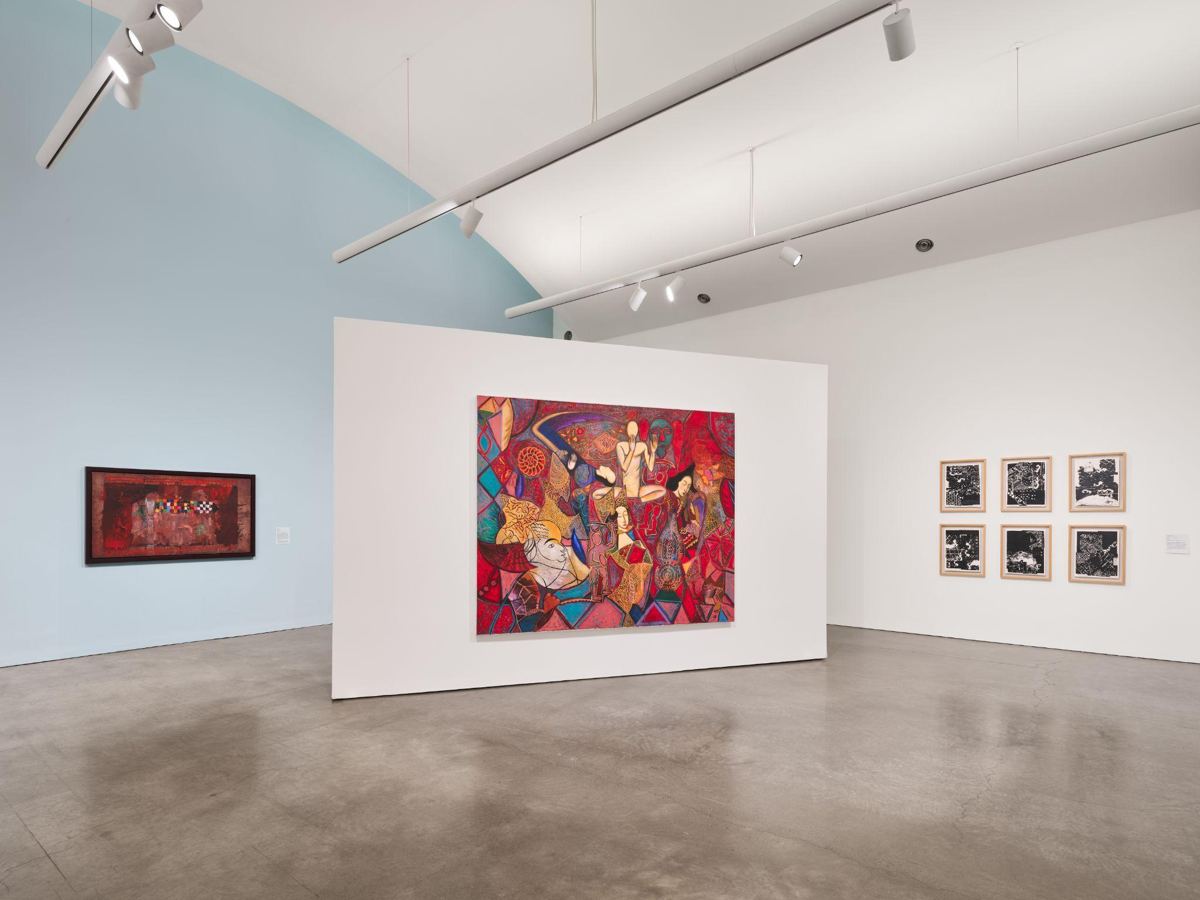
The Group was interested in something called Istilham al-Turath, something which in simple terms means that you’re looking back into history to move forward. “All post-colonial countries do that, because they sort of look back to moments of their history before contamination by imperialism and colonialism. Who are what we were before we became subjugated”, explains Shabout, “For the Arab world, it happened in Egypt before, the neo-pharaonic sort of styles, they're looking back into something that represented their glory specifically. And so, you know, the Iraqis looked back as well to Mesopotamia and to Sumerian and Assyrian things that they were seeing in the museum, the National Museum of Iraq, and the Museum of Integrity. They also got a copy of a journal from France that had images of Maqamat al-Hariri, the Hariri assemblies, with the paintings attributed to Yahya al-Wasiti. To them, that really revolutionised their notion of Istilham al-Turath, because they saw a 13th century artist from the Islamic age who pretty much was, you know, painting in modern language, in modern art language.” And so the Group drew from the past and other local sources. “Particularly as Jawad Saleem forged it, it was very much informed by these experiments, that from the images and aesthetics of those past periods, that they were able to then sort of distil a new language, new vocabulary that is expressive of their contemporary reality at the time”, she adds.
The exhibition features not the artists who were part of the original Group, but also those who were inspired by it, comprising works by the likes of Dia al-Azzawi, Mohammed Ghani Hikmat, and Hanaa Malallah amongst many, many others. These works have come from many prominent collections too, including the Barjeel Art Foundation, The Ramzi and Saeda Dalloul Art Foundation, the Farjam Foundation, Ibrahimi Collection, and Qatar Museums. The works on display are as recent as 2023, stressing how influential the Group was. “What they started did sort of continue, whether through the concepts and the philosophies they sort of extended, or through, you know, teacher-student relationships”, explains Shabout, “Hassan Al-Said lived long and influenced particularly the 1980s generation. And so the legacy of the group is as important as their development because it resonates still today in one way or the other. I did find out through my research that, unfortunately, the local art community in Baghdad, the younger generation, they know the names of the artists, but they don't really have the context of the group. So my hope is that this also helps them understand more.”
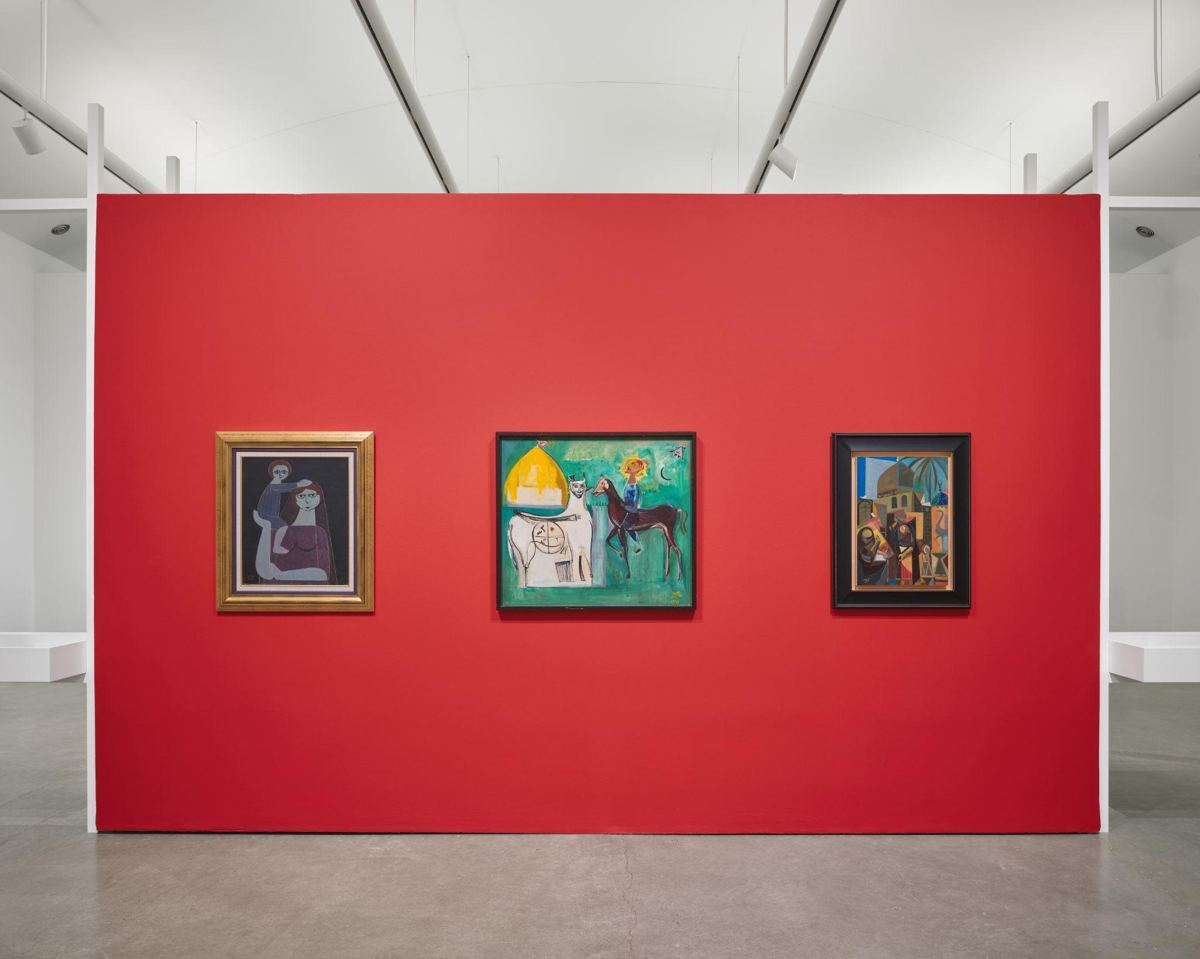
Shabout explained to us that there were efforts by others to reinstate the group in the 1990s by Mahmoud Obaidi and in 2011 by Amar Dawod, whether under sanctions or in diaspora. “In the 1990s the experiment didn't go far. They did one exhibition, but then they all had to leave the country”, she explains, “And so in 2011, Amar Dawod also found that they're all out in diaspora trying to figure out how to survive. But then how should their art survive? And then he found in the Baghdad Group, as many did, a way of reconnecting with the country.” She goes on to explain that many Iraqi artists in diaspora are connecting subconsciously to the Group in their contemporary experimentation.
Perhaps what is most significant about this exhibition is the fact that it is happening in the US. “It's kind of really interesting on two levels. On the one level, all the research on modern Arab art is mostly done in the US. We now have second generation students working on Arab art. So, in a way, the knowledge generation on modernism in the Arab world is happening mostly in diaspora outside of the Arab world. A situation that I hope we can change eventually”, says Shabout. She explains that there have actually been many exhibitions on contemporary Arab art in the US to show a different side of the Arab world in response to 9/11 and the Iraq Invasion. “Now, modernism, of course, is more complicated because it is showing a view of the past, not a view of the contemporary”, she explains, “But it is extremely poignant and important that it happened now at a time that we actually see a move away from Arab art in the US particularly, and maybe in Northern Europe as well, given the political situation. Many shy away from putting on an exhibition about anything that could be considered politically motivated for the region. So, this exhibition, which has been in the works for the last two years, was a very fortunate moment where this is not discussing any current political situation, but this is looking at a moment in the Arab world, in Iraq particularly, that predated all the destruction that took place. So, yes, it allows Americans to see a different view of what Iraq looked like, what Iraq is, what Iraq has developed and contributed.”
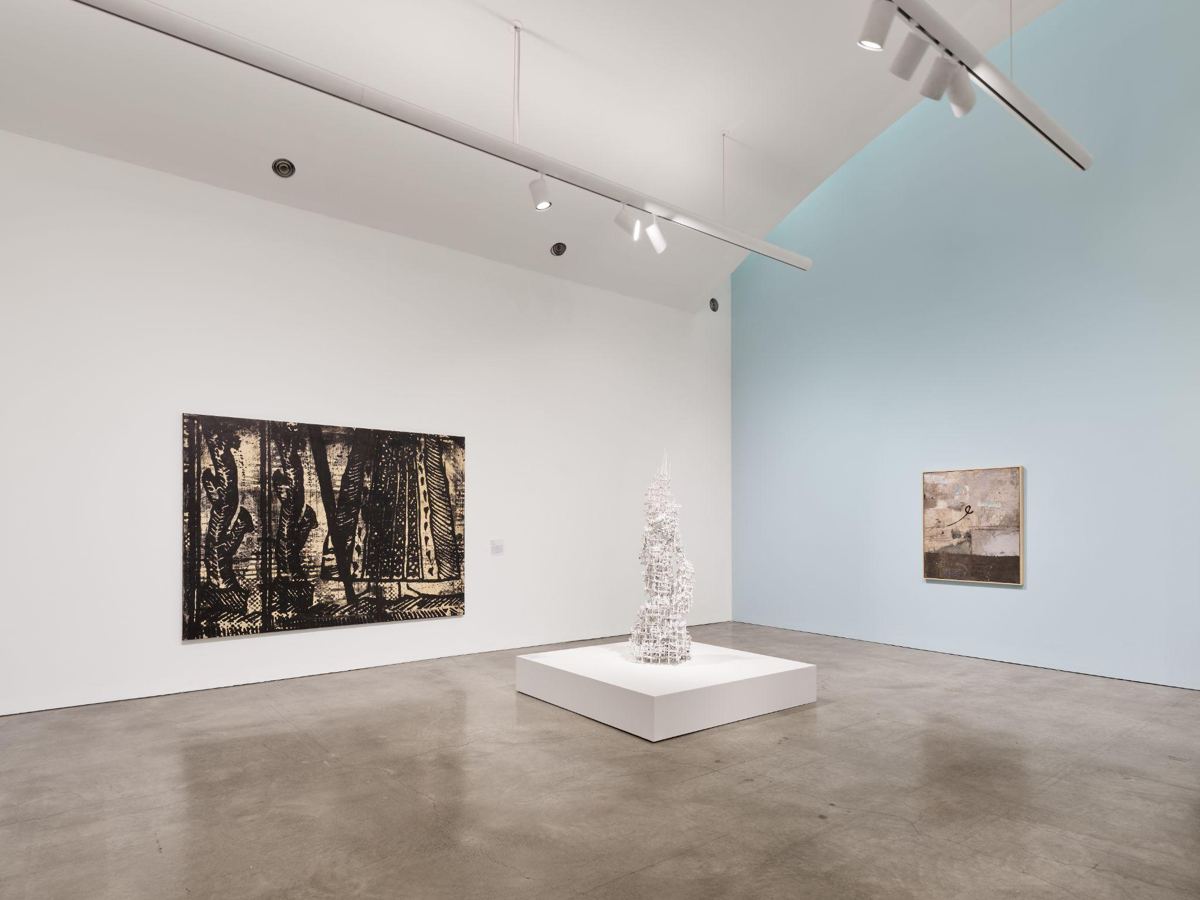
All Manner of Experiments is almost an experiment in itself. It brings modern Iraqi artists to a Western audience, most of whom would have never come into contact with their history or art before. It succeeds in contextualising their work and also highlighting their continued influence and legacy. “I think, in short, the legacy is that experiments are paramount and that one should not just sort of look for artificial influences, but rather dig deep in how you can formulate your own aesthetics based on sources in your local community”, says Shabout, “Artists should always find a way of engaging their resources, which could mean for diaspora artists as well, their local new host countries. So the idea of an identity that is rooted in a local place can be interpreted in different ways.” This pioneering exhibition is certainly a must-see for anyone lucky enough to be in the US this autumn.
More from News
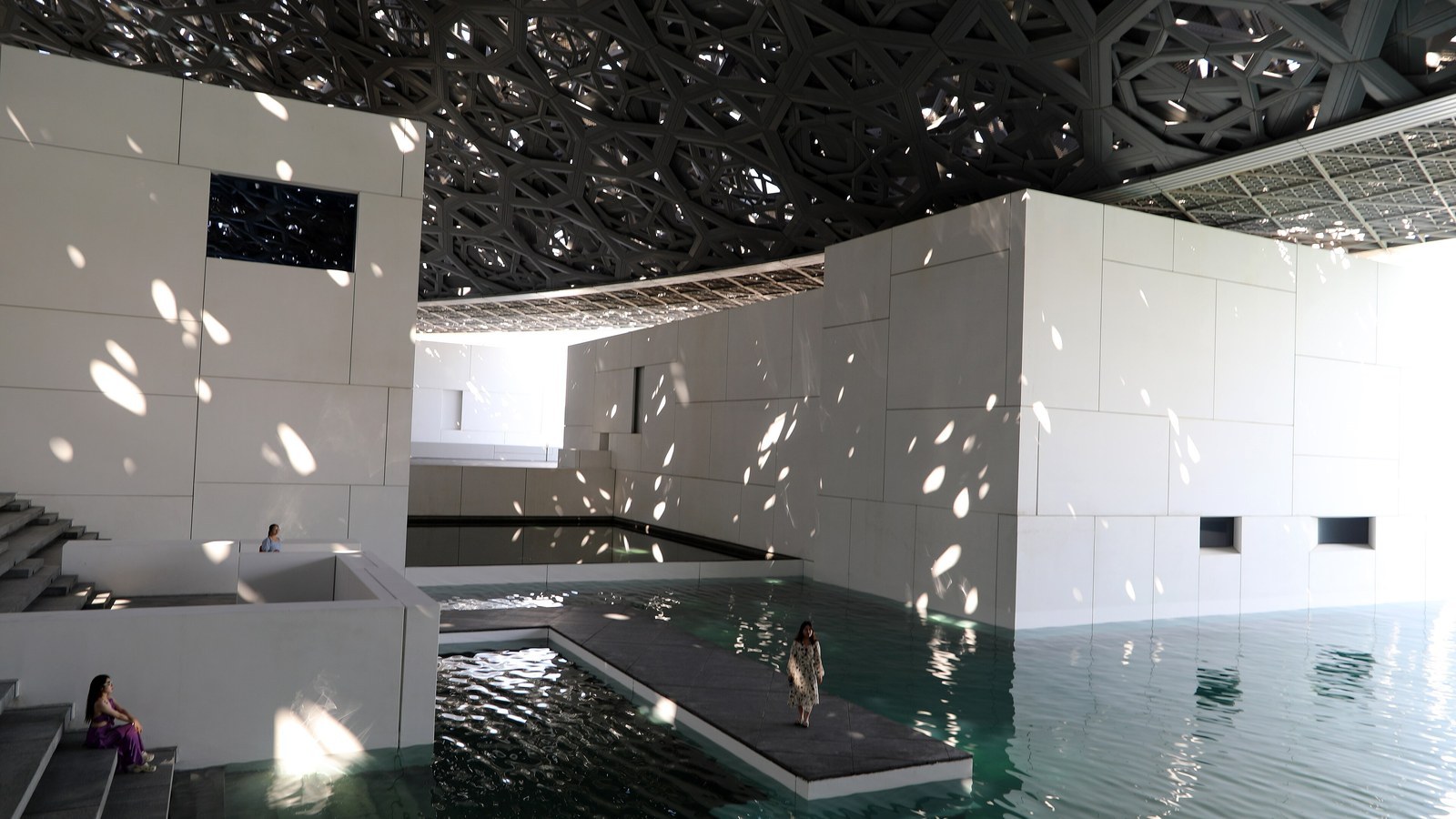
Louvre Abu Dhabi Sets Sail Across the Indian Ocean in 'Spices and Wonders'
Organised with the Guimet in Paris, Louvre Abu Dhabi's autumn exhibition traces the Indian Ocean trade routes that linked Africa, the Middle East and Europe with South and Southeast Asia, from 14 October 2026 to 14 February 2027.
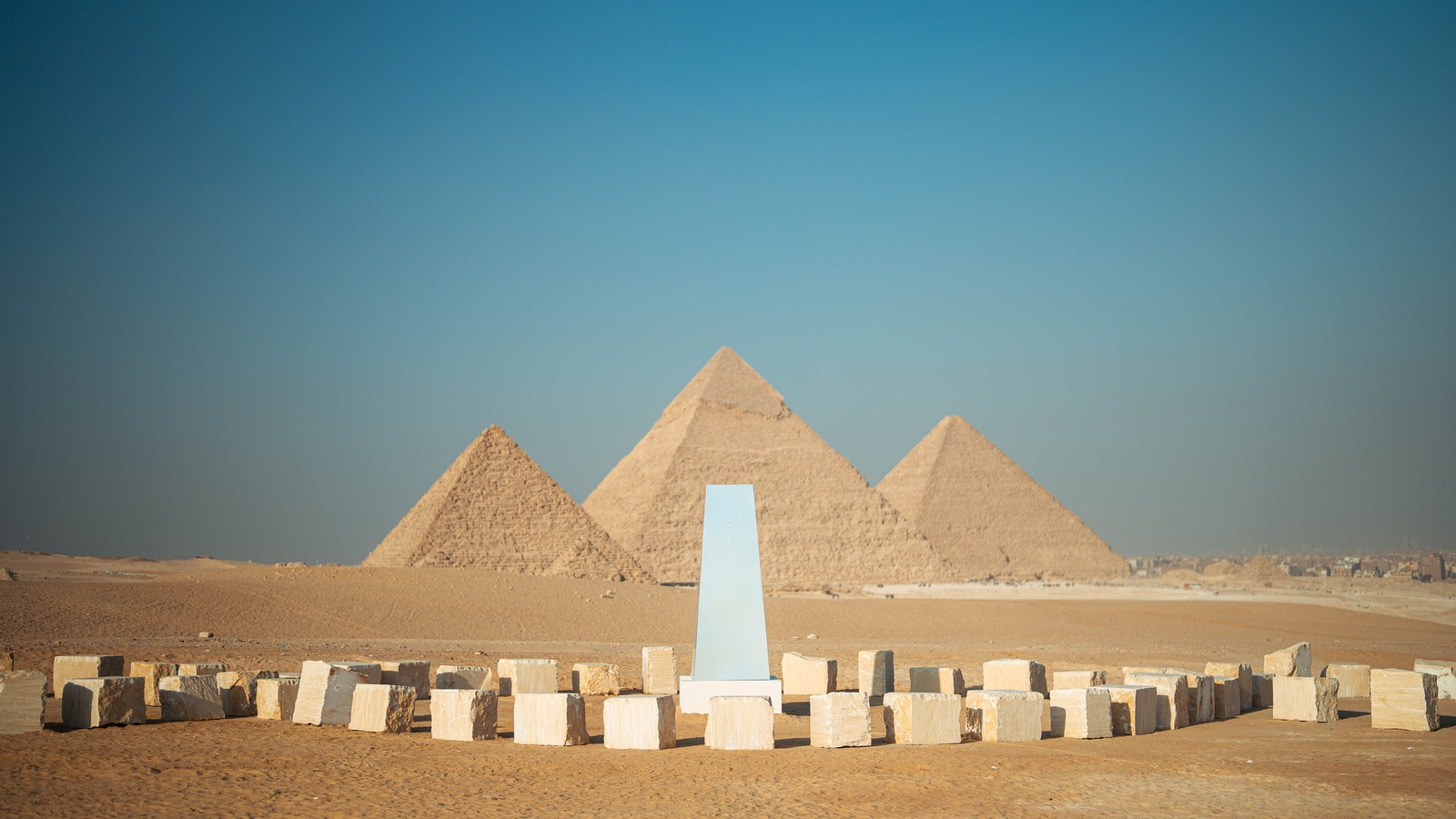
Forever Is Now Returns to the Pyramids of Giza With a Women-Led Sixth Edition
Art D'Égypte has named the eight artists for Forever Is Now 06, the first edition led mainly by women artists, on the Giza plateau from 4 to 28 November 2026.
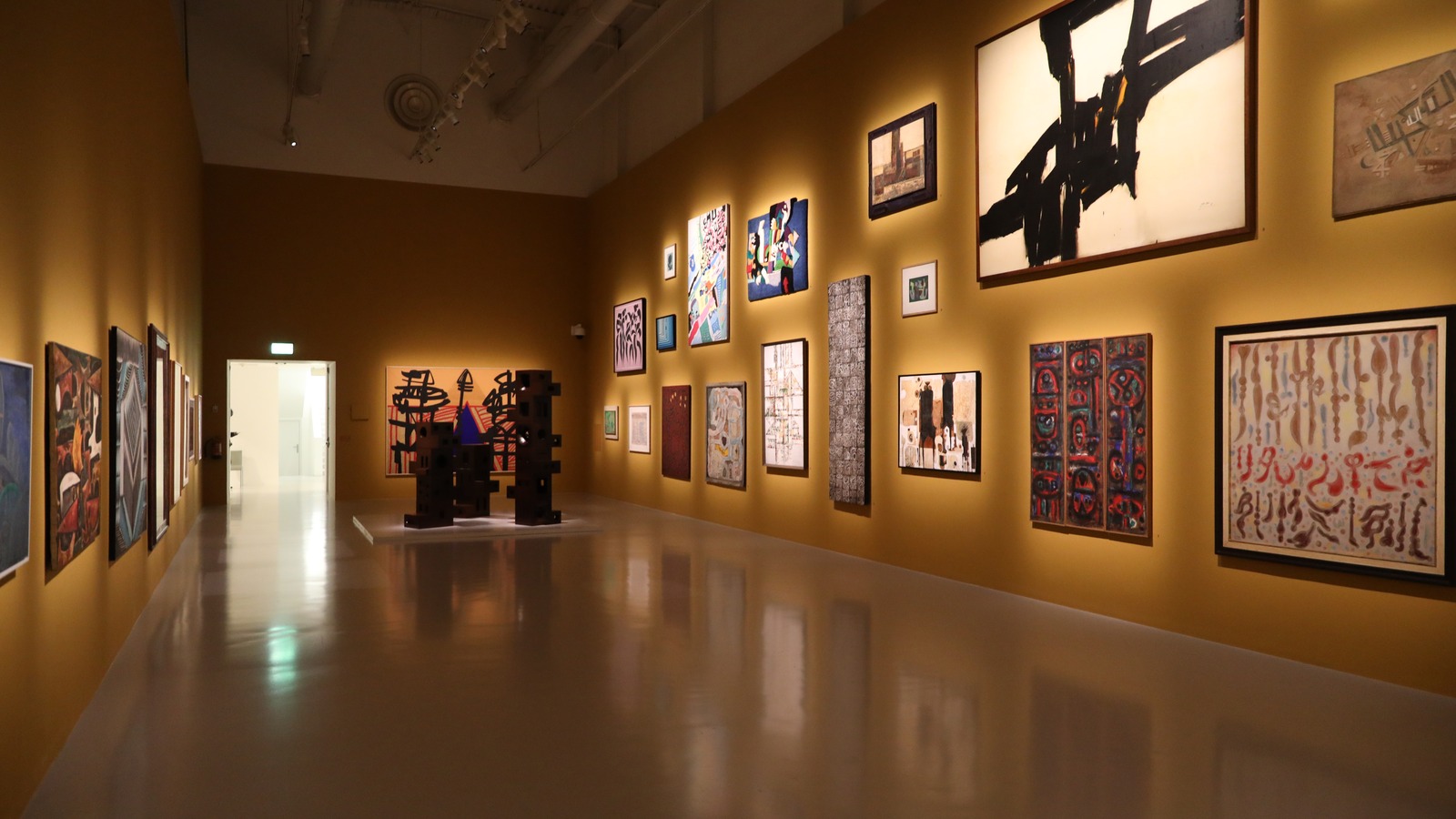
Mathaf Revisits the Baghdad Modern Art Group in a Major Doha Exhibition
Curated by Nada Shabout, What Lingers in the Artist Mind traces the Baghdad Modern Art Group from the 1940s to today across 17 sections at Mathaf in Doha, from 25 October 2026 to 6 February 2027.