Bahrain Pavilion Wins the Golden Lion at the Venice Architecture Biennale
A prestigious win for a show all about heat
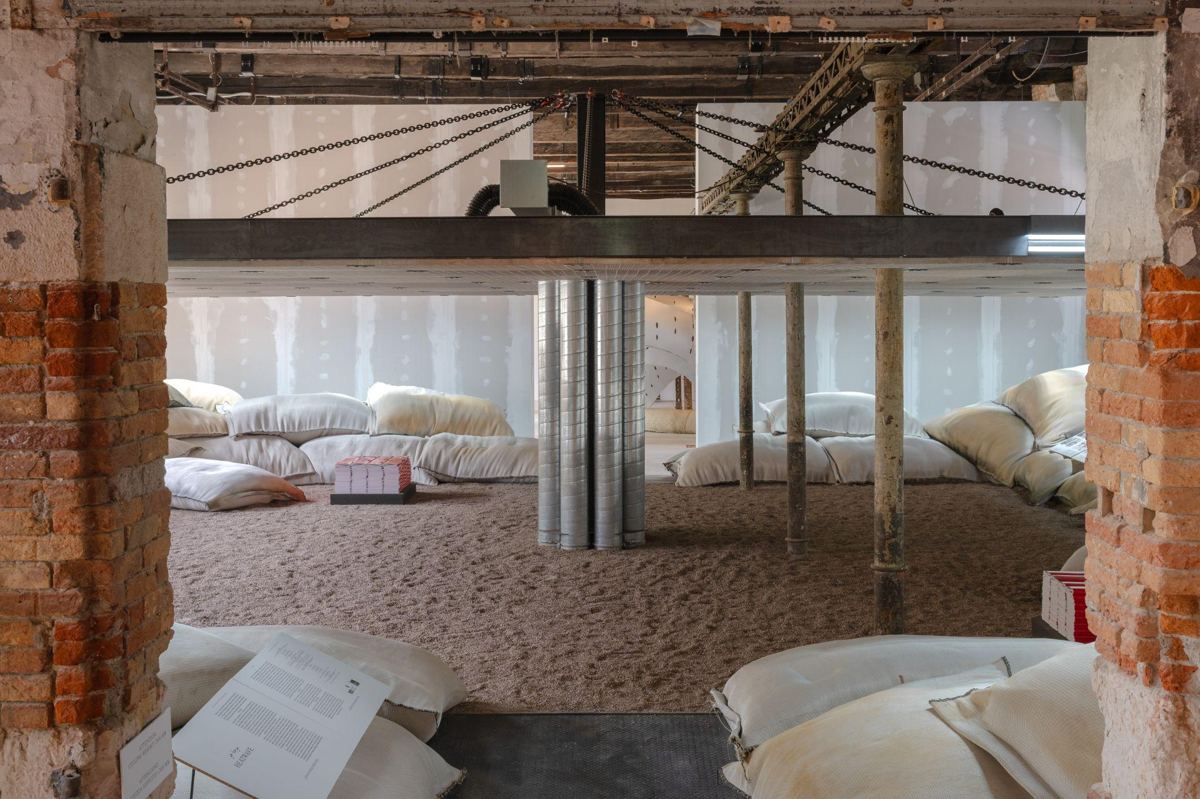
A prestigious win for a show all about heat
Bahrain’s Heatwave exhibition has just won the Golden Lion for the Best National Participation at the 2025 Venice Architecture Biennale. The Golden Lion is the highest honour presented at the biennale and is awarded to the national pavilion that demonstrates excellence in architectural vision and design, as well as aligning with the overall theme of the exhibition, which for 2025 is “Intelligens: Natural Artificial. Collective.” Curated by architect Andrea Faraguna, the pavilion stood out for its site-specific installation that addressed the issue of extreme heat and spotlighting Bahrain’s climate realities.
The Bahrain pavilion, which was commissioned by Shaikh Khalifa bin Ahmed bin Abdullah Al Khalifa from the Bahrain Authority for Culture and Antiquities, addressed a pressing issue particularly directed at the MENA region: extreme heat. Not only did the pavilion incorporate innovative design, but it also proposed ideas to combat extreme heat conditions. The pavilion includes works by Eman Ali, Wafa Al Ghatam, Mario Monotti, and Alexander Puzrin.
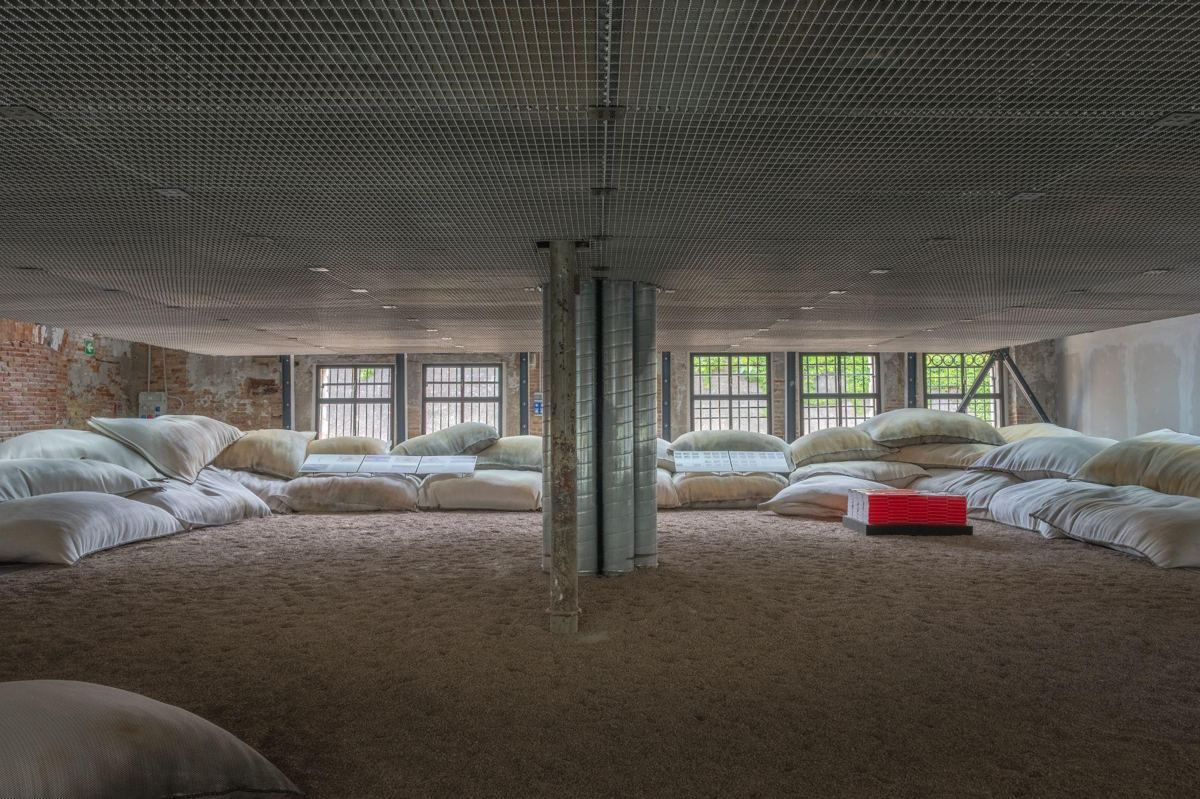
“As the weather heats up in Venice you’ll get to enjoy the cooling impact of this thoughtful installation and even have a moment to rest by sinking into the large sandbags”, says artist Eman Ali on Instagram, “It’s a really elegant presentation and the mood inside the space is peaceful which I found to be a much needed respite from the busyness of the biennale, beautifully reinforcing the concept.”
The design of the pavilion incorporates traditional Bahraini cooling systems like shaded courtyards and wind towers, as well as contemporary research. It functions as a full-scale prototype and proposal for climate solutions, to illustrate how passive cooling techniques can address global warming in real time. The pavilion includes a raised platform, suspended ceiling, and central supporting column. It also incorporates geothermal wells and solar chimneys connected via a thermo-hygrometric axis, linking underground conditions to outdoor air. Its modular structure features a floor and cantilevered ceiling, adaptable for various urban environments
Bahrain’s pavilion highlights low-impact and climate-responsive design for outdoor workspaces in hot climates, emphasizing innovative architectural solutions, social fairness and environmental responsibility. It’s designed to be scalable, so that it can be implemented in many contexts. “Architecture must address the dual challenges of environmental resilience and sustainability”, explain the designers, “The ingenious solution can be deployed in public spaces and in locations where people must live and work outdoors in conditions of extreme heat. The pavilion uses traditional methods of passive cooling typical of the region and reminiscence of wind towers and shaded courtyards.”
Heatwave also considers the experience of outdoor workers exposed to extreme heat, particularly those working in construction. The installation reconsiders thermal comfort as a question of equity, introducing the idea of “thermal commons”, advocating for approaches to architecture that are communal. Throughout the pavilion Heatwave explores high-heat scenarios positioning its architecture as a solution to a climate emergency.
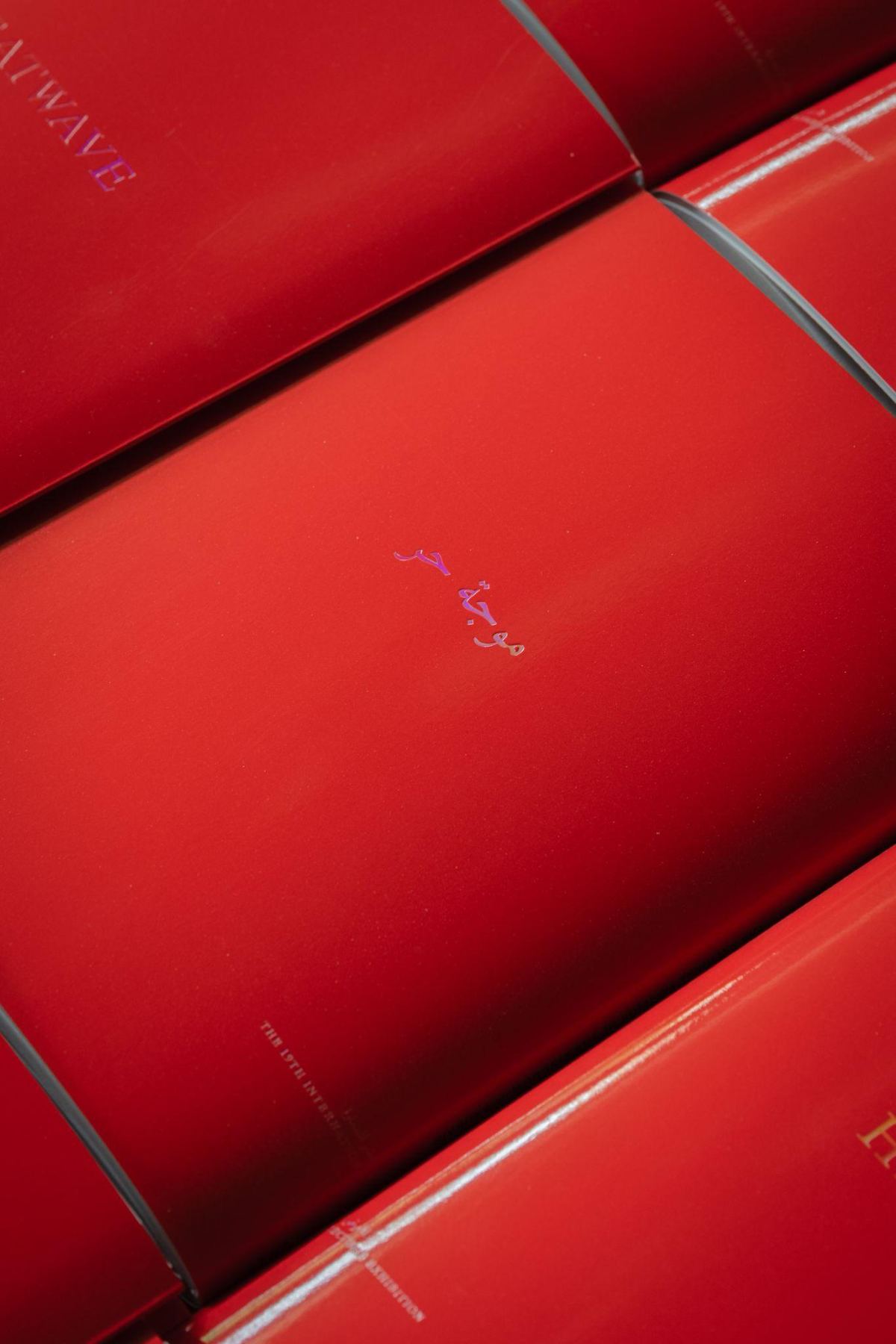
“For this commission I wasn’t just thinking about the physical toll of heat on the body and the land, but also its psychological impact”, says Eman Ali of her essay contribution to the pavilion, “I wanted to understand heat as more than just temperature and more like pressure. A slow, constant force that distorts things, that transforms and erodes. So, I listened to the island. I read its softness, its residue, its scars. I wanted to capture erosion. Not just of surfaces, but of memory too and of presence worn thin by light, time, and extreme heat. The essay unfolds from two opposite starting points, mimicking the feeling of heat intensifying and then washing out everything, eventually converging at a central image. It’s a visual narrative that speaks to the mythology of heat and disappearance.”
Bahrain’s Golden Lion win was selected by an international jury comprising Swiss curator Hans Ulrich Obrist, South African architect Mpho Matsia and Italian curator Paola Antonelli. It is actually the second time the Kingdom has won the Golden Lion, having first won the honour in 2010 for Reclaim, Bahrain’s debut participation at the biennale.
The Venice Architecture Biennale runs until 23 November 2025
More from News
First Baghdad Photo Week Puts Light on Iraqi Photography Scene
While the MENA region is known for its artistic hubs, Iraq - with its ancient history - isn’t often thought of as having a serious contemporary art scene. However, Baghdad Photo Week brings contemporary Iraqi photogra…
Alexandria Biennale to Return in 2026
The MENA region’s oldest biennale makes a comeback
Qatar Opens Tasweer Photography Biennale
A photographic festival comes to Qatar