Why Do Diaspora Artists from the MENA Region Focus on Identity So Much?
But where are you really from?
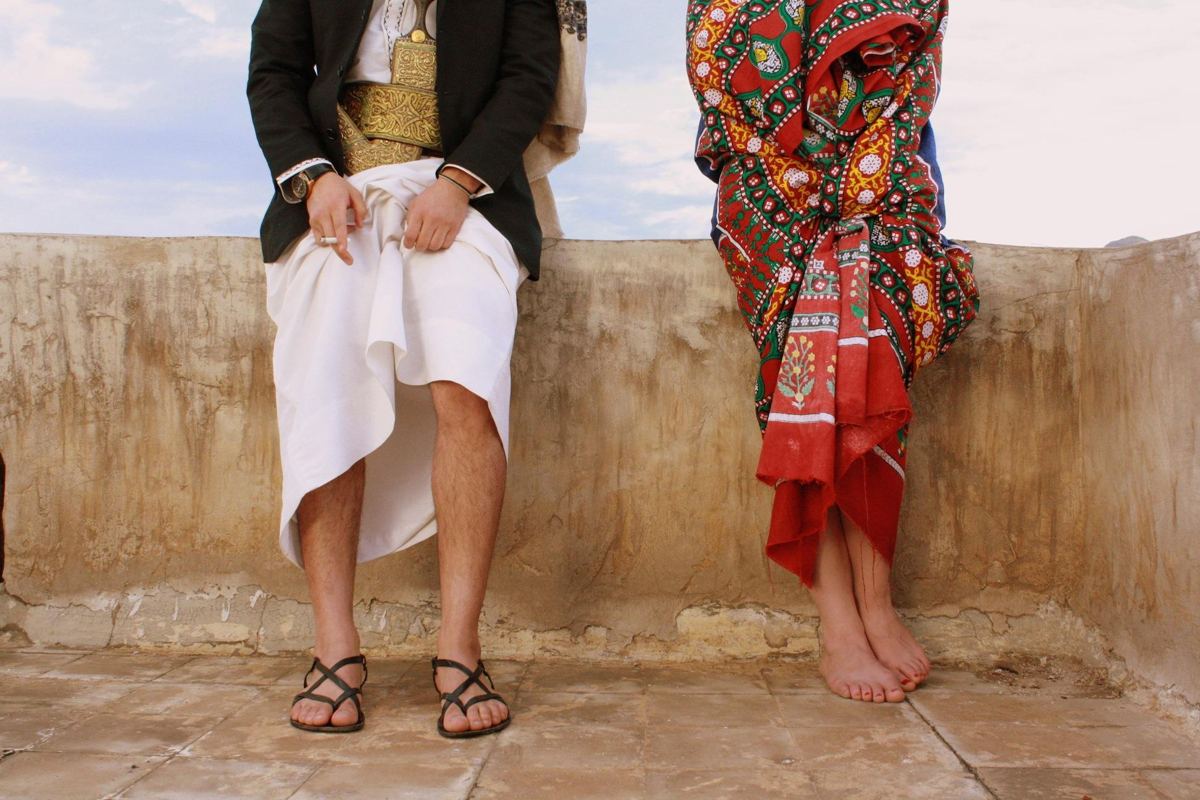
Artists living in the West - but with roots in the MENA region - pretty often use their artwork to comment on some part of their identity or heritage. Even those who are second or third generation living overseas seem to have a preoccupation with their ancestral homeland. This is of course not the case for all diasporan artists from the region, but it does seem to be a big trend. The question is: Why? We spoke to some diasporan artists to find out just that.
“Identity politics” is generally understood to be politics based on a particular identity, often concerned with ethnicity, nationality, or religion. It can also suggest a move away from traditional politics and towards a bigger focus on whatever that identity politics may be based on, whether that’s race or something else. Of course, there are many benefits to diasporan artists illustrating their heritage on the canvas. This includes highlighting issues in their home country to an audience that might not be aware of them. Their work also has the power to educate others about culture, traditions, and political issues. And, besides the social aspects, their work can present artistic styles and techniques that may not be so well known abroad.
“For many diaspora artists from the MENA region, identity becomes an urgent, unavoidable theme because of the constant negotiation between cultures, geographies, and expectations. When you’re living away from your place of origin, often in contexts where your background is misunderstood, politicized, or erased, art becomes a way to reclaim and redefine who you are on your own terms”, says Ibi Ibrahim, a Yemeni artist who is currently based in the US. “Our identities are shaped not just by personal memory, but also by displacement, migration, and inherited histories. These layered experiences naturally surface in our creative practices. Art becomes a space where we can process the contradictions, preserve cultural memory, and push back against stereotypes or simplifications.”
Palestinian-American artist Lena Kassicieh agrees. “There's something powerful about being able to control your own narrative when you've grown up seeing your identity defined by others. Through our art, we can show the multiplicity of our experiences, the joy alongside the struggle, the contemporary alongside the traditional, the personal alongside the political. We're creating space for our communities to be seen as fully human, which is both an artistic and political act in a world that often flattens us into stereotypes or statistics”, she says. “I believe identity becomes central to our work because diaspora creates this unique condition where you're simultaneously holding onto something and reimagining it. When you're physically separated from your homeland, whether by choice or circumstance, art becomes a way of maintaining connection while also exploring what that connection means in new contexts. For many of us, there's an urgency around preserving and celebrating our cultures, especially when we see how often MENA identities are misrepresented or reduced to conflict and crisis in mainstream narratives. My work, like that of many diaspora artists, becomes a form of cultural reclamation, stating that we are here, we aren't going anywhere, and you cannot erase our memory, heritage, experience, language, identity or history. We're not just making art; we're actively reshaping how our communities are seen and understood.”
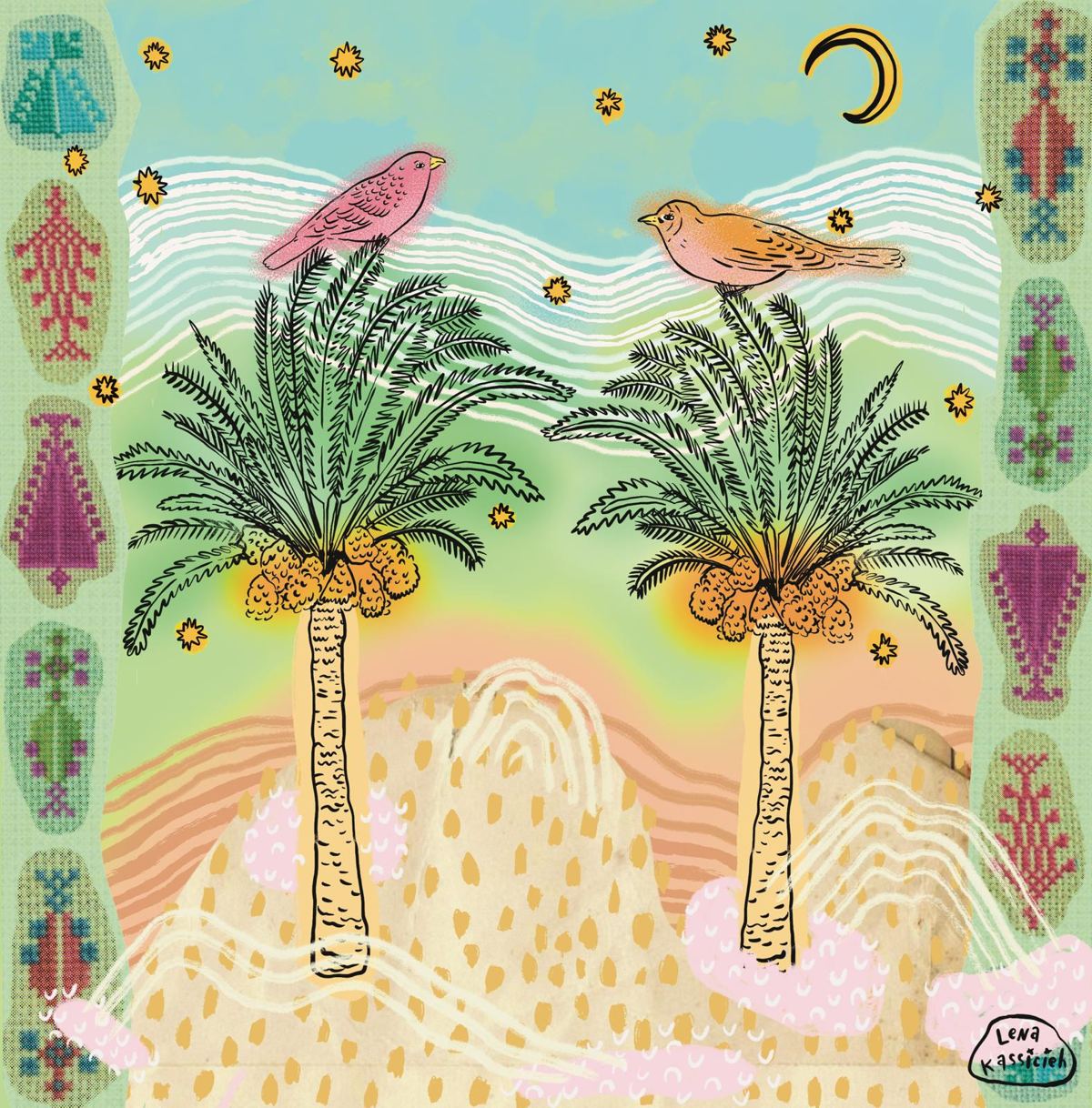
Kassicieh’s Palestinian heritage is omnipresent throughout her work, acting as an artistic archive of her family’s past, including photographs, maps, journals and documents that carry the imprint of her family’s experiences. “These aren't just source materials for me; they're vessels of memory that hold stories, textures, and fragments of a life that predates displacement. When I work with these pieces, I'm in conversation with my ancestors, letting their handwriting, their captured moments, their careful documentation guide my artistic choices”, she explains, adding, “What's crucial to me is how I use these materials to celebrate Palestinian life and joy, not just document struggle. Too often, Palestinian stories are filtered through narratives of victimhood, violence, and loss. While those experiences are real and important, they're incomplete. My work seeks to move beyond that limited frame and paint a fuller picture of Palestinian lived experience, the celebrations, the humor, the everyday beauty, the resilience that manifests as joy rather than just survival. I want people to see Palestinians as whole human beings with rich inner lives, family traditions, moments of lightness and celebration.” Her archival materials often capture these instances, a family gathering, children playing, someone's careful calligraphy in a journal. These become the foundation for work that honors the complexity and fullness of Palestinian identity, both in historic Palestine and across the diaspora.
Armenian-Egyptian-Lebanese-Canadian artist Muriel Ahmarani Jaouich also draws from her hyphenated identity to create her works, confronting everything from Ancient Egyptian culture to the aftermath of the Armenian Genocide. “I carry the intertwined lineages of Armenian, Egyptian, and Lebanese histories, marked by displacement, survival, and silence. Through painting, I attempt to reconstruct what was nearly erased: family stories, ancestral grief, and fragmented memory. I work with oral histories, archival images, and inherited objects as visual entry points, but it’s often through intuition and layering that my ancestors reappear, not as fixed representations, but as shifting presences”, she says,
Similarly, Ibrahim’s heritage has been a constant undercurrent in his work, shaping the themes he explores documenting responses to how Yemenis will react after the war ends and commenting on the Yemeni-American community. “As someone from the Arab diaspora, I exist between languages, cultures, and memories, this sense of in-betweenness fuels my creative process. My work often emerges from fragmentation and reconstruction, reflecting the layered experience of cultural displacement”, he explains, “I draw on Arab traditions through oral histories, and visual references, sometimes subtly in rhythm, and sometimes more directly through textiles, or individual and family stories. These elements aren’t about nostalgia; they’re reimagined as evolving signifiers of identity. I’m also mindful of representation. My practice challenges reductive views of Arab identity, especially in Western contexts, and instead embraces complexity, resilience, and nuance. For me, heritage is not a fixed archive but a fluid, living source, something I continually engage with and reinterpret.”
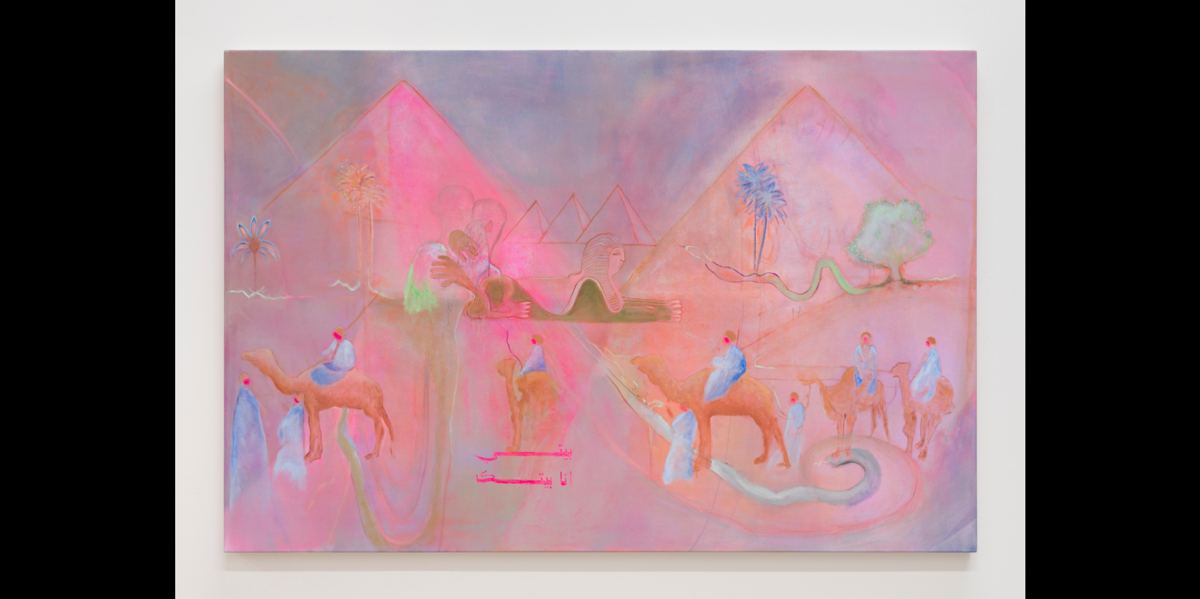
When asked why diaspora artists focus so much on identity, Ahmarani Jaouich explains that it is more than just a theme. “It’s a condition we live through daily. When your family history is shaped by colonization, forced migration, or genocide, identity becomes inseparable from loss, silence, and survival. Our work often begins in the gaps, what wasn’t passed down, what couldn’t be said, what was altered to survive”, she explains, adding, “Beyond the pain, there’s also a drive to reclaim joy, pride, and resilience. For many of us, art becomes a space to reimagine ourselves on our own terms, to hold multiplicity, contradiction, and beauty all at once. Identity features heavily because it is both inherited and remade, and in the act of creation, we recover what has been lost and elevate what has endured.” This is echoed by Ibrahim. “For many of us, identity isn’t just a theme, it’s the lens through which we see and shape the world. It’s also a form of resistance and survival. By centering our lived experiences, we challenge dominant narratives and create space for nuance, multiplicity, and connection across the diaspora”, he says, “Identity in diaspora art isn’t about looking back with nostalgia, it’s about forging something new from the in-between. It’s about belonging, questioning, and imagining different ways to exist, rooted in where we come from but not limited by it.”
For many diasporan artists with roots in the MENA region, the art they create is a way to write their story away from the stereotypes and judgements of the Western gaze. “Ultimately, art is how I reclaim narrative agency”, explains Ibrahim, “It allows me to weave personal and collective stories, offering a space where diasporic identity can be both grounded and expansive.” Ahmarani Jaouich has a similar sentiment, with her work allowing her to tell the family stories that have been buried by difficult histories. “I’m also deeply interested in the luminous aspect of these histories, the resilience, the elevation of spirit, the strength that remains despite rupture”, she says, “My work holds space for grief, but also for transformation. The act of painting becomes a place where memory and imagination meet, where light emerges from what was buried.” Essentially, for the moment at least, diasporan artists from the region channel their identity through their work out of necessity, to readdress and reposition themselves for audiences that don’t completely understand them.
More from News
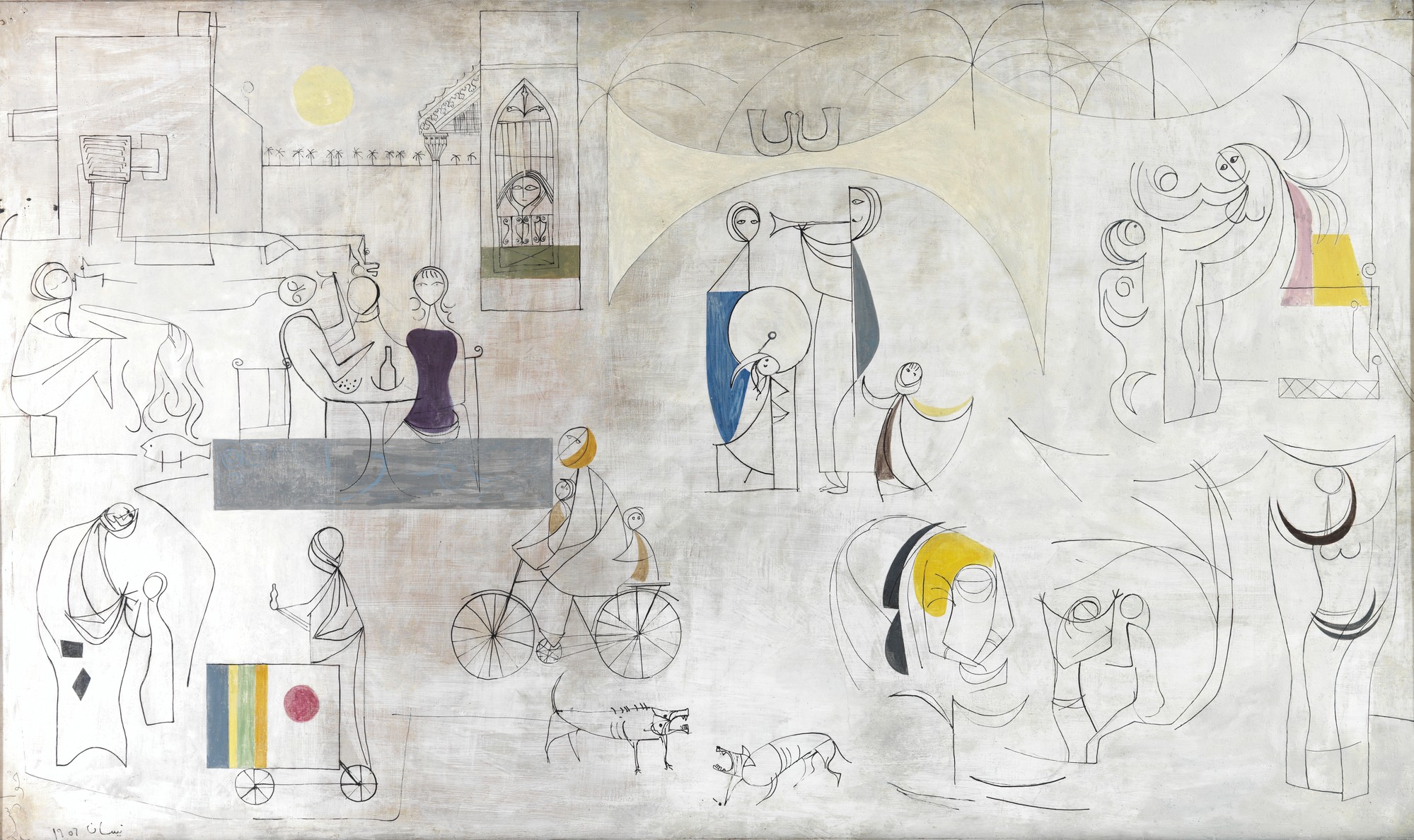
10 Institutional Exhibitions Opening in the MENA Region This October
From the Baghdad Modern Art Group at Mathaf to Salah Elmur at Jameel Arts Centre and a moving image biennale in the Medina of Tunis, here are the museum and art centre shows opening across the MENA region this October.
Why Did Contemporary Iranian Art Sell for £200 in London This Month?
Twenty Tehran galleries sent close to 200 works to Ab-Anbar in London, priced from £200 to £3,000. We look at what the show tells us about the market for art made in Iran today.
ArtZone Palestine Amplifies Palestinian Voices
Amidst the seemingly neverending destruction and devastation in Gaza, the MENA art world - and generally many artists across the world - have not been shy about amplifying Palestinian voices. A number of exhibitions a…