Jordan Nassar Brings Tatreez Landscapes and a Gaza Mosaic to London
Imagined Palestine, stitched, rearranged and remembered in glass.
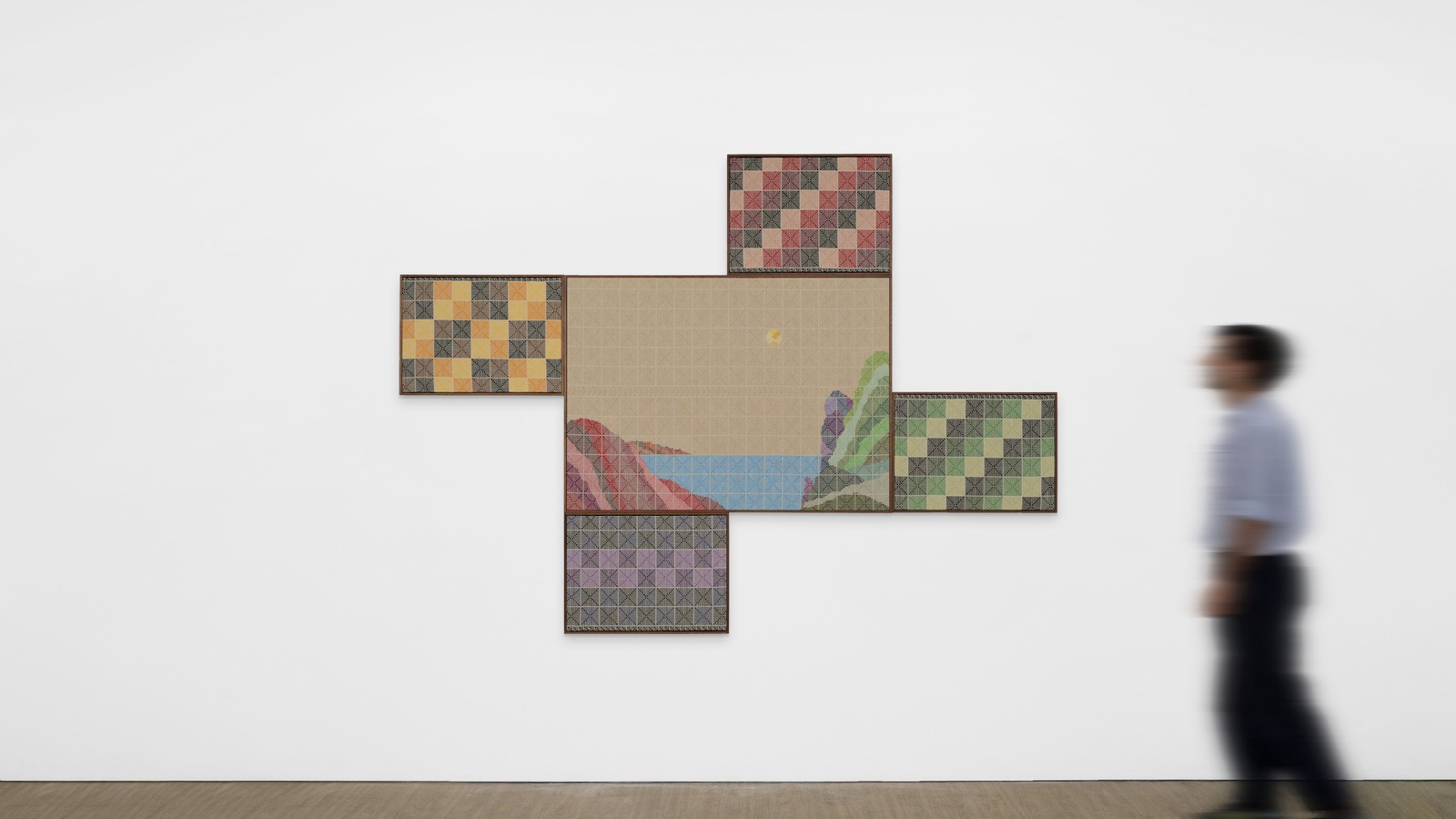
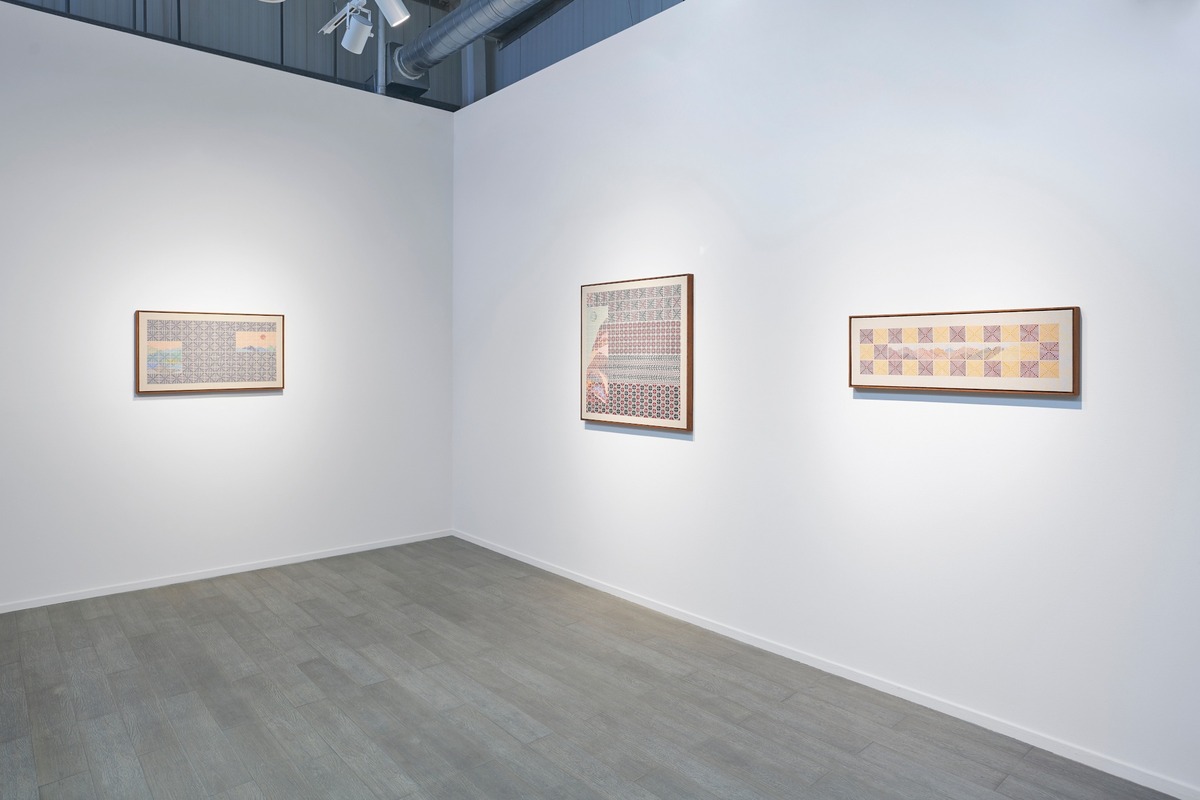
Just in time for Frieze week, Palestinian-American artist Jordan Nassar has opened a new solo exhibition in the heart of Mayfair. No History of Shapes is presented by Dubai's The Third Line at Frieze No. 9 Cork Street, Frieze's gallery space in London, from 8 to 24 October 2026, and The National reports that it is his first show in the UK in a decade. It is a welcome chance to see one of the most distinctive voices of the Palestinian diaspora in London.
Born in New York City in 1985 to a father of Palestinian heritage and a Polish mother, Nassar works primarily in hand-embroidered textiles that draw on tatreez, the traditional Palestinian cross-stitch. He designs the compositions and, according to The National, craftswomen in the West Bank embroider them. His panels move between geometric abstraction and fictive landscapes of Palestine. "I like to discuss these landscapes as versions of Palestine as they exist in the minds of the diaspora, who have never been there and may never be able to go there," the artist explains in his biography on The Third Line's website.
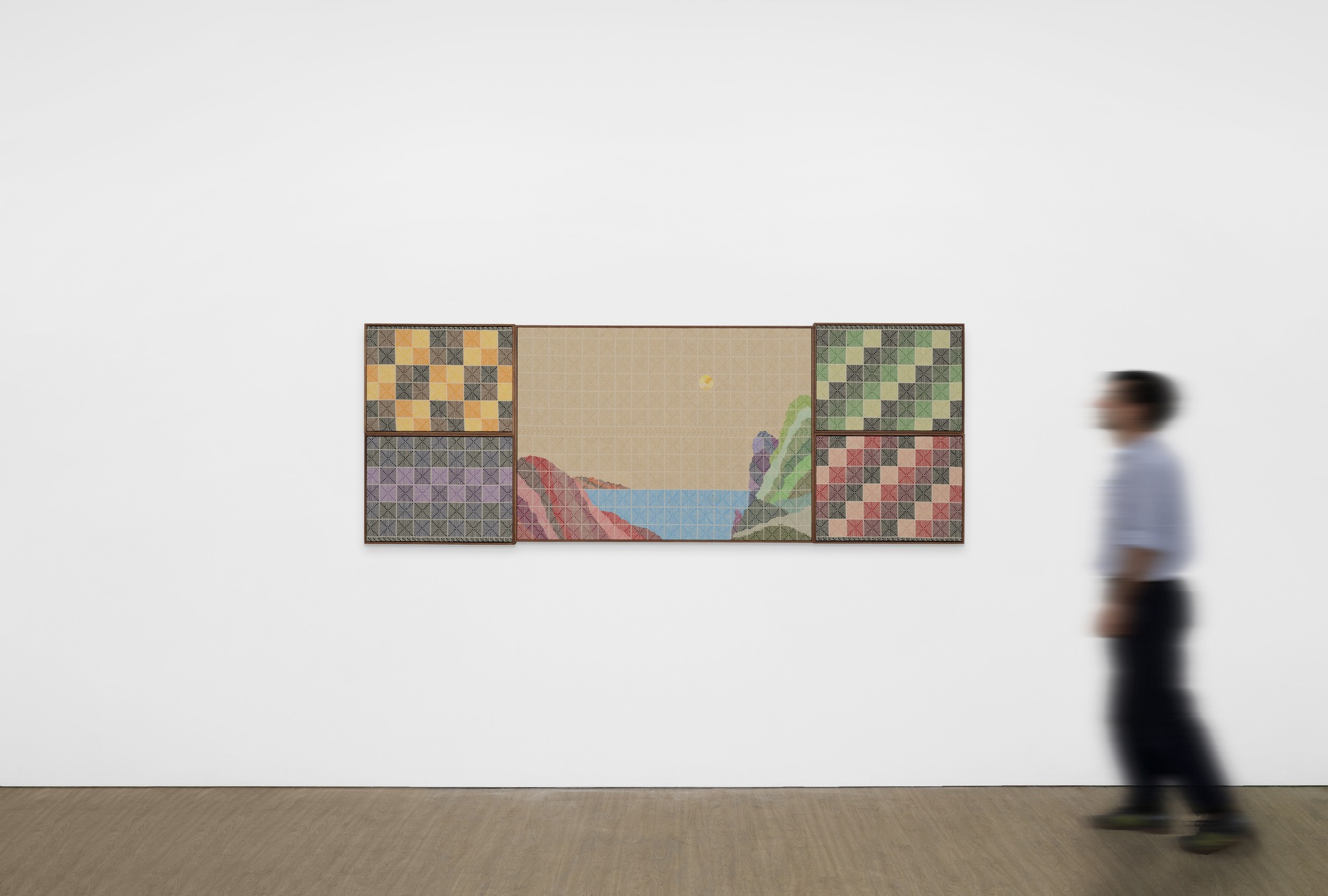
The new embroideries, all made in 2026, continue that inquiry into colour and pattern. In They Build Homes with Clouds, green, red and purple mountains rise against an ochre sky with the sea beyond, framed by smaller panels of embroidered squares, while The Absolute Eternal and The Bursting of Shape push his geometry further still. Though dense with pattern, the gallery notes, the works keep an airy, luminous quality that evokes the open landscapes of Palestine.
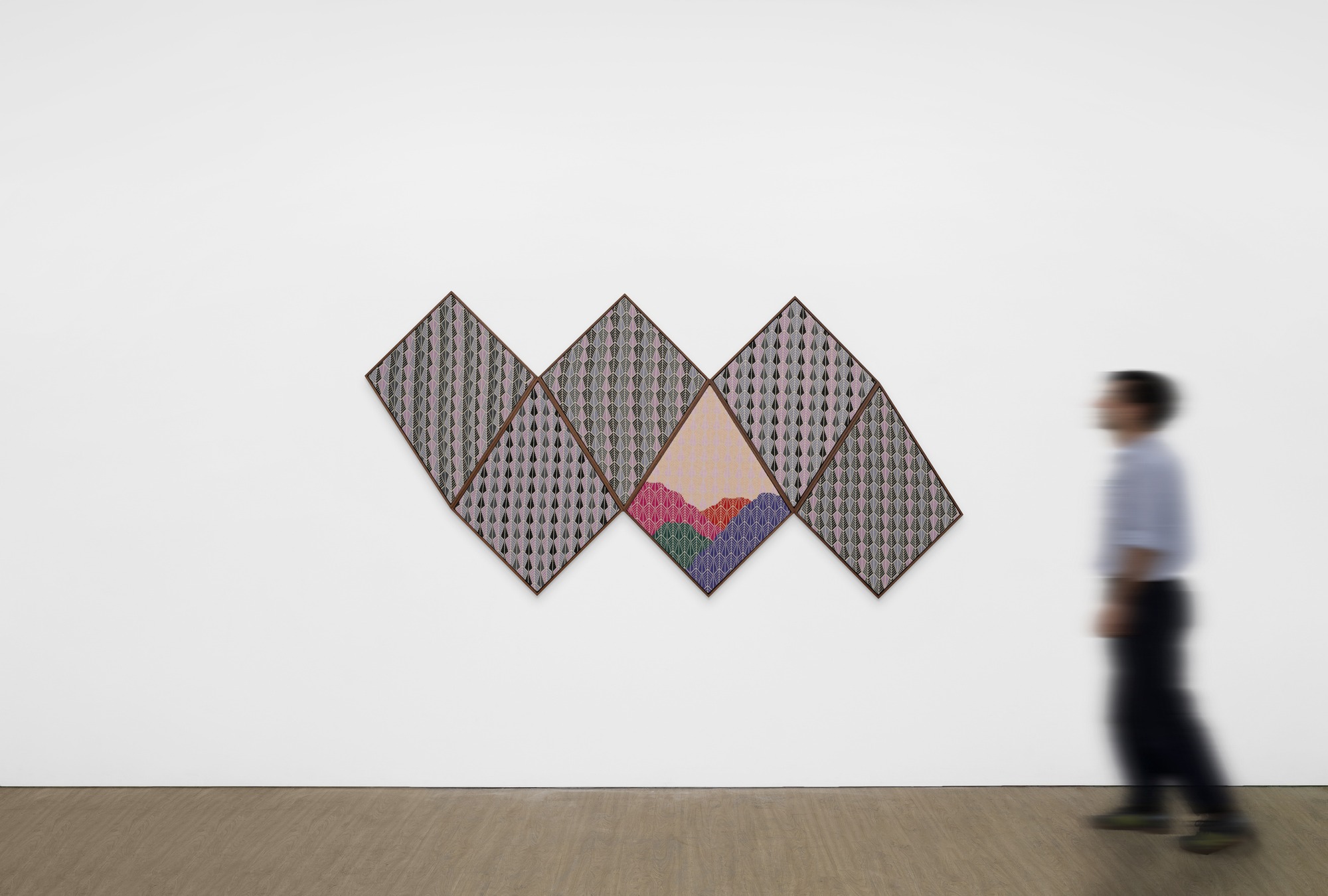
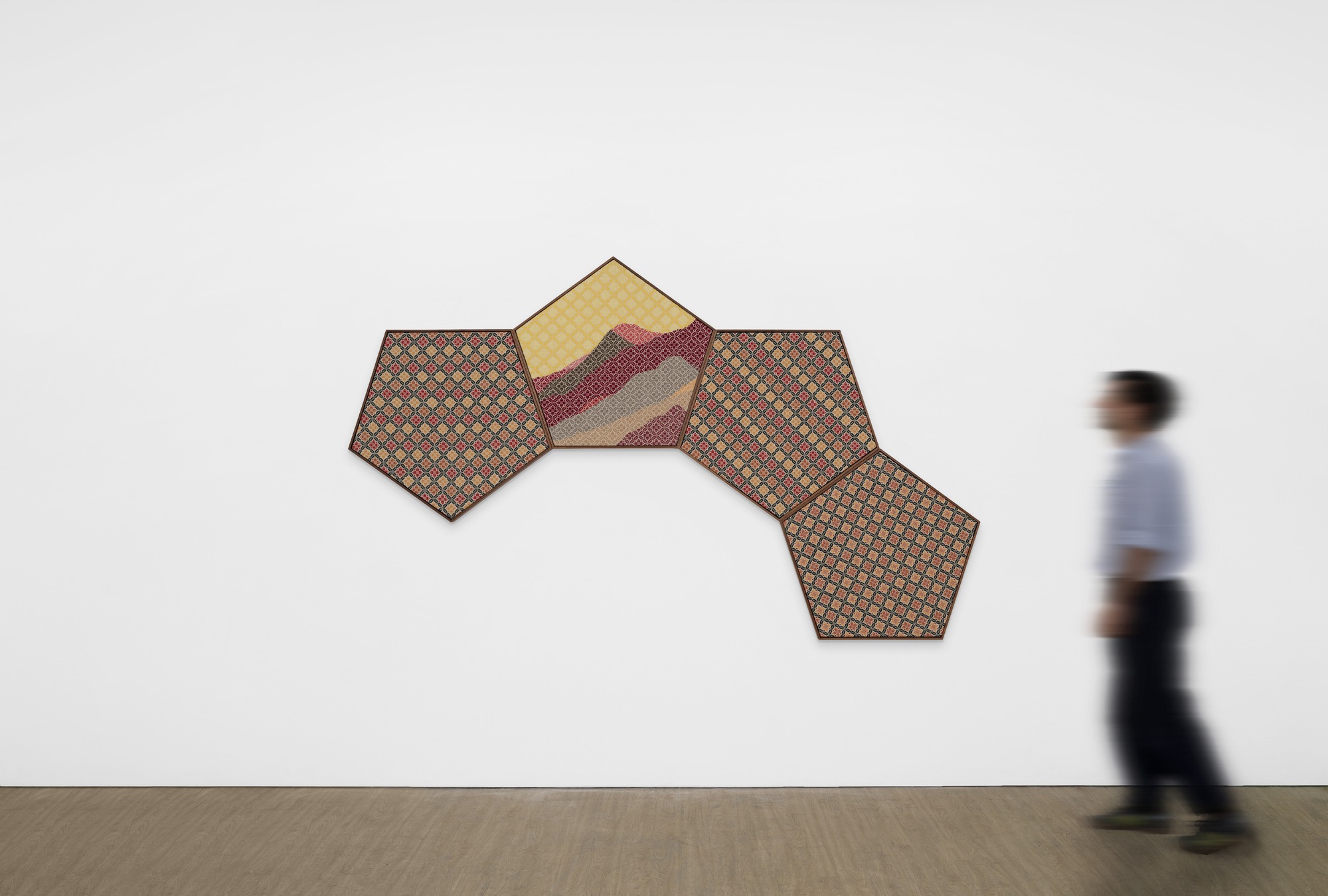
What's new is the structure. Nassar has borrowed the modular logic of the Convertible series by the Iranian artist Monir Shahroudy Farmanfarmaian (1922-2019), multipart reliefs that can be arranged in different configurations. His embroidered panels can likewise be rearranged into different geometric wholes, so that viewers, as the gallery puts it, generate new meanings with each arrangement. It is a fitting homage to one of the great modernists of our wider region.
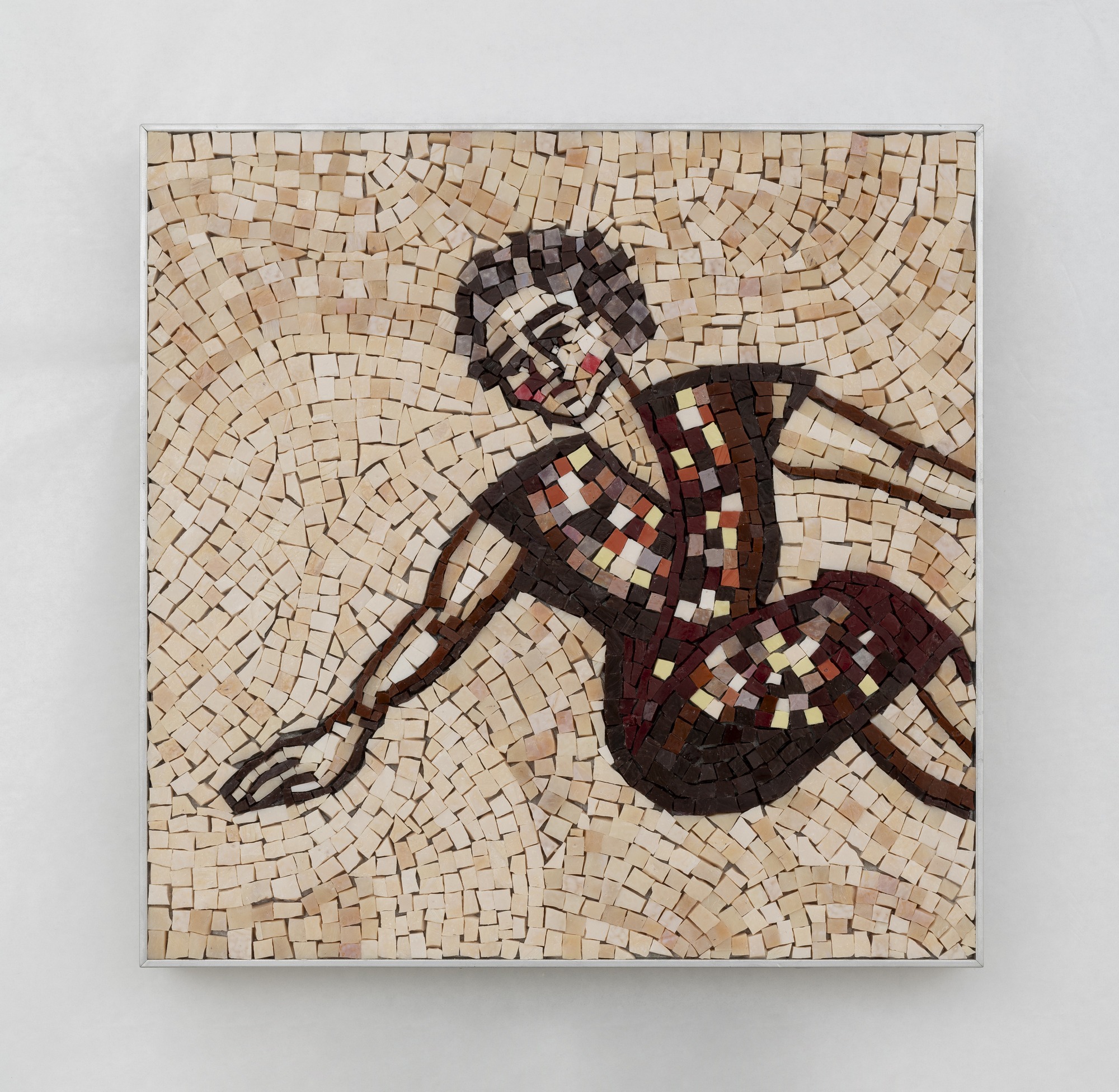
Alongside the embroideries are five small mosaics, made by hand-cutting glass, that are near-replicas of a Byzantine mosaic found in Jabalia, in northern Gaza. Working from photographs of the mosaic available online, Nassar recreated parts of it, adding and altering elements to fill the gaps. Together the pieces depict an orange tree, a lion, a human figure and abstract patterns from the original; Jabalia (Tree) measures 46.5 by 38.1 cm and Jabalia (Figure) 31.5 by 31.5 cm, both in smalti on aluminium.
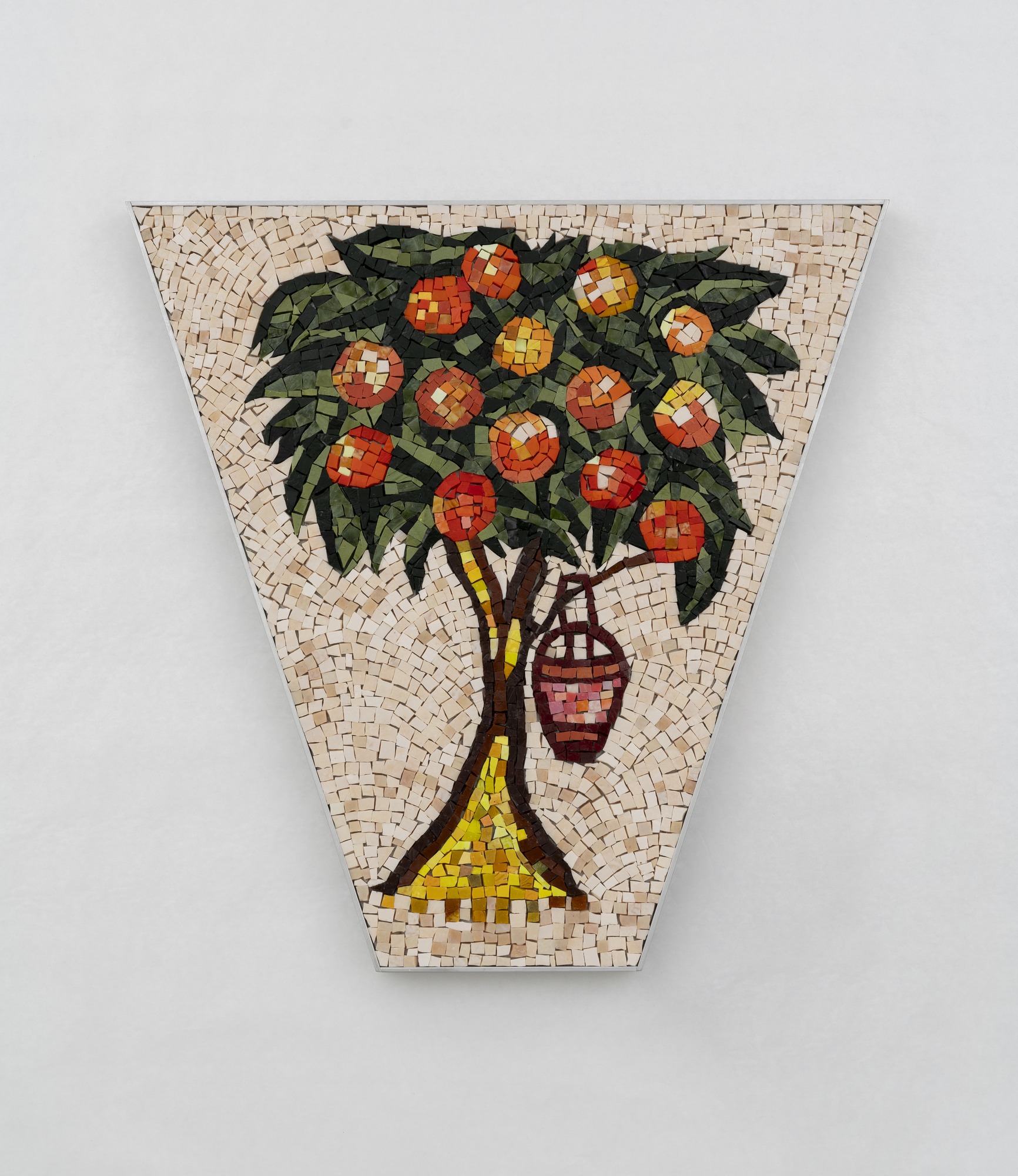
The artist calls the series "a tender gesture", one that keeps the original, under threat from the ongoing violence, from being erased from collective memory, while also freeing it from being used for nationalistic purposes. The National notes that local archaeologists say the church that held the mosaic was damaged by Israeli shelling, and that its current condition is unknown. Nassar himself resists reading the work as a statement. "I don't really know if art is the best venue for these things. For me, it's more about human connection," he told The National.
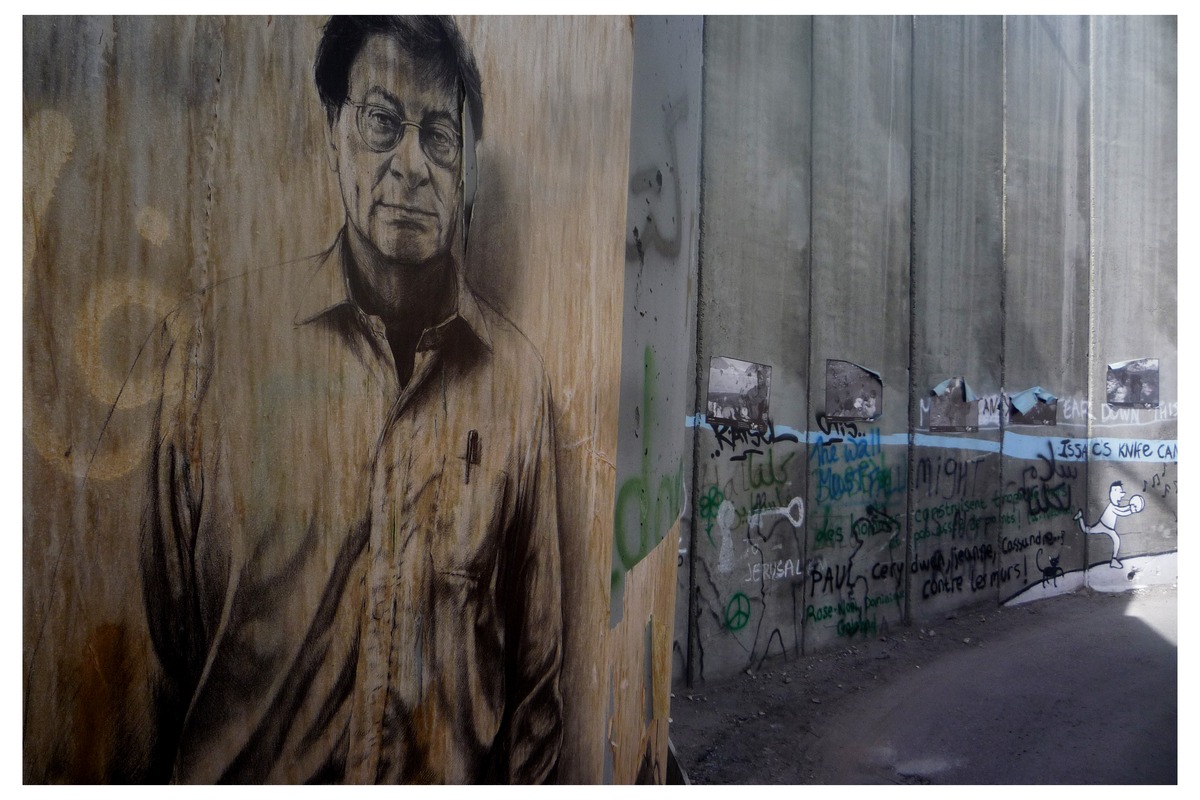
The exhibition takes its title from Describing Clouds, a poem by Mahmoud Darwish (1941-2008), the most celebrated Palestinian poet of his generation, in which he imagines a universe with no final shape. Nassar, too, draws up shapes whose many possible arrangements point, in the gallery's words, to the infinite vastness of the universe.
This is Nassar's second solo exhibition with The Third Line, after For Your Eyes at the gallery's Dubai space from 16 January to 27 February 2019, and it forms a two-part presentation with Anat Ebgi in Los Angeles, which shares a body of work across both galleries. His work has been shown at institutions including the Whitney Museum of American Art, the Institute of Contemporary Art, Boston, the North Carolina Museum of Art and the Shangri La Museum of Islamic Art, Culture & Design in Honolulu, and in 2024 he received the Louis Comfort Tiffany Foundation Biennial Grant.
Perhaps what is most significant is the timing. With the art world gathered in London for Frieze, a Dubai gallery is showing a Palestinian-American artist who turns a craft passed down through generations of women into contemporary art, and who quietly keeps a piece of Gaza's heritage in view. That is exactly the kind of presence our region should have in London.
If you're in town for Frieze, this is one not to miss.
No History of Shapes is on view at Frieze No. 9 Cork Street, London, from 8 to 24 October 2026.
Sources5 references
- The Third LineJordan Nassar: No History of Shapesthethirdline.com
- The Third LineNo History of Shapes (press release, PDF)thethirdline.com
- The Third LineJordan Nassar (artist page)thethirdline.com
- FriezeThe Third Line: Jordan Nassar, No History of Shapesfrieze.com
- The NationalThe imagined Palestinian landscapes of Jordan Nassar's tatreezthenationalnews.com
More from News
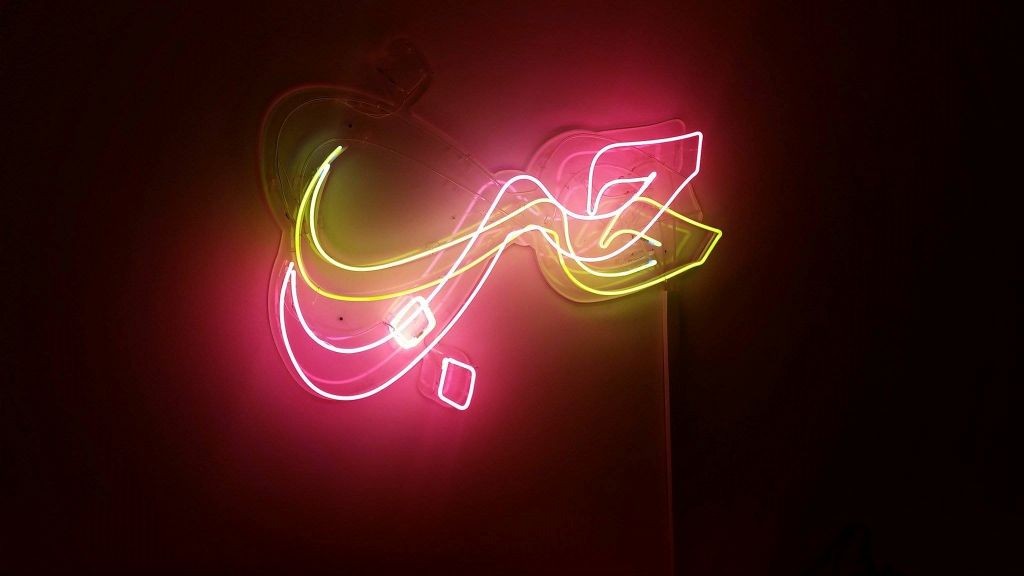
Dom Art Projects Explores Light Across the Arab World and Eastern Europe in 'The Matter of Light'
Curated by Eugenia Kikodze, Dom Art Projects' third not-for-profit exhibition brings together more than 20 artists, from Zaha Hadid and Kamal Boullata to Ilya Kabakov, with loans from Barjeel Art Foundation and Art Jameel Collection. It opens in Dubai on 27 October 2026.
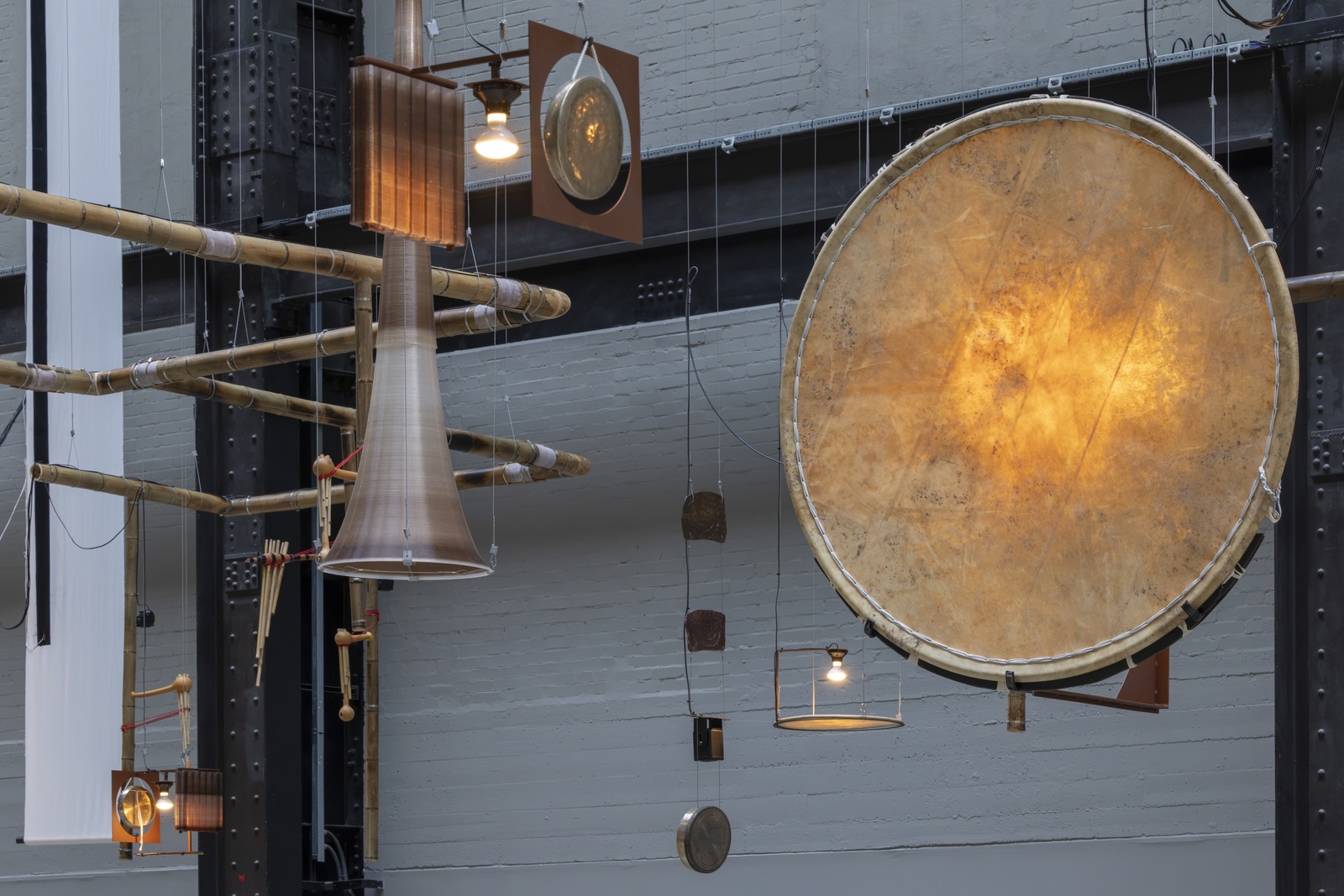
Tarek Atoui Turns Tate Modern's Turbine Hall Into a Sound Vessel
Lebanese artist Tarek Atoui's Hyundai Commission, Hold, has turned Tate Modern's Turbine Hall into an immersive landscape of instruments, textiles and stones. It is free to visit until 11 April 2027.
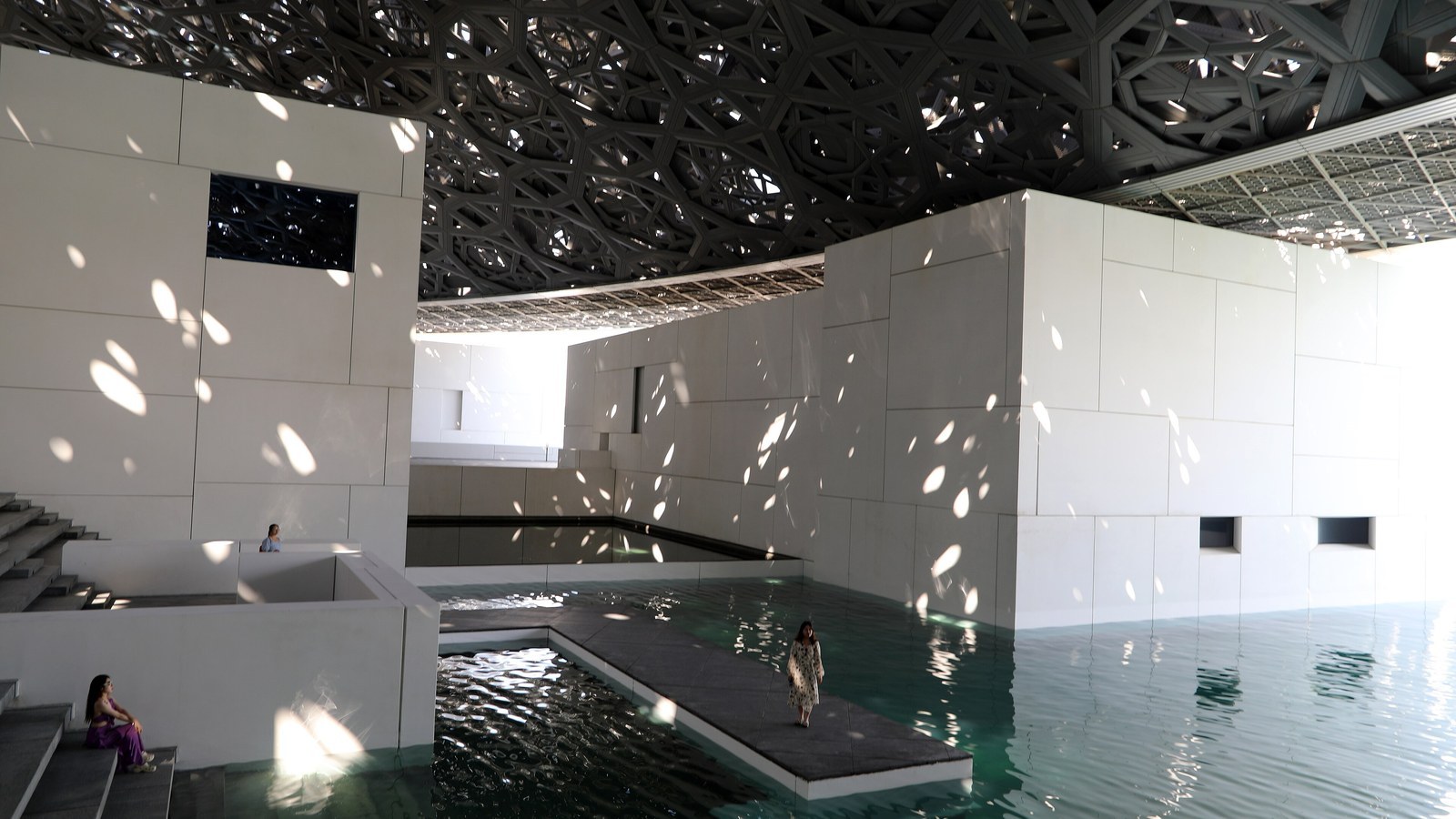
Louvre Abu Dhabi Sets Sail Across the Indian Ocean in 'Spices and Wonders'
Organised with the Guimet in Paris, Louvre Abu Dhabi's autumn exhibition traces the Indian Ocean trade routes that linked Africa, the Middle East and Europe with South and Southeast Asia, from 14 October 2026 to 14 February 2027.