An Honest Look into the Palestinian Art Scene
Despite the worst circumstances, art is still finding a way to survive
Amer Shomali was due to start his new job as the Director of the Palestinian Museum in Birzeit in the West Bank on 8 October 2023, but one day earlier, life in Gaza and in the rest of Palestine changed forever. We all know about the horrors of what Palestinians in both Gaza and the West Bank are suffering. While many exhibitions, fundraisers and cultural events have been taking place outside Palestine to spread awareness and raise humanitarian aid, inside Palestine, art is probably the last thing on anyone’s mind. That said, a week ago, we received an email about a press release for the opening of an exhibition in Ramallah, which prompted us to ask just how the art scene in Palestine is functioning - or not - in the midst of unimaginable chaos.
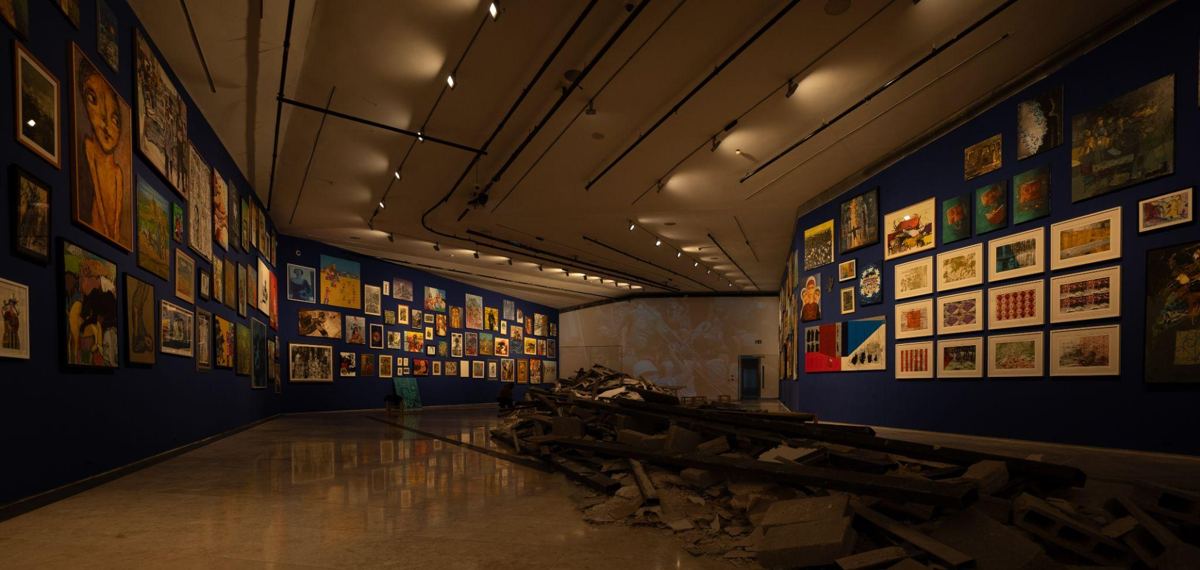
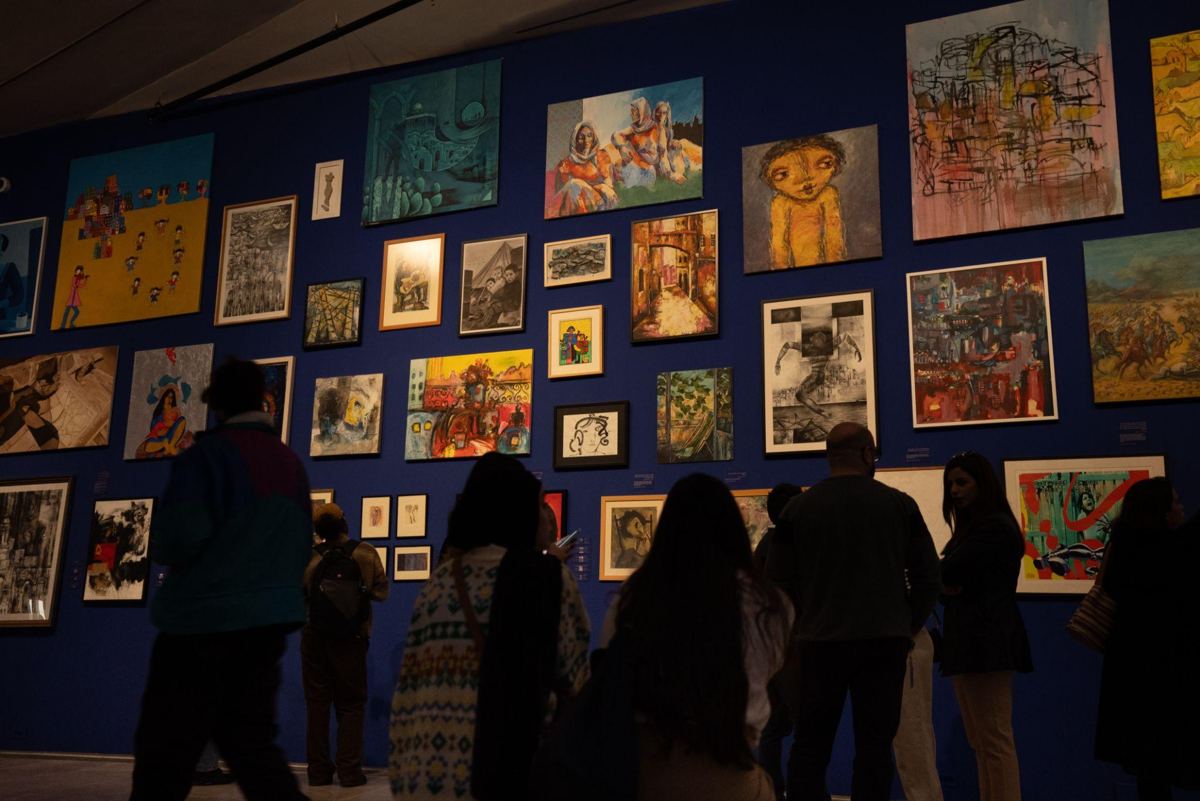
“Do we have a healthy art scene at the moment? I don’t think so”, says Shomali, who began his tenure at the Palestinian Museum by deinstalling all exhibitions and hiding their collections in fear that the Museum would be looted. “On October 28, around that week, they started to bomb the cultural section in Gaza, art galleries, two museums and many heritage sites. All were bombed almost in the same week and then we decided that we can’t just be observers and we have to jump and help our colleagues in Gaza. So we called our colleagues in Gaza and we said we’re going to offer you our main exhibition space as an extension of your bombed spaces, so we can have an exhibition for Gazan artists there. But to create an exhibition for Gazan artists is quite theoretical, like how can you do that? There’s no way to ship anything out of Gaza, there is no way to answer your phone calls, there’s no internet. It’s complicated.” Despite this difficult hurdle, Gazan artists started to contact the museum and inform them of artworks that were in homes and houses in the West Bank, and the museum team would go and collect them to be placed in a show titled This is Not an Exhibition. The show included almost 230 paintings by Gazan artists in the Museum’s main exhibition space, with the rubble of the previous exhibition in the centre, as a sign of the state of emergency that they didn’t have time to clean it up. “On the day of the opening we had people come to the exhibition saying they would like to add paintings. So we started to move the paintings around and freeing the space to add a new painting on the walls”, says Shomali, “At the same time people said ‘OK, I want to support the artist, and they started to buy it and take it home. So we kept changing the exhibition. Overall we had almost 300 paintings getting inside the exhibition. When we opened in January one artist was killed among the artists participating in the exhibition. Today, a year and a half later, we lost another five colleagues.” For many of the artists, the works in the exhibition are the only remaining samples from their career.
In addition to the exhibition, the Palestinian Museum has been working to evacuate collections from bombed museums and studios in Gaza. “We managed to get some money wired to the museums in Gaza”, says Shomali, “We hired a bulldozer to remove the rubble from the destroyed buildings. We got a team of volunteers who started digging under the ground to remove archaeology, dresses, and paintings. We managed to retrieve 2,500 objects of paintings and dresses, which is almost 25% of registered collections. The rest were either burned or destroyed totally or looted. This is not normal day-to-day work for a museum.”
You may think that the situation in the West Bank is better, but that is not exactly the case. “Israel installed 900 new checkpoints in the West Bank when the ceasefire happened so doing anything across the West Bank became impossible”, explains Shomali, “Even in the Palestinian Museum we used to have 1,500 visitors every month but during the ceasefire, we had 10 people. Half of our staff couldn’t even reach the museum because of checkpoints.”
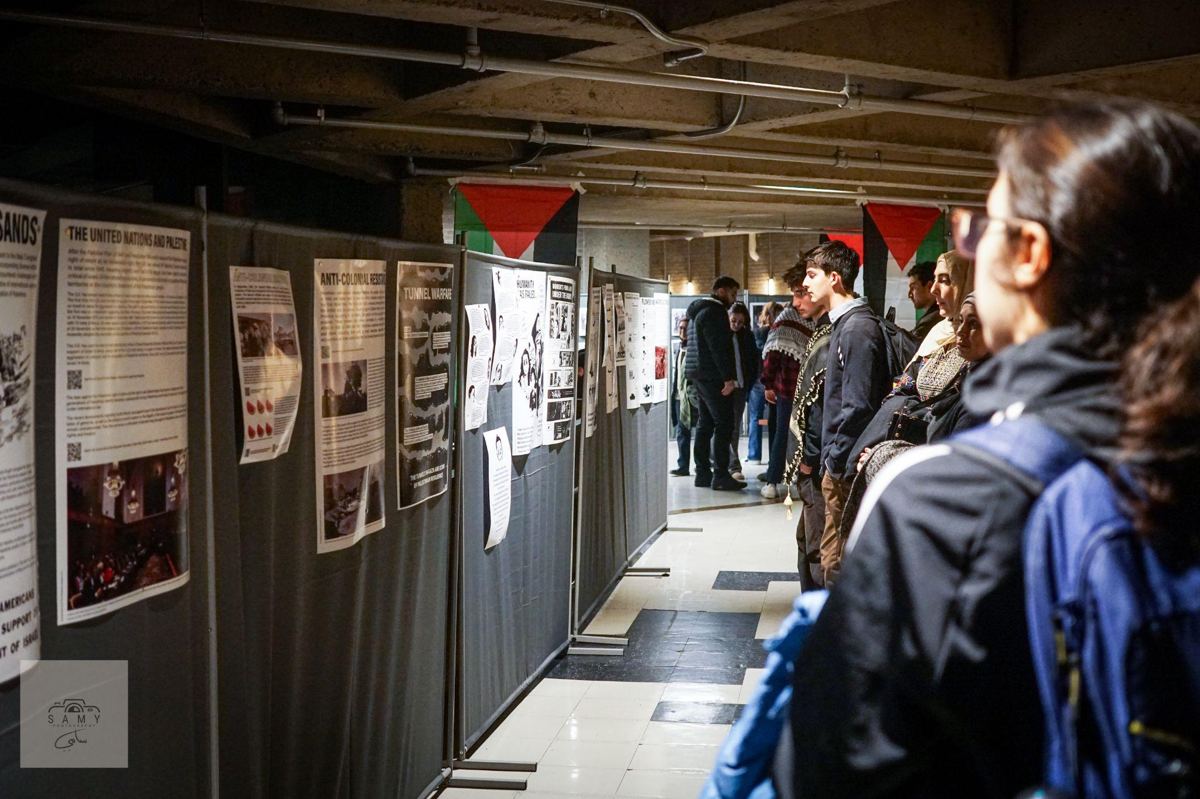
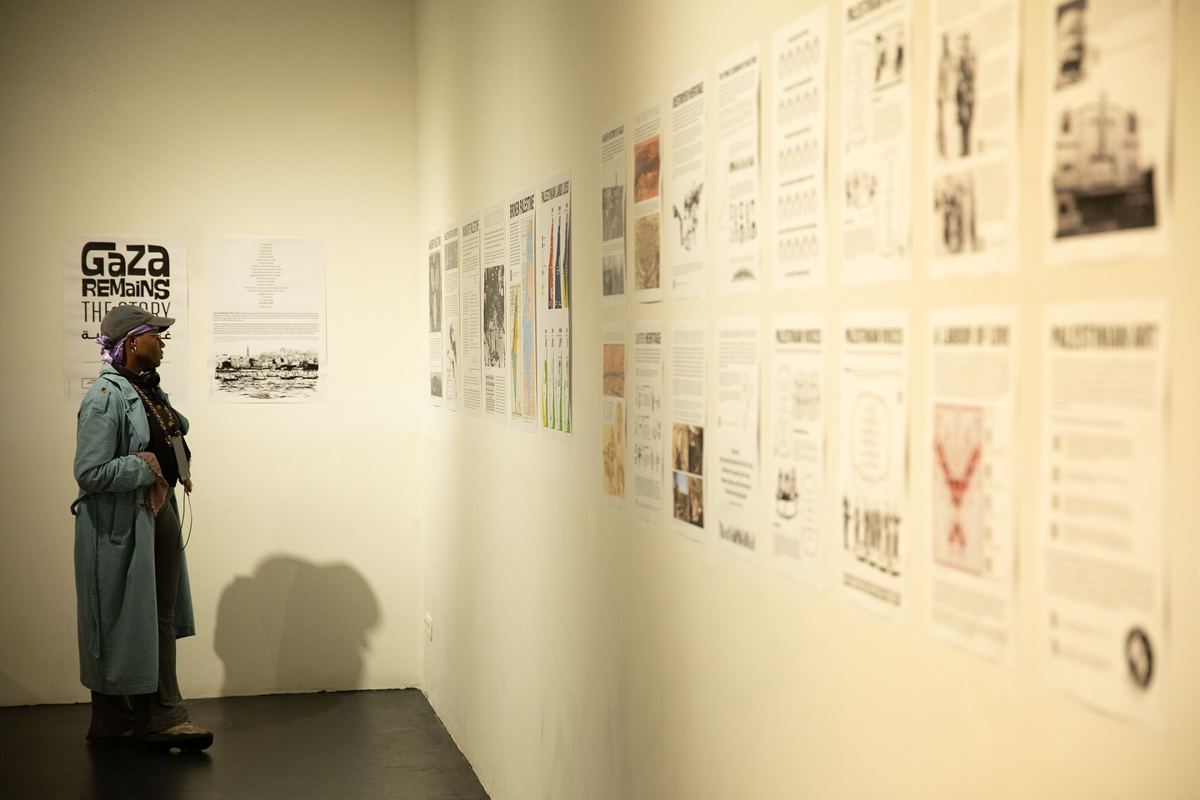
One of the Museum’s latest initiatives was curating a downloadable exhibition, where art spaces can download files online and present their own exhibition called Gaza Remains the Story. “You have a blueprint kind of like Ikea. Put this one here, move 20 cm and put the second one here”, explains Shomali, “We had paintings, photos, infographic posters, captions, all the details of a well made exhibition but all printable. We uploaded that to the internet in addition to a folder with social media posts, reels, templates for the posters, templates for the exhibition. That exhibition was hosted in 167 places around the world. From Japan to San Francisco. We also provided tools and exhibitions for people in solidarity with Palestine to create those kinds of spaces. We turned the museum from being a destination, a space, to being a resource.” The success of this blueprint allowed the Museum to work on similar initiatives abroad. For instance, they called on the Palestinian community in Bahrain to help present an exhibition in Bahrain without a single member of the Palestinian Museum visiting, something they were able to replicate in Saudi Arabia and London. “We are a small staff trapped in Palestine, we can’t travel. But we have 9 million Palestinians around the wall”, adds Shomali, “If we want to have an exhibition in Chile or in Armenia or somewhere we will make a few phonecalls, find who is able to help us and we start to work with them pro bono on the ground. So we turn from a small staff to a 9 million staff around the world who are willing to help serve the Palestinian Museum, the Palestinian art movement around the world. It’s a big change in the way we operate.”
So what about the future for the Palestinian Museum? “It’s impossible to plan anything. This year we don’t have a timeline. We have things we would like to do”, explains Shomali, “Anything that is ready we will install in the Museum. But we can’t say ‘in February we will have this exhibition’. We can’t do that. We will keep hitting walls. We can say we will keep working on this exhibition, whatever gets ready we’ll install it. We’ll deinstall it when the second thing gets ready. It’s impossible.” Many organisations in the West Bank have stopped functioning too. “When the war started all our programming was not relatable so we kept postponing, postponing”, adds Shomali, “It’s making our life complicated. We are working on an exhibition in October, one of the curators was arrested for a month by the Israelis. So we have this happening in parallel to what’s happening, so we can’t focus on Gaza, we can’t focus on the West Bank. We don’t have time to process but at the same time you are requested to respond. Responding in the art field is not easy. Usually we respond as artists later on, we reflect on things years after, but the blood is still fresh.”
Besides the Palestinian Museum, there are other galleries operating inside Palestine. Bethlehem-based Bab idDeir even opened a second space in Ramallah in May 2024, where Zawyeh gallery - which also has a space in Dubai - is also operating. That said, from the looks of Zawyeh’s website, they haven’t had an exhibition in Ramallah since November 2024. The Ramallah space currently has a solo exhibition by Rania Amoudi called Mariam, shedding light on the special conditions of women during war in an attempt to present a different perception of the reality of contemporary Palestinian women. It delves into the repressed femininity and deferred dreams held by Palestinian women, dreams that have been unable to flourish under the burden of war, social expectations and imposed sanctity. Bab idDeir has also recently opened another exhibition at its Bethlehem space titled Between Here and There, which seemingly chooses not to focus on war. The exhibition presents the works of 18 emerging artists selected through an open call for young creatives, sharing a common drive to create new and unconventional works, whether through their chosen mediums or the subjects they explore.
“As for Bethlehem, the city was affected a lot economically and socially since the city depends primarily on local and international tourism. And since the war – the tourists were not allowed to come to Palestine”, says Rula Doughman of Bab idDeir, “Unfortunately, in the first few months I had to close the gallery and then we started opening on weekends – before the war we opened an exhibition that lasted till last April. Other art galleries such as The Walled Off closed and are still closed. We have local art organizations like Dar Jacir for Research and Wonder Cabinet, Marsam 103, they organize workshops and residencies, they have few activities but not as their usual plans.”
And despite all the struggles, Doughman opened a second space in Ramallah. “ I had agreements with 2 artists living in Ramallah – to feature their solo exhibition during 2024. I was very lucky to find a nice space in the old city of Ramallah- it was a ballet school – an open space in an old building , 2nd floor, no elevator. I had a good deal and the contract fees are very acceptable”, she explains, “At the end of 2024 I had a group exhibition, the exhibition was dedicated to children and orphans in Gaza, 35% of sales were donated to Gaza, we were able to collect $13,500.”
In addition to all this, Bab idDeir is working in partnership with Emmaus International Art Residency (EIAR) to open the doors of a new residency house in the heart of Qubaybah village, a place rich in history, nature, and inspiration. As part of this partnership, Bab idDeir will lead the artistic curating and management of the residency, welcoming international artists, curators, and researchers to create, reflect, and engage with Palestine’s vibrant cultural scene. She expects the open call to be announced soon.
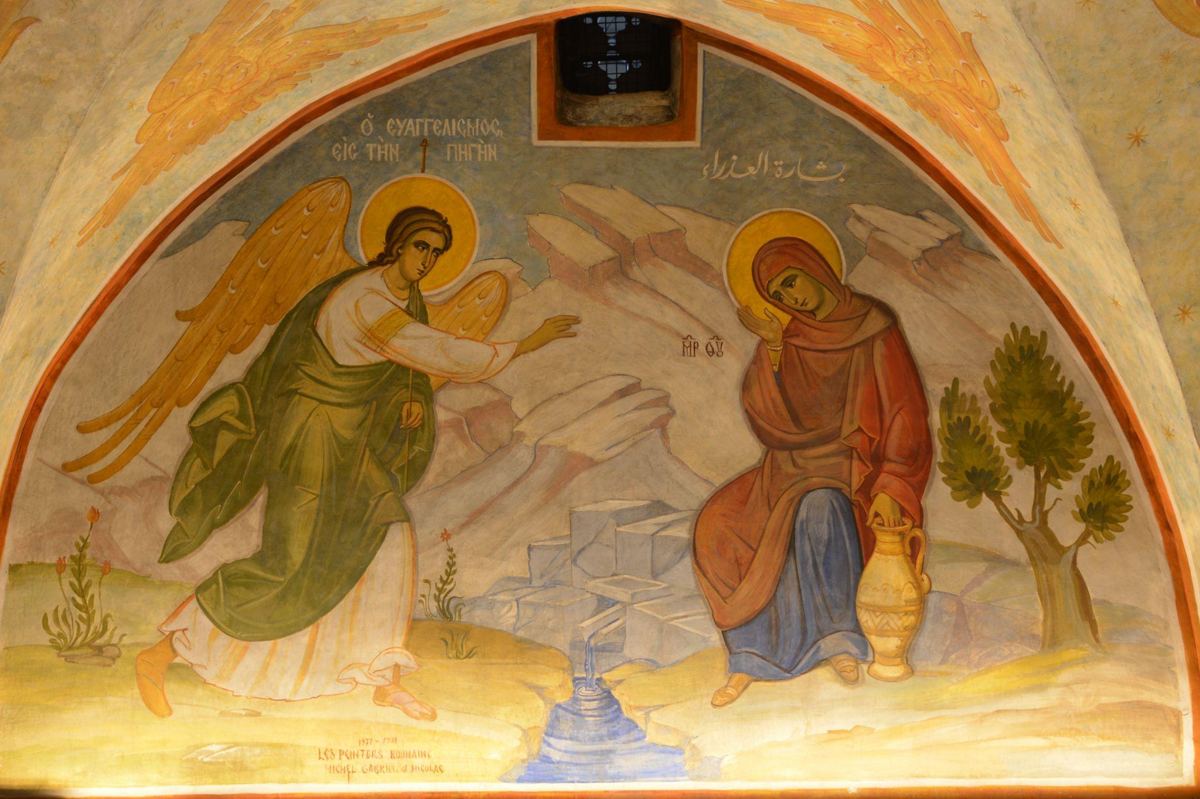
Meanwhile, Nazareth is a Palestinian city within Israel, with a Palestinian art scene operating within that. “Being an artist in Nazareth is a deeply personal and often spiritual experience. The city is full of history, religious symbolism, and layered narratives. It inspires much of my work, but at the same time, there are challenges”, says artist Celine Obeid, “Opportunities are limited, and artists often have to create their own platforms and networks to share their work.” The art scene in Nazareth is relatively small but there are galleries and cultural spaces that support visual arts. “The art scene in Nazareth is relatively small, but there are several galleries and cultural spaces that support visual arts. “Many of these spaces showcase contemporary Palestinian art and often focus on themes of identity, memory, and heritage,” adds Celine. “Exhibitions do happen, though not on a regular schedule, and most artist connections are built through personal relationships rather than formal networks. Local initiatives and independent projects are essential in keeping the scene active.”
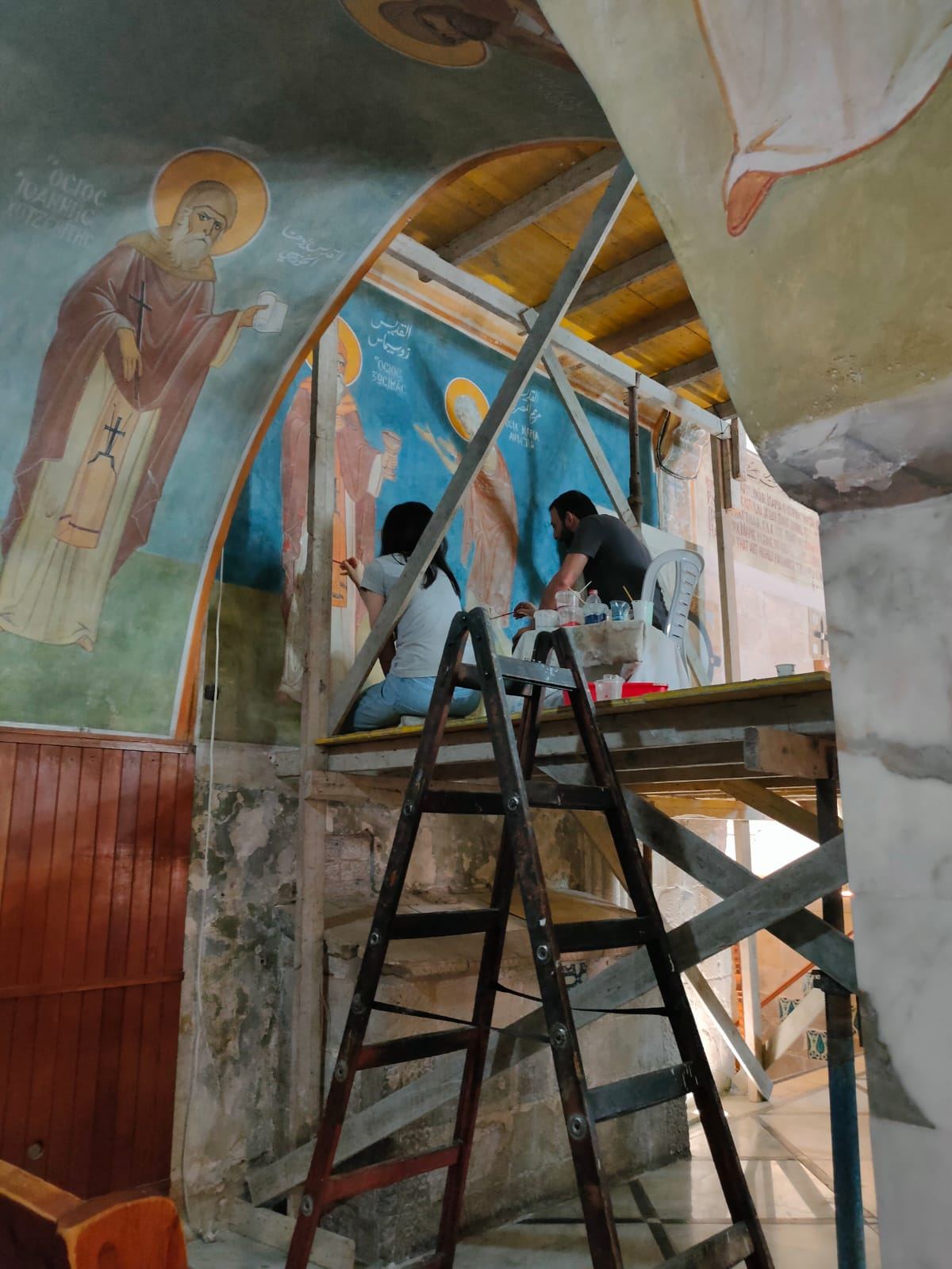
Currently, Celine is working on restoring wall icons from the 1970s in the Greek Orthodox Church of the Annunciation alongside the iconographer and restoration specialist Nizar Khshaiboun, and creating a personal collection of abstract and impressionist paintings inspired by everyday scenes from her surroundings. That said, it hasn’t been easy following 7 October. “The political and social tensions have created an atmosphere of uncertainty and caution. Many artists have felt limited in their ability to express themselves freely, fearing misinterpretation or backlash”, she explains, “Cultural activities have slowed down, and some exhibitions or events were postponed or canceled altogether. There is a sense of self-censorship and emotional weight that has influenced both the content of the artwork and the ability to share it publicly. Despite these challenges, artists continue to create, often turning inward, using their practice as a means of reflection and quiet resistance.”
In Haifa, where there is also a sizable Palestinian population, there is also Darnah, a Palestinian, shop, gallery and art brand that is continuing to promote Palestinian culture despite being located within Israel. Recently, they have hosted a number of workshops and events internationally, notably with Palestine House in the UK. Despite the situation, the art scene is still operating, no matter the obstacles.
So what can we take away from all of this? Writing about the Palestinian art scene at this time feels counterintuitive. We know that artists are suffering in unimaginable ways and it feels wrong to ask people about creativity when their very existence is under threat. That said, from writing this article we have seen how art does persist. In fact, promoting art from Palestine is now more important than ever to show the essence of what is happening both in Gaza, and the West Bank.
More from News
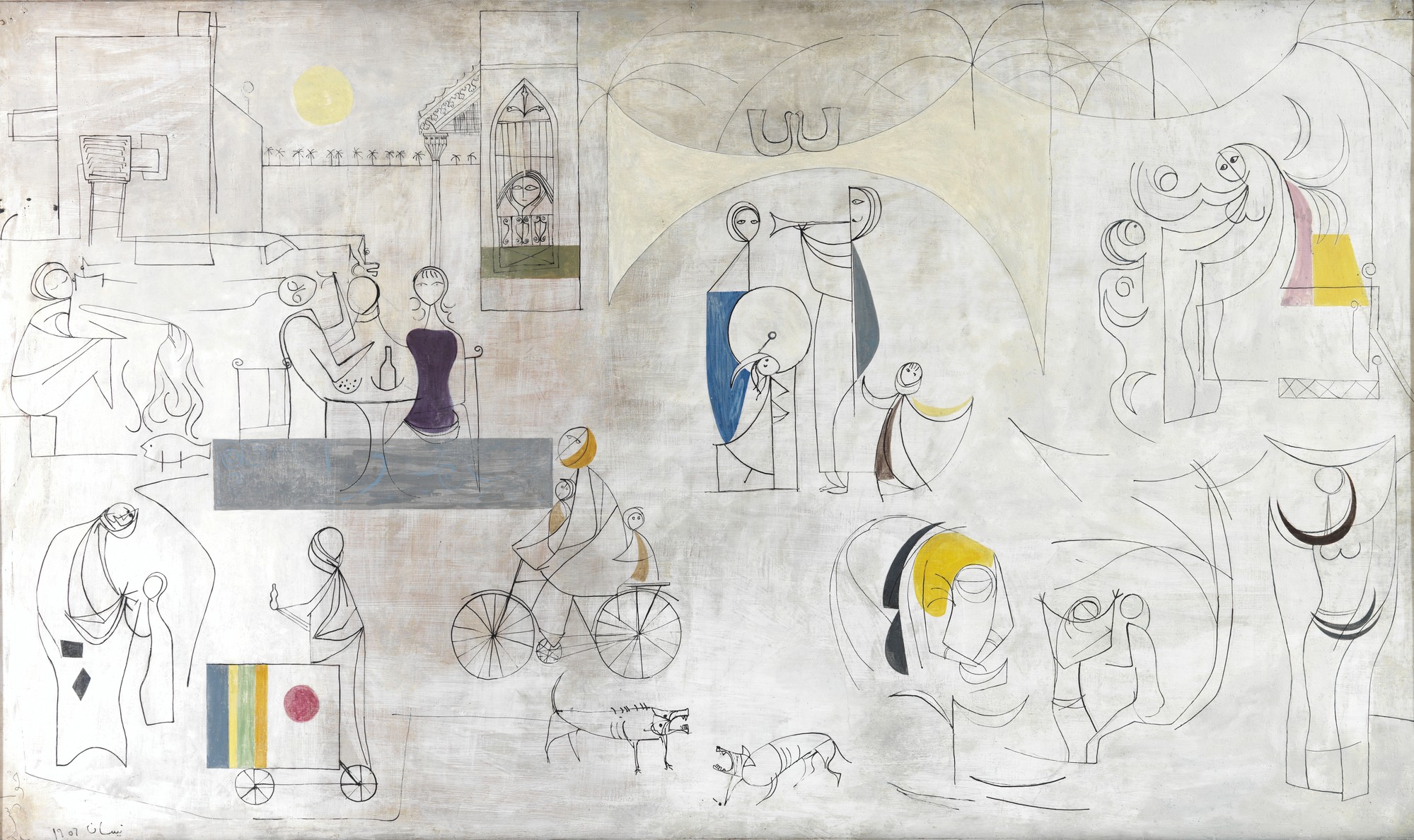
10 Institutional Exhibitions Opening in the MENA Region This October
From the Baghdad Modern Art Group at Mathaf to Salah Elmur at Jameel Arts Centre and a moving image biennale in the Medina of Tunis, here are the museum and art centre shows opening across the MENA region this October.
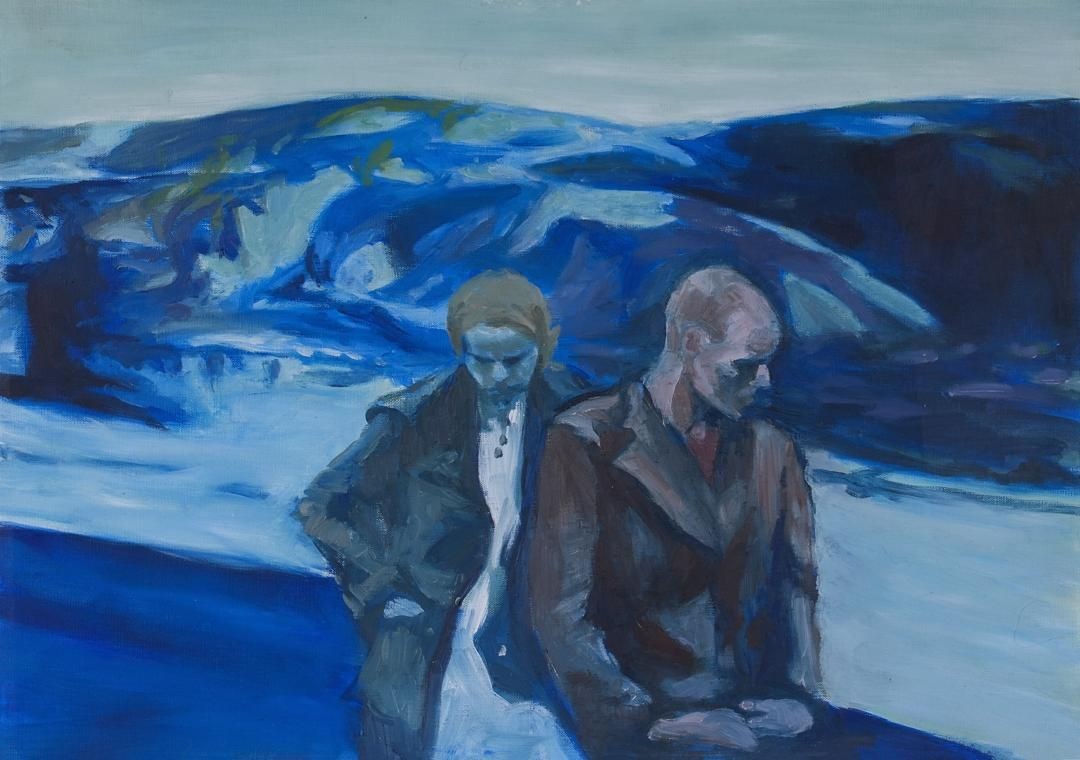
Why Did Contemporary Iranian Art Sell for £200 in London This Month?
Twenty Tehran galleries sent close to 200 works to Ab-Anbar in London, priced from £200 to £3,000. We look at what the show tells us about the market for art made in Iran today.
ArtZone Palestine Amplifies Palestinian Voices
Amidst the seemingly neverending destruction and devastation in Gaza, the MENA art world - and generally many artists across the world - have not been shy about amplifying Palestinian voices. A number of exhibitions a…