SVNIR D STARS
Place
Date & Time
Artists
Curators
On view · Group exhibition
SVNIR D STARS
Press Release
La Boîte in Tunis presents SVNIR D STARS, a two-person exhibition by Fredj Moussa and Corentin Laplanche Tsutsui, on view from 24 June to 30 October 2026 at the art centre's space in La Charguia. The show grows out of Wandering Studio, the duo's residency at La Boîte in September 2025, and turns the gallery into a mock tourist attraction built from the leftovers of cinema.
Its starting point is Mos Espa, the abandoned Star Wars film set in the desert near Nefta in southern Tunisia, which the two artists visited while filming there in 2023. From that encounter they began to look at cinema as an extractive industry, one that uses land to harvest fictions and leaves behind sets, souvenirs and a tourist economy. The exhibition, in the words of La Presse, looks at the desert as commodified landscape, film set and artistic material all at once.
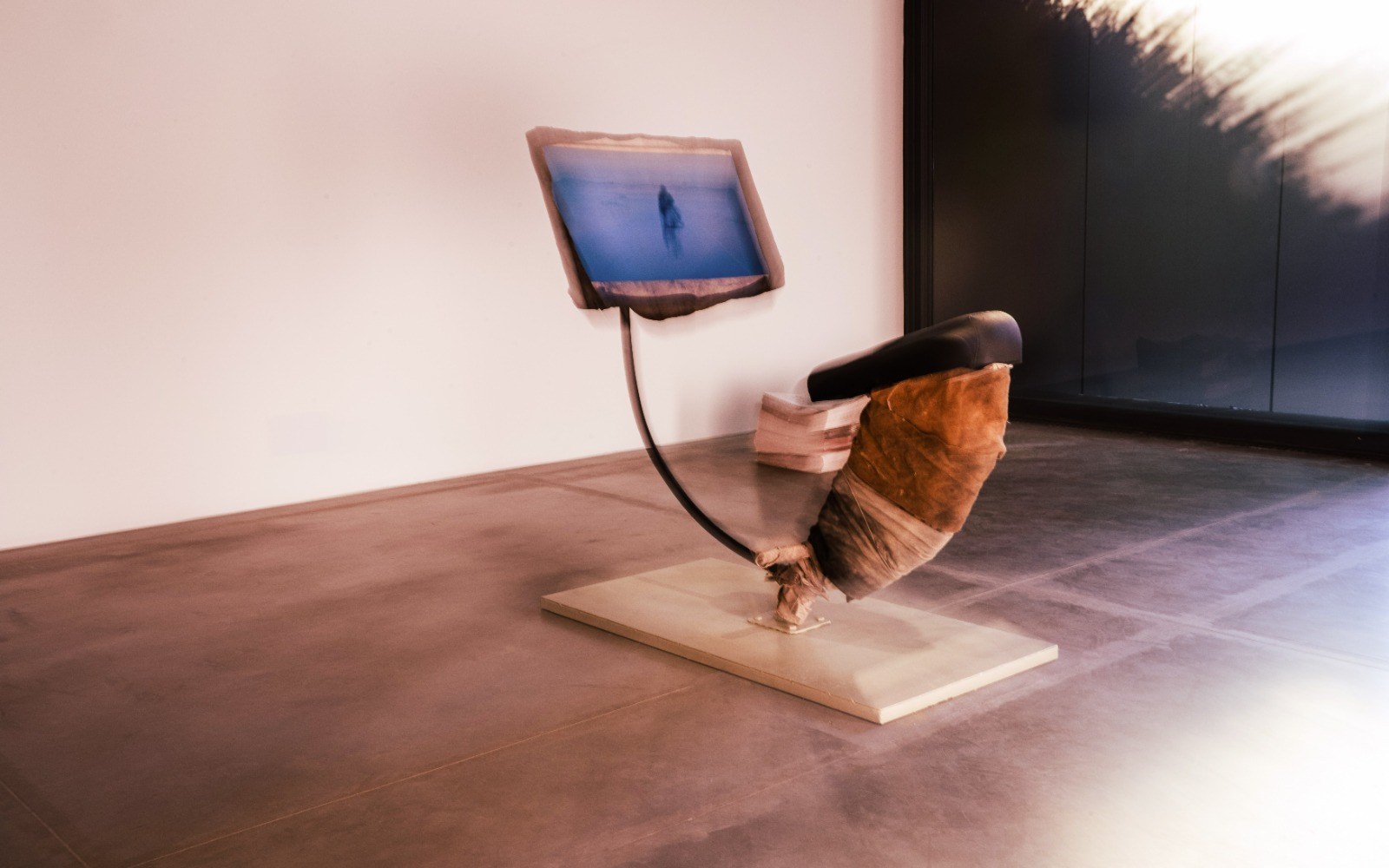
The gallery text is written as a cheerful holiday brochure: "Nous avons ramené le Sahara pour vous !", we have brought the Sahara to you, to be enjoyed in air conditioning without leaving the city. Visitors move through dismantled studio kits staged as a kind of magnificent dump, free newspapers with crosswords and a poster on the back page, sculptural screens on salvaged stands and a large printed billboard in the courtyard, before reaching the centrepiece, the film Atlel Ennoujoum. A shop of postcards, T-shirts and souvenirs completes the parody.
Moussa, who lives and works in Sousse, makes films, portable sculptures and hand-painted posters that draw on oral histories, mythical fragments and colonial remains to build landscapes where fiction becomes a form of resistance. Laplanche Tsutsui, based in Marseille, works across analogue and digital image, film and installation, reflecting on how we inhabit territory in an age of global cities and late capitalism. The two have collaborated since 2018.
With its humour and its souvenir shop, SVNIR D STARS asks a serious question about who profits from the images made on Tunisian soil and what remains once the cameras leave. It is also a good example of La Boîte's model, a research led art centre housed inside a working company, and a rare chance to see one of the most talked about young Franco-Tunisian practices at home in Tunis.
By