Human being-Being human
Place
Date & Time
Artists
Curators
On view · Solo exhibition
Human being-Being human
Press Release
Two neighbouring galleries in Sidi Bou Saïd have joined forces this autumn to honour one of Tunisia's most singular artists. Human being-Being human, curated by Beya Othmani, is a survey of the late Tunisian-Swiss artist Fatma Charfi (1955 to 2018), and it unfolds across two spaces: Aïcha Gorgi Gallery and Blue Wind Project, which represents her work.
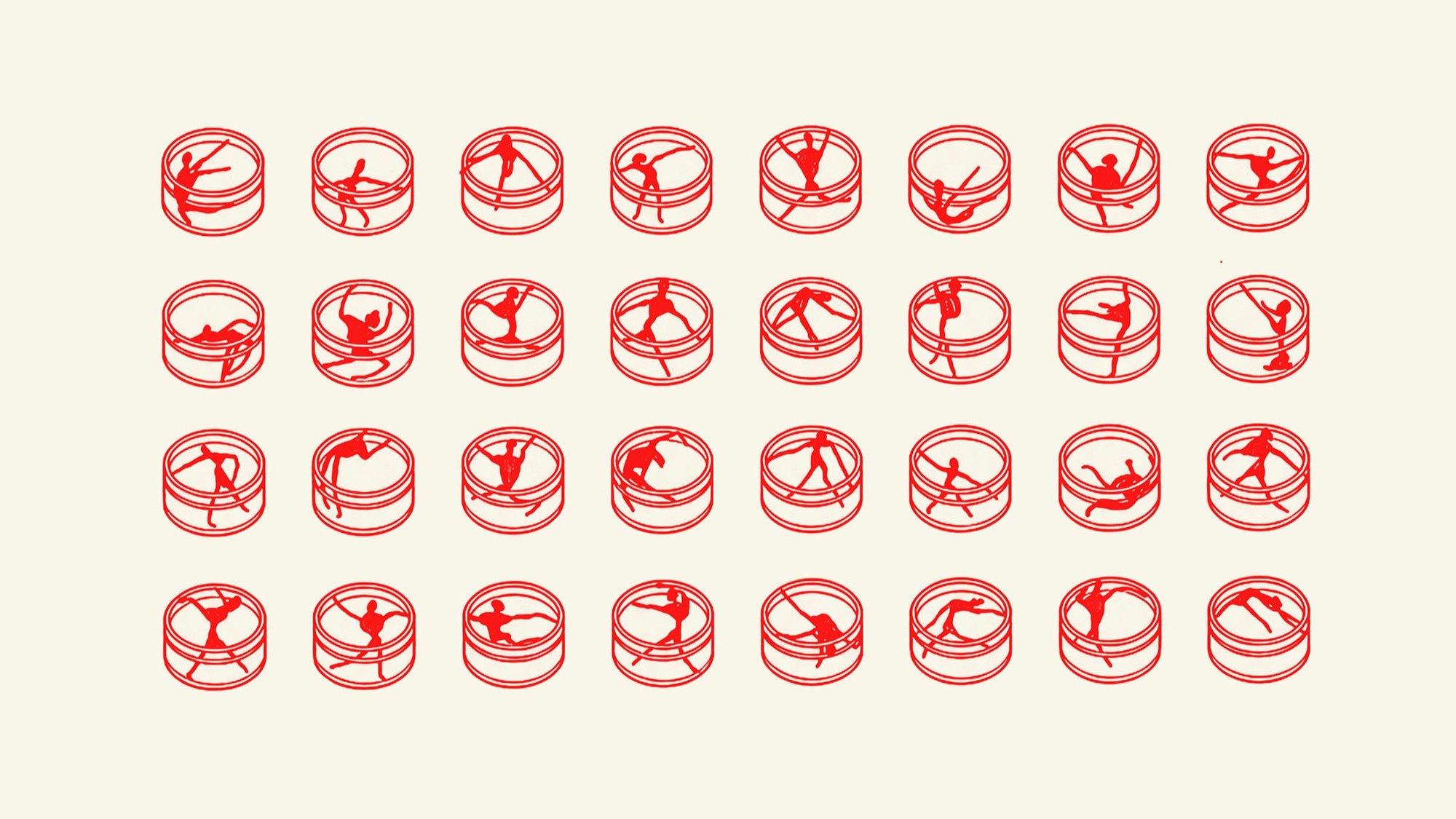
Born in Sfax, Charfi studied at the École des Beaux-Arts de Tunis before doctoral studies in aesthetics at Université Paris 1 Panthéon-Sorbonne and further training at the Institut d'Art Visuel in Geneva. Based in Switzerland from the mid-1980s, she worked across installation, sculpture, performance, photography, video, drawing and painting. From the late 1980s, her vocabulary was defined by the Abrouc (plural Aberics), a small, hand-twisted anthropomorphic figure through which she explored power, representation and vulnerability.
The exhibition brings together nearly three decades of work, "from her pioneering installations of the early 1990s to works made shortly before her death", as the gallery puts it. Its title comes from one of Charfi's own works and plays on the double sense of être humain: the human being as an individual, and being human as a practice.
The first movement, at Aïcha Gorgi Gallery, gathers installations that grew out of Charfi's observation of the world. The second, at Blue Wind Project, turns to the performative side of her practice, with works such as Cry of a Child (2002 to 2009), which paved the way for her long-running performance project Laboratoire de paix (2002 to 2014).
The show is also a reminder of how far Charfi's work travelled. Her breakthrough came at the 15th International Biennial of Contemporary Textile in Lausanne in 1992, she received the Jury Prize at the Alexandria Biennale in 1999, and in 2000 she became the first woman and the first Arab artist to win the Grand Prix Léopold Sédar Senghor at Dak'Art. Since most of her work remained in Switzerland after her death, this return to Tunisia is a rare chance to see it at home.
By